


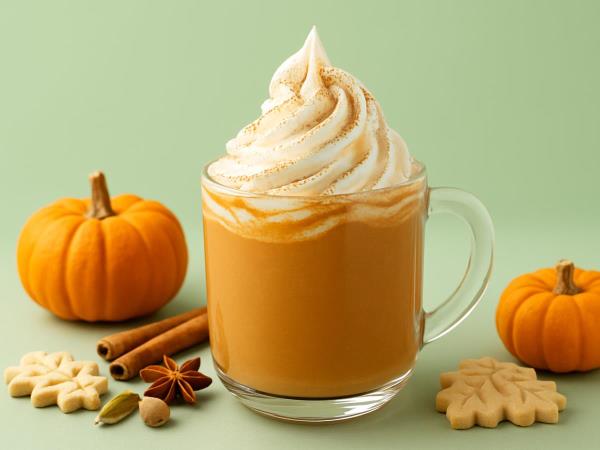


Pumpkin Coffee: The Autumn Cup That Spoils Your Taste Buds the Wholesome Way
expert, nutritionist
Forget the syrup-loaded coffee-shop version. The real secret of an unforgettable pumpkin coffee is not a bottle of flavoured sauce, but a single honest ingredient: pumpkin you roast yourself. Once you taste the deep, caramel-like sweetness of freshly roasted pumpkin stirred into hot coffee, the caf{-15447} menu suddenly looks a lot less tempting.
A drink with a surprisingly famous past
Most people credit Starbucks with inventing pumpkin coffee, but the story may be older. As VinePair reports, in a September 1994 issue of the Seattle music magazine The Rocket, singer-songwriter Tori Amos told her audience that while everyone else had their usual coffee-shop order, she had her own drink that tasted like pumpkin pie – her personal invention, which she playfully called a "witch warmer". That was nearly a decade before pumpkin lattes appeared on chain menus.
The commercial version came later. According to an interview with Seattle public radio station KUOW, Peter Dukes, who led the Starbucks espresso team in 2003, recalls that back then the only pumpkin product you would find in a grocery store was canned pur{-15447}e for pie. His team famously poured espresso over a slice of pumpkin pie just to see how the flavours worked together, as he told FOX Business.
Not every celebrity is a fan, though. Chef and author Ina Garten has said she simply likes coffee to taste like coffee, as Tasting Table reported. Country singer Jessie James Decker, on the other hand, makes her own homemade version precisely because, as she told Tasting Table, she prefers pure ingredients and nothing artificial. Our recipe follows the same philosophy – and it may convince even the coffee purists.
Breakfast, afternoon treat or a light evening cup
You can prepare pumpkin coffee for breakfast, as a mid-afternoon pick-me-up or even as a light alternative to a heavy dessert after dinner (in that case, decaf is a wise choice). Whatever the occasion, skip the white sugar – maple syrup pairs far better with the earthy flavour of pumpkin. Replace regular whipped cream with coconut cream if you prefer a dairy-free option. If you are sensitive to lactose, use almond, coconut or soy milk instead; plant-based drinks such as coconut milk are naturally lactose-free, as explained by the University of Florida IFAS Extension. Keep in mind, though, that coconut milk contains very little protein, so it is not a complete nutritional replacement for dairy milk.
Curious about which sweetener to choose? Our articles Sweeter Than Honey, Yet Gentle on Blood Sugar: The Truth About Agave Syrup and Popcorn Beats Apples, and Sugar Beats Honey: 8 Nutrition Face-Offs That Flip Everything You Thought You Knew compare popular options side by side.
Ingredients (for two cups of pumpkin coffee)
- 250 ml freshly brewed coffee
- 3 tablespoons roasted pumpkin pur{-15447}e
- 2 tablespoons maple syrup (or another sweetener of your choice)
- 3 drops vanilla extract
- a sprinkle of cinnamon or nutmeg
- whipped cream (or a plant-based alternative, or frothed milk)
Preparation
The key ingredient of pumpkin coffee is the pumpkin pur{-15447}e. It must be made from just one ingredient – pumpkin – because any added flavours will mask the authentic autumn taste of a ripe pumpkin.
Arrange pieces of pumpkin on a baking tray and place them in an oven preheated to 200 {-15696}C (about 390 {-15696}F). Roast for 45 minutes, until the pieces are soft. Then transfer them to a blender and blend until completely smooth.
If you like, strain the pur{-15447}e through a cotton cloth – excess water can dilute the pumpkin flavour. It is also worth knowing that pumpkin pur{-15447}e keeps in the fridge for up to five days, and you can use it for both hot and iced coffee.
Mix the pumpkin pur{-15447}e thoroughly with freshly brewed coffee, maple syrup and vanilla, top with whipped cream and finish with a sprinkle of cinnamon.
Above all, you will be won over by its distinctive autumn flavour.
Why homemade is the smarter choice
From a nutritionist's point of view, the biggest advantage of this recipe is control. You decide how much sweetener goes in, and you use real pumpkin rather than flavouring. Coffee-shop seasonal drinks can be surprisingly sweet – Homes & Gardens notes that a large pumpkin spice latte can contain around 50 grams of sugar. For comparison, the American Heart Association advises keeping added sugars well below that level for the whole day. Maple syrup is still a form of sugar, so a tablespoon per cup is a sensible amount.
Pumpkin itself is a genuinely nutritious vegetable. It is low in calories and, like carrots and sweet potatoes, naturally rich in beta-carotene, an orange pigment the body can convert into vitamin A, according to WebMD and Healthline. A comprehensive scientific overview published in PubMed Central describes pumpkin as a nutrient-dense food containing a wide range of plant compounds. Of course, three tablespoons of pur{-15447}e in a cup of coffee is a small amount – think of it as a tasty bonus, not a substitute for vegetables on your plate. For more seasonal inspiration, read 5 Healthiest Autumn Foods to Improve Memory.
Coffee, enjoyed in moderation, fits comfortably into a healthy lifestyle for most adults. A 2025 review indexed on PubMed concluded that moderate coffee intake appears to be more beneficial than harmful across many health outcomes – while also noting that adding sugar and cream may reduce some of those potential benefits. That is one more reason to keep the sweetener and topping modest. The U.S. Food and Drug Administration cites about 400 milligrams of caffeine a day as an amount not generally associated with negative effects for most healthy adults; pregnant women and people sensitive to caffeine should talk to their doctor. If you want to bust a few common coffee myths, read When salad isn't healthy, and coffee isn't what you think.
Cinnamon brings warmth and natural sweetness, so you may find you need less syrup. Enjoy it as a spice rather than a remedy: the U.S. National Center for Complementary and Integrative Health notes that research does not clearly support using cinnamon for any health condition, although it is considered safe in the amounts normally used in food. The common cassia variety contains coumarin, so if you sprinkle cinnamon on everything every day, milder Ceylon cinnamon is a good alternative. A pinch of nutmeg is all you need – it is a powerful spice.
Readers' tips
One of our readers, a mother of two, told us she now roasts a whole pumpkin every Sunday: half becomes soup, and the other half becomes pur{-15447}e for the family's weekday coffee. "The kitchen smells like autumn for the whole day," she wrote, "and I've stopped buying flavoured syrups altogether." Another reader freezes the pur{-15447}e in ice-cube trays, so one or two cubes go straight into a mug of iced coffee in the warmer months.
A few more ideas to try:
- Iced version: mix the pur{-15447}e with cold brew coffee, maple syrup and a splash of oat or almond milk, then pour over ice.
- Lighter version: skip the whipped cream and top with frothed skimmed or plant-based milk.
- Choose the right pumpkin: smaller, sweeter varieties such as Hokkaido or butternut give a creamier, less watery pur{-15447}e than large carving pumpkins.
- Cut back on sugar gradually: start with two tablespoons of maple syrup and reduce it a little each week – your taste buds adapt faster than you think. For more on smarter sweetening, read Sugar Is the New Fat - So What's the New Sugar?
Small details often make a big difference in how we prepare everyday foods – something we also explore in Foods We Use Incorrectly.
Information on this website is for educational purposes only and is not medical advice.
expert, nutritionist
 Would you like to be informed about news on the website?













|

