


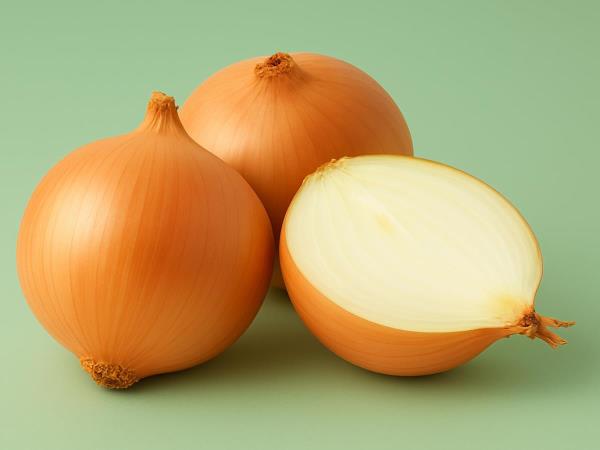


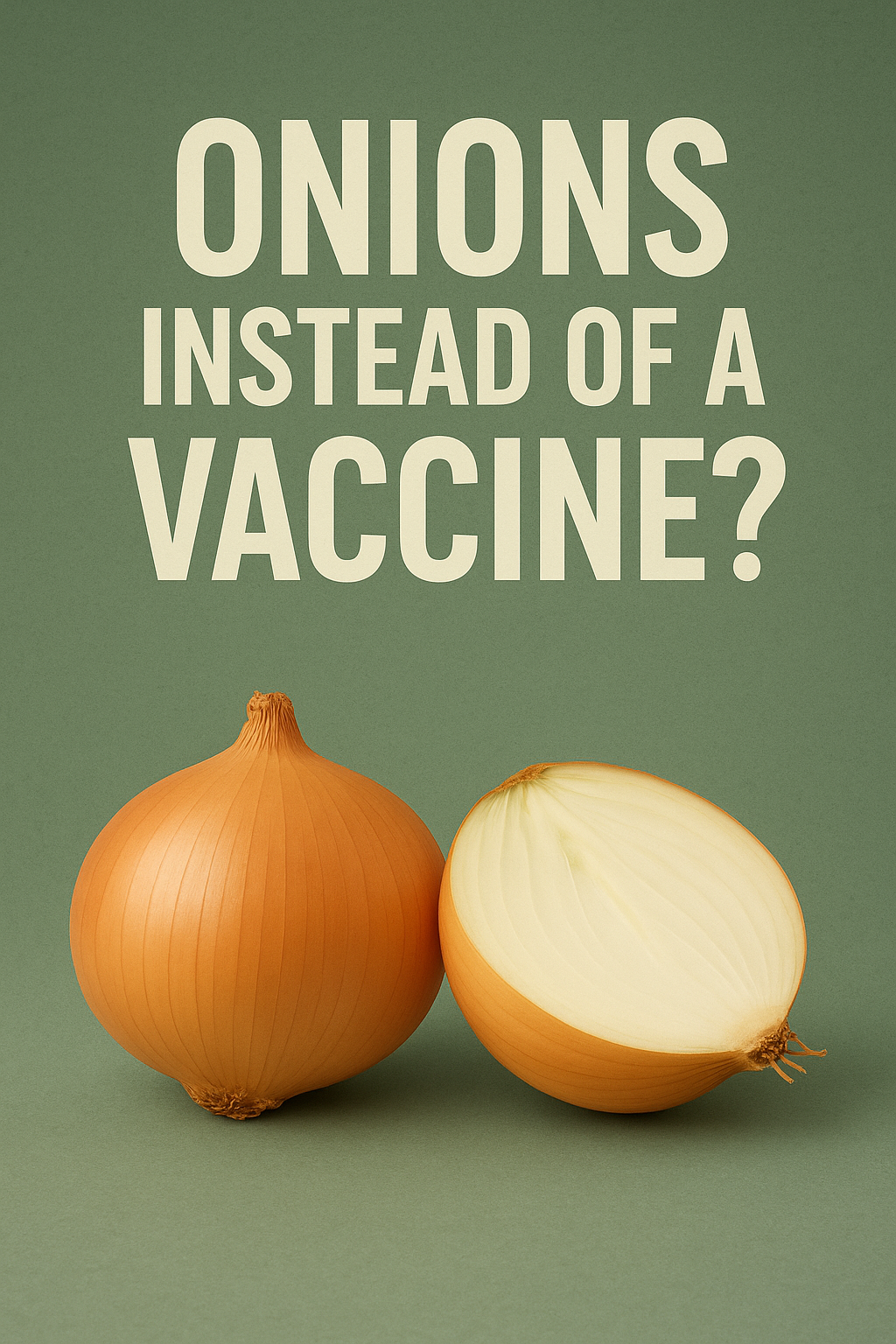

Onions Instead of a Vaccine? The Mongolian Farmers, the Spanish Flu and the Truth About a Legend Growing in Every Garden
expert, nutritionist
Imagine a pandemic that killed tens of millions of people – and a vegetable from your kitchen counter that supposedly kept whole families safe. That is the promise of one of the most widely shared food stories on the internet. An exchange of letters between a doctor in Mongolia and one in the United States raised an unusual question: why did so few people in Mongolia die during the Spanish flu?
The story has left many readers open-mouthed. First, because the "solution" seems so simple. Second, because of the surprising "facts" it claims to reveal. But as you will see, the most surprising part of this story is not what the onion does – it is what it doesn't do.
A grandmother's plate of onions
One of our readers told us that every winter her grandmother placed a saucer of sliced onions on the windowsill of each bedroom. "When we had a cough, she swore the onion would turn dark overnight because it had 'pulled the sickness' out of the room," she recalls. "We grew up believing it completely – and the whole house smelled of onions until spring."
She is far from alone. Physician and integrative medicine author Dr. Andrew Weil has written about this very belief, noting that onions are good for us but have no magical power to gather germs. The legend, he explains, often comes with an anecdote about a farm family that survived the 1918 pandemic thanks to onions placed in every room.
The Spanish flu: humanity without defenses
The Spanish flu swept the world between 1918 and 1920. According to the U.S. Centers for Disease Control and Prevention (CDC), it killed an estimated 50 million people worldwide. At the time, humanity had neither the knowledge nor the technology to stand up to the virus – there were no flu vaccines, no antiviral drugs and no antibiotics for secondary infections.
According to the viral story, however, it wasn't like this everywhere. In Mongolia, it claims, remarkably few people died of the flu.
The story as it circulates online
The tale goes like this: this fact would probably have been forgotten had a medical student from Mongolia not started playing with it. As part of a research assignment, he interviewed farmers who still remembered how their parents had fought the flu and other viral illnesses. The research, so the story says, was carried out before the coronavirus pandemic.
The eager student soon noticed onion tea. Many families still treat the flu with onion tea, just as they did a hundred years ago. Onion tea was once popular all over the world – there were periods when it was used widely, and periods when pharmaceutical products pushed it aside completely. The same was true in many parts of Europe.
Not satisfied with a superficial conclusion about onions and tea, the student kept digging. By chance, he sent his findings to a friend in Oregon, USA, who worked for a pharmaceutical research company that occasionally shared raw research data with interested outsiders, hoping fresh eyes might spot a detail their own team had missed.
The onion findings were not exactly textbook material, but they were enough to make the American colleague ask what kind of onion the Mongolian farmers used (onion tea was never especially popular in America). The puzzled student sent the farmers a new round of questions – and this, the story says, is where the thread began to unravel.
It turned out that tea culture in Mongolia is different from that in Europe or the U.S. The "secret," according to the tale, was not in the tea at all, but in the leftovers that Europeans throw away. Life in a traditional Mongolian home often takes place in a single room – including the kitchen scraps.
Onion scraps!
From here, the viral version makes its boldest claims: that cut onions act as a magnet for flu viruses (including COVID-19 and the Spanish flu of a century ago), and that onion sliced the night before becomes so loaded with germs that eating it is dangerous.
What science actually says
This is where the nutritionist has to step in. None of the people in this story – the Mongolian student, the Oregon researcher or the farmers – can be traced, and no published study supports the claim. In fact, the onion legend is centuries older than the Spanish flu.
- It's an old folk belief. The National Onion Association describes it as an old wives' tale dating back as far as the 1500s, when cut onions were placed around homes during plague outbreaks. Back then, people believed disease spread through "bad air," and onions were thought to clean it.
- Viruses don't fly into onions. Flu viruses spread mainly through respiratory droplets and contact between people. As fact-checkers at Snopes point out, onions won't protect a home from the flu – handwashing and keeping distance from sick people will.
- Nobody could have seen it in 1919. Some versions claim a doctor found the flu virus in an onion under a microscope. Flu viruses are far too small for the light microscopes of the time; the electron microscope was only developed in the 1930s by Ernst Ruska, who later received the Nobel Prize in Physics.
- Onions are not "germ magnets." Dr. Joe Schwarcz of McGill University's Office for Science and Society explains that onions are not especially prone to bacterial contamination. Their sulphur compounds actually have antibacterial activity, and a cut surface dries out quickly, which makes it a poor place for bacteria to grow.
- Yesterday's onion is not poison. Lead Stories has debunked the claim that onions cut the day before are dangerous. Like any cut vegetable, store them covered in the fridge and handle them with clean hands and clean boards.
Australian fact-checkers at AAP FactCheck reached the same conclusion: onions cannot absorb bacteria or viruses from the air, and they don't turn black from "germs." There is one real warning in the old chain messages, though – onions are toxic to dogs, so keep scraps away from your pets.
So why do so many people swear by it?
The strangest thing is how many people say they have "always known" about this onion trick. Many add that their grandparents knew it too. Most colds and flu cases get better on their own within days to a couple of weeks, so whatever was on the windowsill at the time easily gets the credit. And a cut onion darkens overnight simply because it oxidizes and dries out, not because it has trapped germs.
So why don't hospitals put out onion rings? Not because of the smell, and not because of a conspiracy. It's because careful study has never shown that they work. Real protection comes from vaccination, ventilation, hand hygiene and staying home when you are ill, as the World Health Organization recommends.
The onion's real value: on your plate, not on the windowsill
None of this means the onion is ordinary. It may not catch viruses, but it is one of the most interesting vegetables in your garden – as long as you eat it.
Onions are one of the richest everyday sources of quercetin, a flavonoid with antioxidant properties. A review published in Frontiers in Nutrition summarizes research suggesting that onion compounds may have antioxidant, anti-inflammatory and antimicrobial effects. Much of this research comes from laboratory and animal studies, so it does not prove that onions prevent disease in people. A review in the journal Antioxidants notes that red and yellow onions contain far more quercetin than white ones. Another review in Agriculture (MDPI) describes how growing and storage conditions affect these compounds.
A few practical tips from the nutritionist's kitchen:
- Choose color. Red and yellow onions are richer in flavonoids than white varieties.
- Peel lightly. The outer flesh layers hold more flavonoids, so remove only the papery skin.
- Mix raw and cooked. Raw onion in salads keeps more of its sulphur compounds, while gentle cooking makes it easier to digest.
- Use the skins in stock. Dry onion skins are rich in quercetin and add a golden color to homemade broths. Just strain them out before serving.
- Pair it with other winter allies. A varied diet with plenty of vegetables, fruit and warming spices helps support overall wellbeing. Read our article Warm Water with Turmeric Against Winter Troubles.
If you enjoy discovering how everyday ingredients are misunderstood, you will also like Foods We Use Incorrectly.
A garden full of stories
The tale of the Mongolian farmers ends with a provocative thought: no crop from the garden has ever made anyone millions. There is some truth in it – you can't patent an onion. But the real lesson is a different one. The onion doesn't need to be a miracle cure to earn its place in your kitchen. It is cheap, versatile, full of interesting plant compounds and a delicious part of a balanced diet.
So the next time someone forwards you the story of the "flu-catching onion," enjoy it as a piece of folklore – then slice the onion, put it in your soup, and leave the protecting to your immune system, good habits and your doctor's advice.
Information on this website is for educational purposes only and is not medical advice.
expert, nutritionist
 Would you like to be informed about news on the website?












|

