





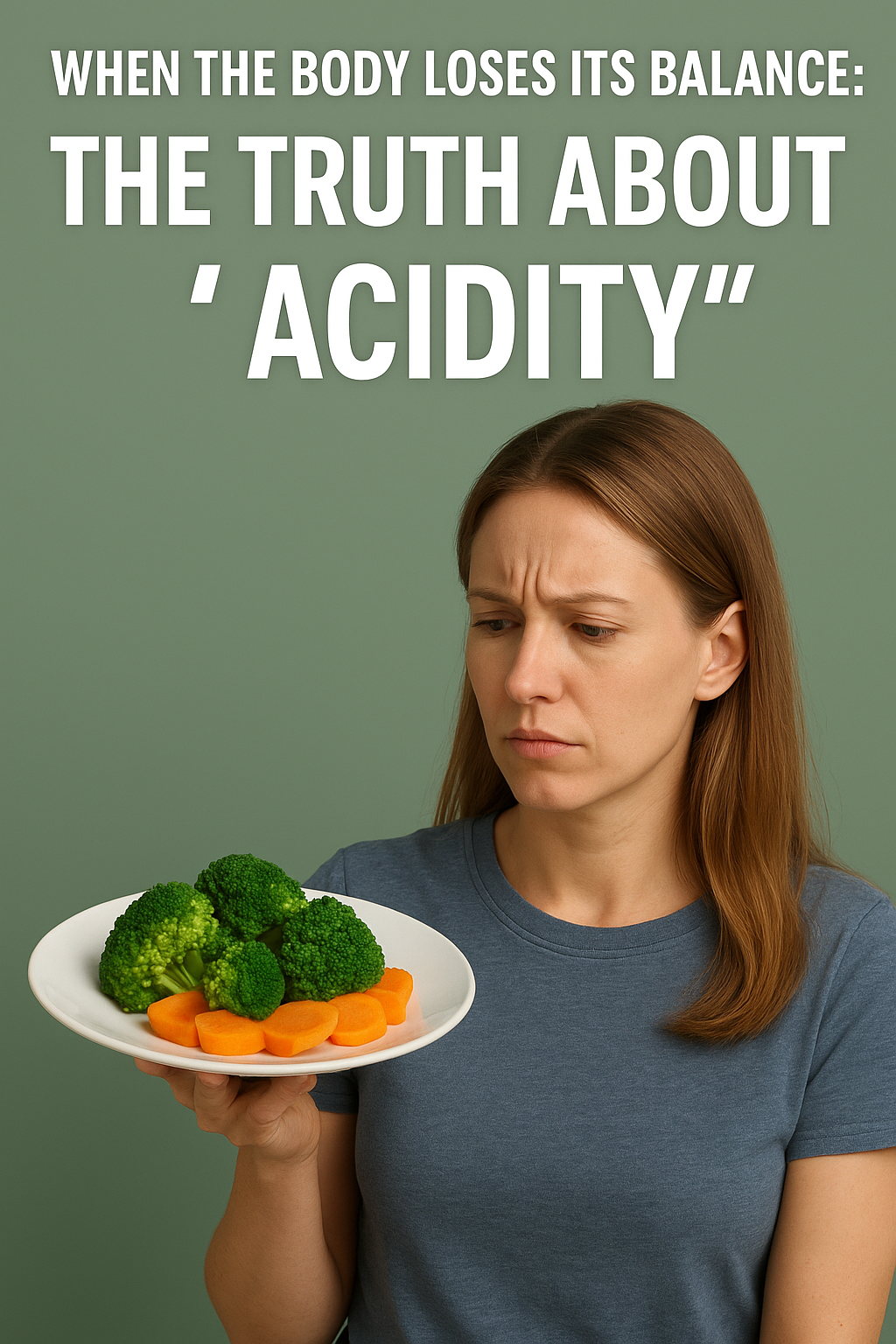


When the Body Loses Its Balance: The Truth About "Acidity" That Few People Know
expert, nutritionist
When the Body Loses Its Balance: The Truth About "Acidity" That Few People Know
Tiredness, heartburn, aching joints and frequent headaches are often blamed on an "acidic body." The real story is more nuanced. Your body is remarkably good at guarding its own pH, but what you put on your plate every day can still make a noticeable difference to how you feel.
Millions of people are convinced their body has "gone acidic." Search engines are full of acid–alkaline food charts, pH test strips sell by the thousands, and some of the world's most famous athletes swear by alkaline eating. Here's the twist few people know: your blood pH barely moves no matter what you eat. Still, the people who switch to an "alkaline" menu often do feel better. The reason is probably not the one they think.
Tom Brady's 80/20 Rule
Perhaps no one has made the alkaline diet more famous than Tom Brady, the quarterback who kept winning Super Bowls well into his forties. In his 2017 book The TB12 Method, he explained that he tries to keep "acidifying" foods such as white bread, white rice, cold cuts and yogurt to about 20 percent of his diet, as Boston.com reported. The other 80 percent is mostly vegetables, whole grains and legumes. Brady credits this way of eating with less inflammation and quicker recovery.
Nutrition experts have been more sceptical. A registered dietitian quoted by Fox News called the science behind the alkaline idea "sketchy" and explained that food does not meaningfully change the pH of your blood. Many of the same experts also agree that a diet made up of four-fifths vegetables is excellent. The plate works; the explanation is what's debatable. That is the thread running through this whole article.
What "Acidity" Really Means
Popular wisdom says that "acidification" of the body means your acid–base balance has been disturbed. The result is said to be weakness, irritability, tiredness, drowsiness, dry skin, dull hair, constipation or diarrhoea. These complaints are very real and very common. However, they have many possible causes, including poor sleep, stress, dehydration, low iron or magnesium, and digestive conditions. None of them is a reliable sign of an "acidic body" on its own.
Your blood pH normally sits in a narrow range of 7.35 to 7.45. Your kidneys and lungs work around the clock to keep it there. When blood truly does become too acidic, a condition doctors call acidosis (MedlinePlus, U.S. National Library of Medicine), the cause is usually a serious medical problem such as kidney disease, uncontrolled diabetes or a lung disorder, not a missing salad. That is a medical emergency, not a diet issue. Anyone who feels persistently unwell should see a doctor rather than rely on food charts.
So does diet matter at all? Yes, just in a different way. When food is metabolised, it leaves behind either an acid-forming or a base-forming residue. Scientists measure this with a score called PRAL (potential renal acid load), developed in the classic study by Remer and Manz in the Journal of the American Dietetic Association. Your kidneys handle that load, and the effect shows up mainly in the pH of your urine, not your blood. A review by Dr Gerry Schwalfenberg in the Journal of Environmental and Public Health concluded that the "alkaline diet" cannot change blood pH. The review also noted that eating more fruit and vegetables may still offer benefits, for example a better potassium-to-sodium balance.
Why Do We Feel Out of Balance?
The things most often blamed for "acidification" are a lack of physical activity, stress, a hectic pace of life and, of course, poor eating habits. That list is spot on, just not because of pH. Each of these factors on its own is linked to fatigue, poor sleep, digestive complaints and low mood. If you've ever noticed how a few bad nights affect your appetite and waistline, you'll recognise the pattern described in When you sleep too little, your belly grows.
A well-chosen diet can soften many of these everyday complaints. It's worth choosing foods rich in potassium, calcium and magnesium, minerals that most fruits and vegetables supply generously. Sodium is a different story. Most of us already get far more than we need, so there's no reason to seek it out. Magnesium deserves special mention: according to Cleveland Clinic, fatigue and weakness are among the early signs that intake may be too low. The NIH Office of Dietary Supplements lists leafy greens, legumes, nuts, seeds and whole grains as good food sources.
The original advice was to avoid eggs, meat, fish, cheese, grain products, fats and rice. These foods do have higher PRAL scores, but they also provide protein, vitamin B12, iron, omega-3 fats and energy. They are not the enemy. A better approach is balance: pair them with generous portions of vegetables. Be most careful with sweets, sugary soft drinks and alcohol, and keep coffee and strong tea moderate. Not sure how much sugar hides in your glass? Popcorn Beats Apples, and Sugar Beats Honey: 8 Nutrition Face-Offs That Flip Everything You Thought You Knew may surprise you.
One part of the old folk wisdom is absolutely right: "acidifying" foods are not the ones that taste sour. A lemon is sour on the tongue, yet it leaves an alkaline residue after it is metabolised. Meat and hard cheese taste anything but sour, yet they have a high acid load.
The List of Friendly Foods
The foods worth putting on your plate more often include buckwheat and millet, dairy products such as pasteurised milk, yogurt and a little cream, and almost all kinds of vegetables. Zucchini, spinach, eggplant, radishes, beetroot, broccoli, carrots, celery and tomatoes are especially good choices. Most fruit belongs on the list too, especially kiwi, watermelon, bananas, peaches, strawberries and raspberries. A note on raw (unpasteurised) milk, which some traditional lists recommend: the U.S. Centers for Disease Control and Prevention (CDC) warns that it can carry harmful bacteria, so pasteurised milk is the safer choice.
The World Health Organization recommends at least 400 grams (about five portions) of fruit and vegetables a day. Late summer and early autumn make that easy, as described in August Is Nature's Richest Table — Here's How to Use It to Feel Your Best.
What About Heartburn and Bloating?
Here the word "acid" is actually accurate, but it refers to your stomach, not your whole body. Your stomach is supposed to be very acidic, with a pH of around 1.5 to 2, because it needs that acid to digest food. Heartburn happens when some of that acid flows back up into the oesophagus. It does not "settle into your cells," as some articles claim.
Common triggers include large, fatty or fried meals, alcohol, chocolate, coffee, mint, citrus and spicy dishes, although triggers vary from person to person, as Healthline explains. Harvard Health Publishing suggests smaller, lower-fat meals and fresh herbs instead of heavy spices. Interestingly, many foods from the "friendly" list above, such as bananas, oats, green vegetables and lean protein, are also gentle on a sensitive stomach. If bloating is your main complaint, take a look at Get Rid of Bloating and Excess Water.
Frequent heartburn, more than twice a week, difficulty swallowing or unexplained weight loss are reasons to see a doctor. These symptoms deserve a proper diagnosis, not just a menu change.
What About Joint Pain, Gout and Other Complaints?
Articles about "acidity" often link it to joint and muscle pain, headaches, fungal infections, gallstones, asthma, arthritis and gout. Each of these conditions has its own causes, and none has been proven to come from an "acidic body." Gout is the closest connection: it involves uric acid crystals, which a diet heavy in red meat, organ meats, beer and sugary drinks can make worse. Even then, the key factor is uric acid, not blood pH, and treatment belongs with a doctor.
As for cancer, which some websites tie to "acidity," a systematic review in BMJ Open found no reliable evidence that dietary acid load or alkaline water causes or prevents it.
Can We Avoid "Acidity" by Skipping Sour Foods?
Not at all! What we need is balanced food: plenty of plants, enough protein, whole grains and healthy fats. Human blood pH normally stays between 7.35 and 7.45, and your body will keep it there either way. Many of us simply eat too many ultra-processed, sugary and salty foods and too few vegetables. Fixing that is what actually helps. Remember, too, that even "healthy-sounding" choices can let you down. A salad drowned in creamy dressing is a good example, as explained in When salad isn't healthy, and coffee isn't what you think.
A few simple, realistic steps:
- Fill half your plate with vegetables at lunch and dinner.
- Swap sugary soft drinks for water, mineral water or unsweetened herbal tea.
- Keep meat portions moderate and pair them with salad or cooked greens.
- Snack on fruit, nuts or yogurt instead of sweets.
- Move every day, even a brisk 20-minute walk counts, and protect your sleep.
And Finally, the Famous Pickle Test
An old folk saying claims that if you suddenly crave pickled cucumbers, your body isn't "acidic." It's a charming piece of kitchen wisdom, but science doesn't back it up as a diagnostic tool. A craving for pickles is more likely about salt, flavour or simple habit. Enjoy the pickle, then check whether today's plate held enough vegetables. That's a test that really means something.
Information on this website is for educational purposes only and is not medical advice.
expert, nutritionist
 Would you like to be informed about news on the website?













|

