





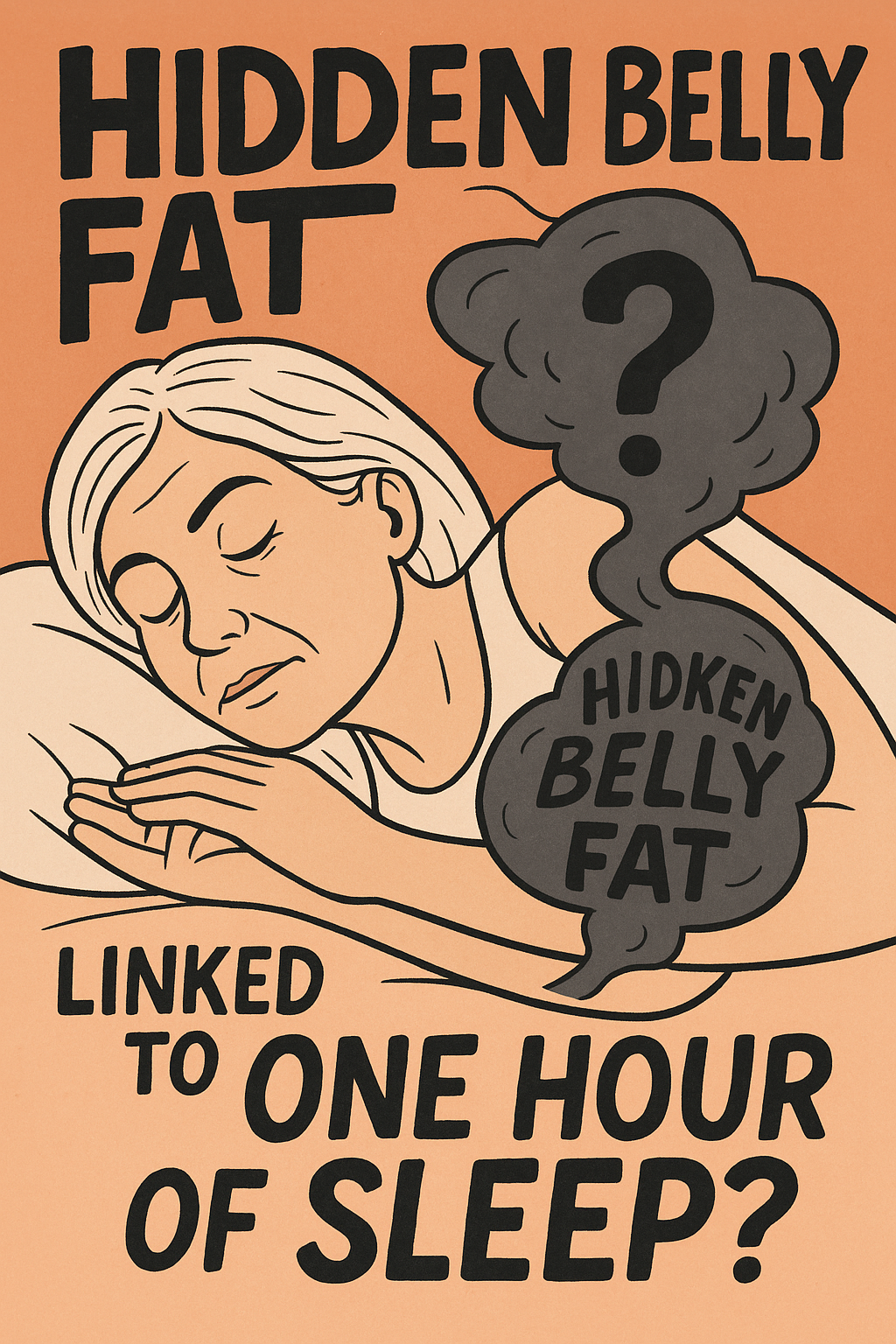
Beer Belly Without the Beer: How Losing Just One Hour of Sleep a Night Is Linked to Hidden Belly Fat
expert, nutritionist
You can skip the beer, count every calorie and still watch your waistline slowly grow. The reason may not be on your plate at all. It may be on your pillow. As unbelievable as it sounds, too little sleep can be linked to a "beer belly." Beer isn't the cause. The fat builds up deep inside your abdomen, where you can't see it.
Few people have learned the cost of skipping sleep as dramatically as media entrepreneur Arianna Huffington. In 2007, after months of working 18-hour days on very little rest, she collapsed from exhaustion at her desk, hit her head and broke her cheekbone. The experience changed her life. She became one of the world's best-known advocates for sleep, wrote the bestseller The Sleep Revolution, and later founded Thrive Global, a company devoted to well-being and preventing burnout. Her message is simple: sleep is not a luxury. It is a foundation of health, and science increasingly agrees.
This hidden fat is called visceral fat. It accumulates around your internal organs: the heart, liver and pancreas. You can't always see it from the outside, yet researchers consider it one of the more concerning types of body fat. According to Johns Hopkins Medicine, excess visceral fat is associated with a higher risk of type 2 diabetes, heart disease, stroke and certain other health problems.
Why Is Sleep Connected to Belly Fat?
A study published in the journal Sleep Medicine examined how sleep duration relates to where the body stores fat. The researchers found a clear pattern: people who slept less tended to have more visceral fat. On average, each hour less of nightly sleep (for example, seven hours instead of eight) was associated with roughly 12 grams more visceral fat. This held true even after the researchers accounted for age, body weight, total body fat, calorie and alcohol intake, and sleep quality.
Twelve grams may not sound like much. But visceral fat is metabolically active, and even small differences can matter. Interestingly, the link seemed to level off at around eight hours of sleep, which suggests there may be no additional benefit from sleeping much longer than that.
The study, "Shorter sleep duration is associated with greater visceral fat mass in US adults: Findings from NHANES, 2011–2014", analyzed data from 5,151 adults aged 18 to 59. The data came from the US National Health and Nutrition Examination Survey (NHANES), collected between 2011 and 2014. Body fat was measured precisely with DXA scans. It is important to note that this was an observational study. It shows an association, not proof that short sleep directly causes belly fat. Still, it fits well with other research.
For example, a controlled experiment at the Mayo Clinic, published in the Journal of the American College of Cardiology, restricted healthy young volunteers to four hours of sleep for two weeks. They ate more, and their visceral fat increased by about 11% compared with people who slept normally. We wrote about that experiment in detail in our article When you sleep too little, your belly grows.
Why Is Visceral Fat Such a Concern?
Unlike subcutaneous fat, which you can pinch (for example on your thighs or hips), visceral fat is hidden deep in the abdomen. There it surrounds the organs and releases inflammatory substances that can disrupt the body's balance.
One of the key terms here is insulin resistance. It means the body no longer responds properly to insulin, the hormone that regulates blood sugar. Over time, this can raise the likelihood of developing type 2 diabetes. Excess visceral fat is also associated with metabolic syndrome, a cluster of issues that includes high blood pressure, elevated blood sugar, unfavorable blood fats and excess weight around the waist. You can read more about it on the National Heart, Lung, and Blood Institute website.
Sleep also appears to matter for blood vessels. In 2023, the European Society of Cardiology reported a study published in European Heart Journal – Open. It found that people who slept less than five hours a night had a 74% higher likelihood of developing peripheral artery disease (a narrowing of the arteries, most often in the legs) than people who slept seven to eight hours. The researchers at the Karolinska Institute in Sweden concluded that seven to eight hours of sleep a night appears to be a good habit for vascular health.
Sleep Loss and Weight Gain: A Global Challenge
In 2023, the World Obesity Federation issued a stark warning in its World Obesity Atlas 2023. If current trends continue, more than half of the world's population (51%, over 4 billion people) will be living with overweight or obesity by 2035. Unhealthy diets and too little movement are well-known contributors. Many experts believe poor sleep also plays a role.
When you sleep too little, your hormones can fall out of balance. Levels of ghrelin (the hormone that stimulates appetite) tend to rise, and levels of leptin (the hormone that signals fullness) tend to fall. A well-known study published in PLoS Medicine observed exactly this pattern in people who habitually slept less. The result is that you may feel hungry more often and eat more than you need. That is why, after a sleepless night, so many of us reach for fast food, sweets and energy drinks. If you want to know which foods quietly work against you on such days, see our article Hello, and Fattening: Foods that Sabotage Your Diet.
Sleep Quality Matters as Much as Sleep Length
Many sleep scientists emphasize that the number of hours isn't the whole story. The quality of your sleep matters too. If you spend eight hours in bed but wake up several times a night, you may feel less rested than after a shorter stretch of deep, uninterrupted sleep.
Good-quality sleep generally means falling asleep fairly quickly, sleeping deeply and waking rarely. According to the Sleep Foundation, deep, restorative sleep stages are when much of the body's hormonal regulation takes place. That is one reason restful sleep is thought to support healthy weight management. If you regularly snore loudly, wake up gasping or feel exhausted despite a full night in bed, it is worth talking to your doctor. Conditions such as sleep apnea are common and treatable.
Folk Wisdom About Sleep
Our ancestors took sleep seriously. In the countryside, people used to say: whoever goes to bed before midnight lives longer. Today we know that it helps to follow the body's natural rhythm, known as the circadian rhythm. This is the body's internal clock, which regulates sleep, wakefulness and hormone activity. When you go to bed at the same time every night, your body finds it easier to stay in balance.
Traditional remedies for better sleep included a warm cup of chamomile tea, a honey drink or a glass of warm milk before bed. Today we would describe them as gentle, natural rituals that calm the body and prepare the mind for rest. The National Center for Complementary and Integrative Health notes that chamomile has long been used as a traditional sleep aid, although scientific evidence for its effects is still limited.
How Can You Improve Your Sleep and Support a Slimmer Waistline?
You don't need to buy expensive gadgets or pills right away. Simple, inexpensive habits are often enough:
- Try to go to bed and wake up at the same time every day, even on weekends.
- Switch off screens at least an hour before bed. As Harvard Health Publishing explains, blue light in the evening can suppress melatonin and disturb sleep.
- Enjoy a warm herbal tea before bed, such as mint, lemon balm or chamomile.
- Keep your bedroom dark, quiet and slightly cool.
- Avoid alcohol and heavy meals right before bedtime.
Many readers tell us that the "no screens after dinner" rule was the hardest one to adopt, and also the one that helped most. One reader described how she swapped late-night scrolling for a book and a cup of lemon balm tea. Within a few weeks, she said, she was falling asleep faster, waking up less often and no longer craving sweets every afternoon. Individual experiences vary, but small changes like these cost nothing to try.
Why Is It Worth Acting Now?
Visceral fat is not just a cosmetic issue. It is a genuine health concern. It builds up quietly at first, but over the long term it is associated with conditions that can affect both quality of life and longevity. Good sleep is one of the cheapest and most practical ways to support your health. The same goes for what you eat. Our article 5 Foods That Shorten Your Lifespan is a good place to start.
In summary: seven hours of sleep may sound like enough, but research suggests that around eight hours may be better for your waistline. If you do sleep less, make sure the sleep you get is high quality. Add some regular movement, a balanced diet and a little folk wisdom (tea, routine, rest), and you will be doing a lot for your body while lowering your chances of developing a "beer belly."
Sleep: The Remedy That Costs Nothing
People spend enormous amounts of money on diets, supplements and beauty treatments. Yet sleep remains one of the most underrated tools for health, and it is completely free. A good night's rest is an investment that may help your waistline, support your heart and sharpen your mind.
If you get enough good sleep, you may gain what the whole world is searching for: better health, less stress and a life with less dangerous fat around your organs.
Information on this website is for educational purposes only and is not medical advice.
expert, nutritionist
 Would you like to be informed about news on the website?














|

