




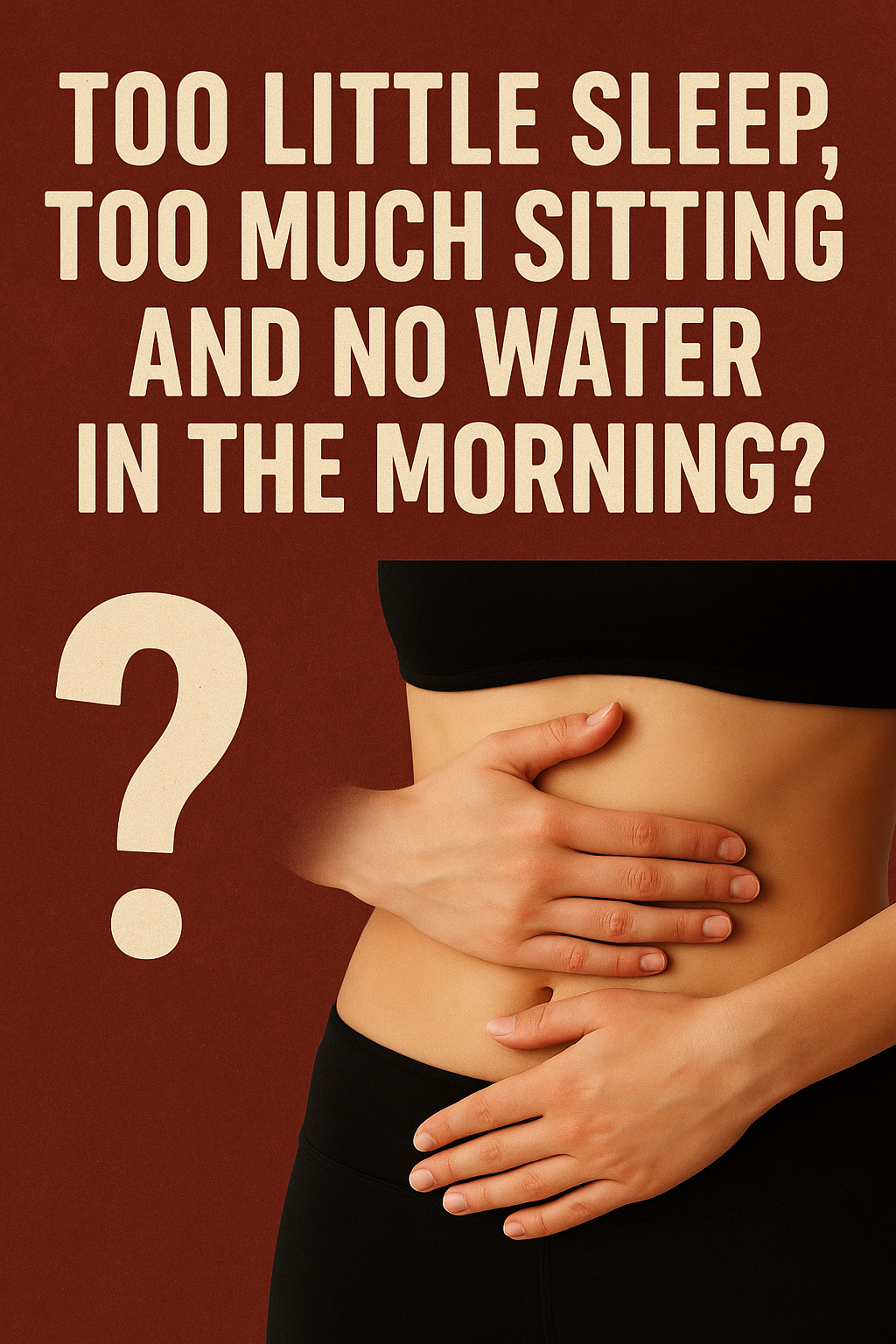


Too Little Sleep, Too Much Sitting and No Water in the Morning? You May Be Quietly Holding Your Metabolism Back
expert, nutritionist
Four hours of sleep a night, six nights in a row. That was all it took. In a well-known University of Chicago experiment, healthy young men handled blood sugar far less efficiently after less than a week of short sleep. Researchers said some of their test results looked more like those of much older people. The good news is that their results went back to normal once they caught up on sleep.
Lack of sleep has been shown to raise blood sugar levels, and it is only one of three everyday habits that can quietly slow your metabolism down.
The Night That Changed Arianna Huffington's Mind About Sleep
In April 2007, two years after launching The Huffington Post, Arianna Huffington collapsed at her desk from exhaustion. She had been working 18-hour days. She hit her head, broke her cheekbone and woke up on the floor of her office. After weeks of medical tests, the diagnosis was simple: exhaustion and lack of sleep. She has since called that moment her wake-up call. She made sleep a priority, wrote The Sleep Revolution and went on to found Thrive Global, a company focused on well-being and preventing burnout.
Most of us will never collapse at our desks. Still, many people know a milder version of her story. They feel tired by mid-afternoon, crave sweets and drink coffee after coffee. They feel heavy and bloated even when the scale hasn't moved.
Apart from food and physical activity, your metabolism is affected by three small-looking habits we repeat every day. They have a big influence on how the body works. These habits matter most in autumn and winter, when we move less, spend more time indoors and want our bodies to get as much as possible out of the food we eat.
1. Not Getting Enough Sleep
Most adults need between 7 and 9 hours of sleep, according to the National Sleep Foundation. Research shows that sleep is closely linked to how well the body processes sugar. In the University of Chicago study published in The Lancet (Spiegel, Leproult & Van Cauter, 1999), participants were limited to four hours in bed for six nights. According to the university's report, they took about 40 percent longer to bring their blood sugar back down after a glucose test, and their insulin response dropped by roughly 30 percent.
Simply put, less sleep often means higher blood sugar. One restless night now and then is unlikely to do lasting harm. But when short nights pile up, even over just a few days in a row, the effects become easier to measure. If your blood sugar is high even when you sleep well, talk to your doctor. Sleep is only one part of the picture.
Blood sugar isn't the only thing that changes. When you sleep too little, your body tries to adapt to the rhythm, and hormones that control appetite get thrown off balance. Research cited in our article 5 Evening Habits That Quietly Sabotage Weight Loss (Timing Isn't One of Them) found that short sleep lowered leptin, the "fullness" hormone, and raised ghrelin, the "hunger" hormone. It also increased cravings for calorie-dense, carb-heavy foods. That helps explain why short sleep is linked to weight gain. We cover this in more detail in When you sleep too little, your belly grows.
Some large studies have also looked beyond weight. A UK Biobank study of more than 300,000 adults, published in the Journal of Psychosomatic Research, found that people with the healthiest sleep habits had about a 20 percent lower risk of kidney stones than those with the poorest habits. These are observational findings that show a link, not proof of cause and effect. Still, they add to the growing evidence that sleep affects much more than mood and energy.
Practical tip: The Sleep Foundation notes that big swings in your sleep schedule can affect insulin sensitivity. Try to go to bed and get up at about the same time every day, weekends included. Even your sleeping position can affect how comfortable digestion feels. See 7 health benefits of sleeping on the left side.
2. Morning Dehydration
Morning dehydration is easy to overlook, yet it can make a real difference to how you feel at the start of the day. During the night, the body slows its metabolic processes, and for about 8 hours you take in no water at all. You keep losing water, though, through breathing, sweating and urine. Even while it works more slowly overnight, the body still needs water.
When you get up, your internal processes switch back to full speed. That's why it's a good habit to drink about 3 to 5 dl (roughly 1.5 to 2 cups) of water soon after waking. Many people say it helps them feel more alert, reduces bloating and makes it easier to avoid overeating at breakfast. There is some science behind this:
- In a study published in the Journal of Clinical Endocrinology & Metabolism (Boschmann et al., 2003), drinking 500 ml of water raised metabolic rate by about 30 percent for a short time, peaking 30 to 40 minutes later. Later studies found smaller effects, so think of this as a modest boost rather than a fat-burning trick.
- In a 12-week trial published in Obesity (Dennis et al., 2010), middle-aged and older adults on a reduced-calorie diet drank 500 ml of water before each main meal. They lost about 2 kg more than people on the same diet without the extra water, partly because they ate a little less at meals.
Water also supports your kidneys, which, together with the liver, do the body's real "cleaning" work. Your body doesn't need a special detox drink. It needs enough fluid so your organs can do their job. If you often feel puffy in the morning, you may also find useful tips in Get Rid of Bloating and Excess Water.
How much do you need over a whole day? The European Food Safety Authority (EFSA) considers a total daily water intake of about 2.0 litres adequate for women and 2.5 litres for men. That includes water from food and all beverages. As explained by the European Food Information Council (EUFIC), about 20 to 30 percent of it usually comes from food.
What about coffee? It's a good idea to drink water before your coffee. This isn't because coffee drains your body. A study in PLOS ONE (Killer, Blannin & Jeukendrup, 2014) found that moderate amounts of coffee hydrated habitual coffee drinkers about as well as the same amount of water. The reason is simpler: a glass of water first replaces the fluid you lost overnight, before caffeine and breakfast come into play. What you eat on an empty stomach matters too. See Why is it dangerous to eat these foods for breakfast, and for a more flavorful morning ritual, The Morning Cocktail That Wakes Up Your Metabolism: Can One Week Really Make Your Belly Feel Flatter?
3. Too Much Sitting
Many people sleep for 8 hours and then sit for the next 8, at a desk, in the car and on the sofa. Long periods of sitting or lying down slow circulation and digestion. They can contribute to bloating, and fluid may pool in the lower legs, causing swollen ankles by evening. Sitting still also means your largest muscles are hardly working. Those muscles normally help take sugar out of the blood.
For decades, the advice has been to get up regularly. Even school lessons are built around short breaks. Yet once we start working in offices, we often forget how important a few minutes on our feet can be. Newer research makes that advice much more specific:
- A study from Columbia University Irving Medical Center, led by Dr. Keith Diaz and published in Medicine & Science in Sports & Exercise (2023), found that a light five-minute walk every 30 minutes was the only schedule that significantly lowered both blood sugar and blood pressure in people who sat for eight hours. It also reduced blood sugar spikes after a large meal by 58 percent compared with sitting all day. Participants felt less tired and in a better mood, too.
- A 2022 meta-analysis in Sports Medicine (Buffey et al.) from the University of Limerick found that standing breaks helped somewhat. Light walking breaks helped clearly more with blood sugar and insulin after meals.
The practical takeaway is simple. Get up at least every 30 to 45 minutes and stand or walk for a few minutes. If you can't leave your desk, try a few slow squats or march in place. Walk to a colleague instead of sending a message, take phone calls standing up, or take the stairs. Better circulation means your brain gets a steady supply of oxygen and energy, and your metabolism can work more smoothly. A short walk after meals can also help with the "heavy belly" feeling described in Food that makes you fat, even if it does not fatten.
A Simple Daily Plan
- Evening: Aim for 7 to 9 hours of sleep and keep a regular bedtime, even on weekends.
- Morning: Drink a glass or two of water soon after waking, before your coffee.
- Daytime: Stand up every 30 to 45 minutes and walk for a few minutes, especially after meals.
None of these habits takes much time or money. Together, though, they can help your body make better use of the food you eat this autumn and winter.
Information on this website is for educational purposes only and is not medical advice.
expert, nutritionist
 Would you like to be informed about news on the website?














|

