





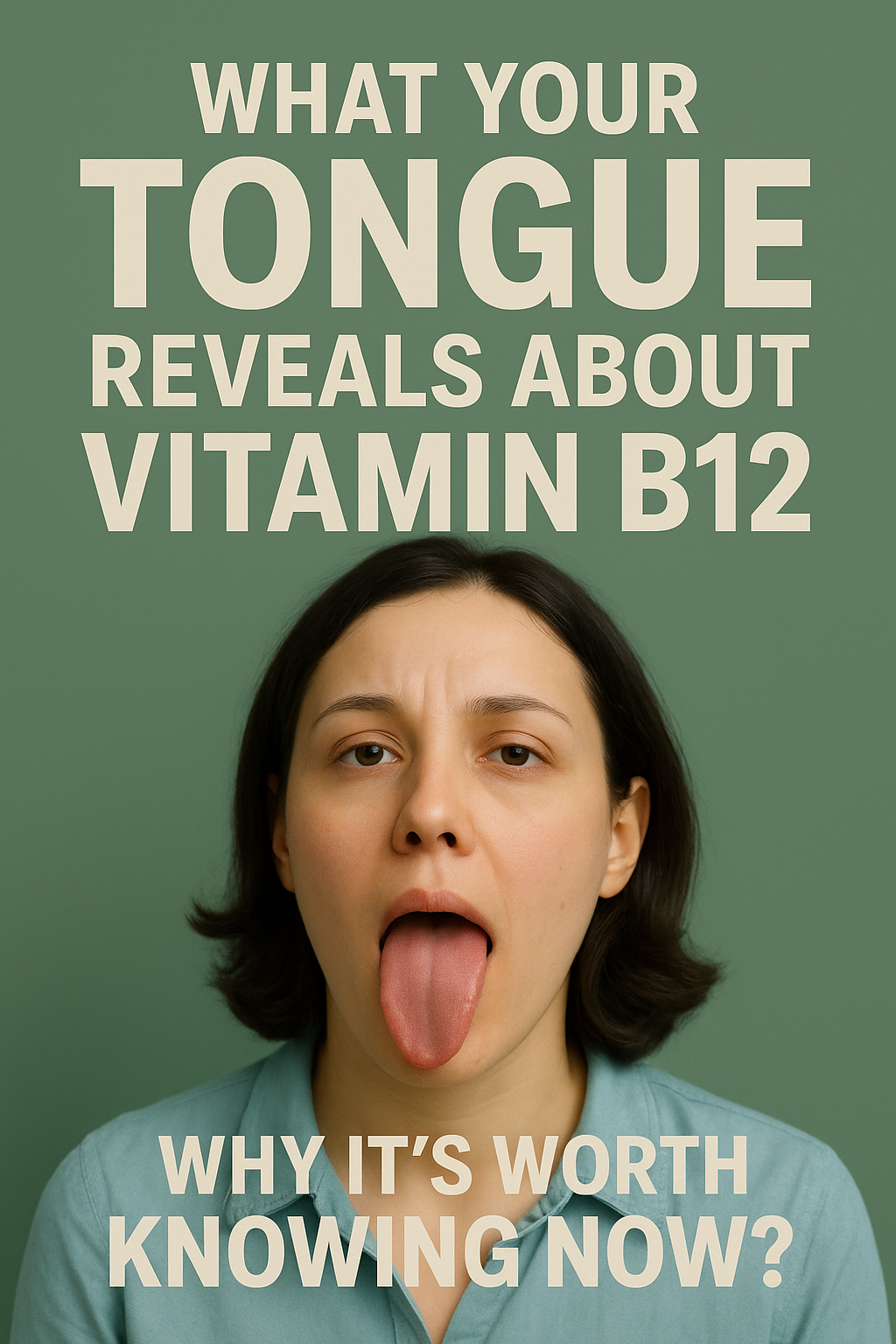

What Your Tongue Reveals About Vitamin B12 – and Why It's Worth Knowing Now
expert, nutritionist
Your tongue may notice it before you do. Long before tiredness becomes "normal", or tingling in your fingers becomes something you shrug off, the inside of your mouth can start showing small changes. A tongue that suddenly looks unusually smooth and glossy. Ulcers that show up every month. A burning feeling when you drink orange juice, or even plain water. These are easy to dismiss, but they can be early hints that your body is running short of one of its most important nutrients: vitamin B12. So it is worth paying attention to what your tongue, gums and the rest of your mouth are telling you.
One writer described her experience in an essay for SBS Food. For years she ate fish, eggs and dairy and assumed she was well covered. Then came exhaustion, muscle aches and a burnout so heavy that she felt like she was "dying". A blood test finally showed low B12. Years later, after she had switched to a fully plant-based diet, the problem came back as clumsiness, poor balance and brain fog. Her energy improved within weeks of treatment, but she now urges everyone to get their levels checked, whatever they eat. Another young woman told GB News that before her diagnosis she had extreme fatigue, dizzy spells, pins and needles in her hands and feet, and mouth ulcers whenever she felt run down. Stories like these come up again and again, and they all point the same way: B12 deficiency is easy to miss.
What We Know About Vitamin B12
Vitamin B12 matters for your blood, nerves, brain and heart, and even for fertility. When levels start to drop, many of us put it down to being tired or a bit low, so the early warnings get ignored. Harvard Health Publishing calls B12 deficiency "sneaky": it develops slowly, and its symptoms are easy to blame on other things.
How common is it? Estimates vary a lot depending on who is studied and how. According to the U.S. National Institutes of Health (NIH) Office of Dietary Supplements, B12 deficiency affects somewhere between 3% and 43% of older adults. The UK's National Health Service (NHS) reports that B12 or folate deficiency affects around 1 in 10 people aged 75 or over and about 1 in 20 people aged 65 to 74. Many people with low levels have no idea that this may be behind how they feel.
Unlike most vitamins, B12 isn't found in unfortified plant foods. It is made by microorganisms, and we get it almost entirely from animal foods: meat, fish, eggs and dairy products, plus foods that have had B12 added.
This vitamin is essential because it:
- helps form red blood cells, which carry oxygen around the body,
- protects the nervous system and helps nerve signals travel properly,
- takes part in making DNA,
- supports normal heart and blood vessel health, partly by helping the body process homocysteine,
- helps keep tiredness and poor concentration at bay.
When levels start to fall, the shortfall can build up quietly for months or even years. According to the NIH, the body stores roughly 1,000 to 2,000 times as much B12 as we usually eat in a day, mostly in the liver. That is why symptoms can take several years to appear, and why problems are often noticed late. The mouth and tongue are often among the first places to raise the alarm. Here are the hidden signs that are most often overlooked.
Hidden Signs of Low B12 That Are Easy to Miss
1. Mouth ulcers – small sores that can say a lot
Mouth ulcers (also called canker sores or aphthous ulcers) are small, painful sores on the tongue, gums or inner cheeks. Recurring ulcers are among the oral signs the NHS lists for vitamin B12 or folate deficiency, alongside a sore, red tongue.
WebMD notes that people usually blame ulcers on stress, acidic food or accidentally biting their tongue. That is often partly true. But low levels of nutrients such as vitamin B12, folate, iron and zinc are also on the list of possible triggers.
Research backs up the link. In a randomized, double-blind, placebo-controlled trial published in the Journal of the American Board of Family Medicine (Volkov et al., 2009), 58 people with recurring mouth ulcers took either vitamin B12 or a placebo every evening for six months. By the last month, about 74% of the B12 group were ulcer-free, compared with 32% of the placebo group. Interestingly, the benefit appeared regardless of people's starting B12 levels. This was a small study, so it is best seen as a promising finding, not a guaranteed fix.
If your ulcers are frequent, very painful, larger than about 4 mm, keep coming back every month, or don't heal within two to three weeks, it is sensible to see your doctor or dentist and ask whether your B12 and other nutrient levels should be checked.
2. A smooth, shiny tongue – a quiet signal that the papillae are disappearing
When B12 runs low, something unusual can happen: the tongue can literally become smooth. It loses the tiny bumps on its surface called papillae, which help you sense taste and grip food while you chew.
As the papillae shrink, the surface of the tongue can become:
- smooth,
- shiny or glossy,
- red, or occasionally a darker, purplish-red,
- tender or sore.
Doctors call this atrophic glossitis, meaning shrinking of the papillae on the tongue. It sounds alarming, but the most important thing to understand is that your body may be telling you, quite clearly, that it is short of a key nutrient. According to Cleveland Clinic, glossitis can have several causes, including low B12, low iron, infections and irritation, so a professional check is the best way to find out what is behind it.
A 2022 case-control study in BMC Oral Health (Chen et al.) compared 236 people with atrophic glossitis with 208 healthy volunteers. About 68% of the people with the smooth-tongue changes had low vitamin B12, far more than in the comparison group, and the link was strongest when the tongue was completely smooth. The researchers also reported that patients with low B12 responded well once their levels were corrected.
3. A swollen, burning or red tongue – when every bite stings
A sore, red and sometimes swollen tongue is one of the oral symptoms the NHS links to B12 deficiency. Many people also describe a burning feeling. The tongue can become so sensitive that spicy food, citrus fruit, hot drinks or even plain water sting. For some, this makes eating unpleasant, and it can turn into a vicious circle: a sore mouth leads to eating less, which can make nutrient gaps even bigger.
Low B12 is more common in older adults, so these mouth changes deserve particular attention in people over 60. They can, however, show up at any age.
Other Warning Signs Linked to Low B12
Low B12 can also bring a range of other symptoms. They are often blamed on the season, stress or simply getting older, but that isn't always the real explanation. According to the NHS and the NIH, they can include:
- long-lasting tiredness and lack of energy,
- pins and needles in the hands and feet,
- muscle weakness,
- blurred or disturbed vision,
- problems with memory and concentration,
- feeling confused,
- low mood,
- feelings of depression,
- a pale or slightly yellowish skin tone,
- being more forgetful than usual.
The NHS also points out that some nerve-related problems caused by long-term, untreated deficiency may not fully reverse. That is why it stresses the importance of diagnosing and treating it early. If you have been fighting constant fatigue with energy drinks or morning rituals like our Smoothie of Eternal Youth for the Tired, a healthy breakfast is a great start. If the tiredness simply won't lift, though, it is worth looking deeper.
Why Does B12 Run Low? Even If You Eat Meat...
Many people think only vegans and vegetarians run short of B12. In reality, a very common cause is poor absorption: the body simply can't get out of food what it needs. To absorb B12 from food, you need enough stomach acid and a protein called intrinsic factor, made in the stomach. When either is in short supply, B12 can go unabsorbed even on a meat-rich diet. The Linus Pauling Institute at Oregon State University explains that this kind of "food-bound" malabsorption, along with the autoimmune condition pernicious anaemia, is among the most common causes of deficiency.
Low B12 is more likely to develop:
- in people over 50–60: according to the U.S. Institute of Medicine's Dietary Reference Intakes report, an estimated 10 to 30% of older people may have trouble absorbing the B12 naturally present in food,
- in people with stomach or bowel inflammation, coeliac disease or Crohn's disease,
- in people with pernicious anaemia, an autoimmune condition that blocks absorption,
- with some medicines: the NIH notes that long-term use of stomach-acid reducers (proton pump inhibitors and H2 blockers) and the diabetes drug metformin can lower B12 absorption,
- in people who eat little animal protein, or follow a vegan or largely vegetarian diet without fortified foods or supplements,
- after stomach or weight-loss surgery,
- in people who regularly drink a lot of alcohol or eat a very limited diet.
Gut health matters too, and not every product sold for "better digestion" helps. Our article 5 Supplements That Harm Gut Health looks at why a gentle, food-first approach is often the wiser route. If you take any of the medicines listed above long-term, please don't stop them on your own. Instead, ask your doctor whether a B12 check makes sense for you.
As Mayo Clinic points out, B12 deficiency can go undetected in people on a vegan diet. Fortified foods or a supplement are generally recommended for anyone who eats no animal products.
How Much Vitamin B12 Do You Really Need?
Official recommendations differ from country to country:
- The NHS sets 1.5 micrograms (µg) a day for adults, a minimum aimed at preventing deficiency.
- The U.S. NIH recommends 2.4 µg a day for adults.
- The European Food Safety Authority (EFSA) has set an adequate intake of 4 µg a day for adults.
For people over 50, the Institute of Medicine advises getting much of their B12 from fortified foods or a supplement. B12 in these forms isn't bound to food proteins, so it is easier to absorb when stomach acid is low.
A nutritionist's tip: the body can absorb only about 1–2 µg of B12 from a single meal before the absorption system is "full", according to the NIH. So it is smarter to include a modest B12 source in several meals across the day than to get it all at once.
Vitamin B12 is found in (approximate values based on USDA FoodData Central and the NIH):
- meat: beef provides roughly 2.5 µg per 100 g; liver is far richer,
- fish and shellfish: canned sardines provide around 8–9 µg per 100 g, and clams and oysters are among the richest sources of all,
- eggs: one large egg provides roughly 0.5 µg, mostly in the yolk,
- dairy products: a cup of milk provides about 1.3 µg, and a small pot of plain yogurt about 1 µg,
- fortified foods: some breakfast cereals, plant drinks and nutritional yeast flakes (check the label).
A note on folate: leafy greens such as spinach and pulses such as lentils and beans are excellent sources of folate (vitamin B9). Folate doesn't improve B12 absorption, but the two vitamins work closely together in making red blood cells and DNA, so a balanced diet should include both.
How You Can Help Yourself at Home
Traditional home cooking has long relied on nourishing foods whenever the body seems to be running low. Some of these habits fit well with what we know about B12 today. Others are better seen as comforting extras than as a source of the vitamin.
- Broths made with meat, bones and offal
Our grandparents simmered them for hours, and they are warming and easy to sip when the mouth is sore. Bones on their own aren't a reliable source of B12, though. The vitamin comes mainly from the meat and organ cuts, such as liver, heart or marrow-rich pieces. For B12, it is better to eat the meat from the pot than to rely on the broth alone. - Sardines in oil – a small B12 powerhouse
A typical can (about 120 g) provides roughly 10 µg of vitamin B12, several times the daily recommendation. Sardines are inexpensive, ready in seconds, and also give you omega-3 fats, calcium (if you eat the soft bones) and vitamin D. For more foods that combine these benefits, see The Sunshine Vitamin Without the Sun: 7 Foods That Help Top Up Your Vitamin D. - Homemade kefir or plain yogurt
Milk products naturally contain B12. Some studies, including a large Norwegian population study published in the American Journal of Clinical Nutrition (Vogiatzoglou et al., 2009), suggest that B12 from dairy may be absorbed relatively well. Plain kefir and yogurt also bring live cultures that support the gut. To learn more, read A Spoonful of Buckwheat, a Glass of Yogurt: The Old Central European Morning Ritual Science Is Starting to Take Seriously and Does Yogurt Really Work Miracles and Can It Also Harm You? - Fortified yeast spreads and nutritional yeast
Brewer's yeast and yeast extracts aren't natural sources of B12. Many fortified yeast spreads and nutritional yeast flakes, however, have B12 added. According to the NIH, a quarter cup of fortified nutritional yeast can provide anywhere from about 8 to 24 µg, depending on the brand. Always check the label. This is especially useful for people on a plant-based diet. - Avoiding foods that irritate a sore mouth
While you have ulcers or a sensitive tongue, it can help to limit vinegar, citrus fruit, spicy dishes, very salty snacks and crunchy foods such as nuts and crisps, which can irritate the lining of the mouth. Soft, lukewarm foods such as scrambled eggs, yogurt, soups and mashed vegetables are usually easier to eat.
A Simple 7-Day Self-Check (Not a Diagnosis)
If you would like to pay closer attention to how you feel, keep a short diary for a week and note:
- whether your tiredness is growing (note the time of day you start to feel worn out; if it keeps coming earlier, take note),
- whether mouth ulcers keep coming back (more than two a month),
- whether your tongue looks smoother, shinier or redder than usual, or feels sore or burning,
- whether you notice pins and needles in your hands or feet,
- whether it is harder to get up in the morning than it used to be,
- whether you forget things more often than usual.
This kind of diary can't confirm a deficiency. Many of these signs have other causes, from poor sleep and stress to low iron or thyroid problems. But if you tick several boxes, especially if you are over 50, eat little or no animal food, or take stomach-acid medication or metformin, it is a good reason to talk to your doctor. A simple blood test can show your B12 level, and doctors sometimes add other markers, such as methylmalonic acid or homocysteine, for a clearer picture.
Please see a doctor promptly if your tongue is very swollen, if you have trouble swallowing, if you notice changes in your vision, numbness, problems with balance or confusion, or if symptoms don't improve within a couple of weeks.
If a deficiency is confirmed, treatment depends on the cause. It may include B12 tablets, dietary changes, or, especially when absorption is the problem, B12 injections. According to the NHS, many symptoms improve with treatment, usually over a period of weeks.
Listen to Your Body, Adjust Your Plate and Keep It Simple
The mouth, tongue and gums are often among the first places to show that something is missing. Ulcers, a smooth tongue or a burning feeling are not always "just one of those things". Sometimes they are your body's way of asking for a closer look, and low vitamin B12 is one possibility worth checking. By paying attention to your symptoms, making a few sensible changes to your diet and talking to your doctor when signs persist, you can give yourself the best chance of feeling better.
Remember: vitamin B12 is one of those nutrients you shouldn't ignore, because it plays a part in the health of your nerves, heart, blood and brain. With more people eating fewer animal foods, more people taking long-term stomach-acid medication, and populations getting older, interest in B12 status has grown in recent years.
So look after yourself. A plate with a little fish, eggs or dairy, or reliable fortified foods if you are plant-based, can help you feel fresher, think more clearly and have more energy. And your tongue will thank you for it.
Information on this website is for educational purposes only and is not medical advice.
expert, nutritionist
 Would you like to be informed about news on the website?














|

