






More Than a Fruit: A Simple 3-Ingredient Banana Syrup That Soothes Coughs and Eases Bronchitis
expert, nutritionist
Multiple randomized controlled trials have put honey to the test against standard over-the-counter cough medicines in children {-15454}€” and the results keep turning heads. A 2026 systematic review and meta-analysis published on PubMed found that, after sensitivity analysis, honey significantly improved all measured outcomes {-15454}€” cough frequency, severity, bothersomeness, and sleep quality for both children and their caregivers {-15454}€” compared with placebo or no treatment. The authors concluded that honey's safety profile and low cost make it "a promising, low-risk alternative" to conventional antitussives for children. That's the science underpinning a remedy that Central European households have quietly relied on for generations: a simple warm cream of banana, honey, and water.
Why these three ingredients work together
Honey is the most research-backed element of this recipe. A 2023 systematic review in the European Journal of Pediatrics found low-quality evidence that honey may be more effective than cough medication or placebo at relieving symptoms and improving sleep in children with acute cough. It acts as a demulcent {-15454}€” a substance that forms a soothing protective film over irritated mucous membranes {-15454}€” while its well-documented antimicrobial properties add another layer of support. As covered in the Foodwhisper piece Novak Djokovic Starts His Morning With It {-15454}€” And So Does Almost Every Kitchen in Europe, choosing raw, minimally processed honey matters: heavy pasteurization can destroy many of the beneficial plant compounds responsible for these effects.
Banana contributes its own quiet power. Bananas are rich in potassium, which helps maintain proper fluid balance and may assist in thinning mucus, making it easier to clear from the airways. Their soft, starchy texture also creates a naturally thick consistency that coats and protects an irritated throat in much the same way a clinical demulcent would. Beyond the throat, bananas contain tryptophan {-15454}€” a precursor that the body converts into serotonin, the neurotransmitter linked to relaxation and mood {-15454}€” which may partly explain the calming feeling many people report after a warm bowl of this preparation.
Warm water rounds out the trio. Hot liquid helps reduce irritation, dryness, and mucus in the throat, and staying well hydrated is fundamental to loosening congestion in the airways. Letting the boiled water cool to a safe temperature before adding honey is important: excessive heat damages honey's beneficial compounds, which is why the recipe calls for adding honey only after the mixture has had time to cool.
Ingredients
- 2 ripe bananas
- 2 tablespoons of honey (raw or minimally processed, ideally)
- 400 ml (about 1{-15486}ž cups) of water
Preparation
- Bring the water to a boil and let it bubble for about 3 minutes.
- While the water heats, mash the bananas thoroughly with a fork or spoon until you have a smooth pur{-15230}Še. Use a wooden or plastic utensil {-15454}€” metal can react with both banana and honey and affect the taste.
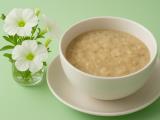
- Pour the hot water over the mashed banana and stir well to combine.
- Leave the mixture to stand for at least 30 minutes, until it has cooled to a warm {-15454}€” not hot {-15454}€” temperature.
- Once cooled, stir in the honey. Adding it only at this stage preserves its beneficial compounds.
How to take it
Divide the full batch into four equal portions (roughly 100 ml each). Drink one portion every four hours during the day {-15454}€” there's no need to wake up during the night. With consistent use over a few days, throat irritation and coughing typically ease noticeably.
One important note: make a fresh batch every day. Like most whole-food preparations without preservatives, it is best when freshly made and should not be stored overnight.
A word on expectations {-15454}€” and when to see a doctor
This preparation works well as a soothing home support for mild coughs, colds, and the early stages of bronchitis. Acute bronchitis often resolves with home treatment alone, and natural remedies like honey and warm liquids are a reasonable first step. However, Your Lungs Are Eating With You: 17 Everyday Foods That May Help Protect Your Airways from Inflammation is a useful reminder that food-based approaches support {-15454}€” but do not replace {-15454}€” medical care. If a cough is severe, lasts more than two to three weeks, produces discoloured mucus, or is accompanied by a high fever or breathing difficulty, please consult a healthcare professional. Honey should not be given to children under one year of age.
Other natural cough and throat remedies on Foodwhisper
If you enjoy exploring kitchen remedies for respiratory complaints, Foodwhisper has covered several others worth bookmarking:
- Horseradish rescues the respiratory system {-15454}€” volatile oils in horseradish penetrate deep into the sinuses, throat, and bronchi.
- Golden mixture against bacteria and viruses {-15454}€” honey and turmeric combined into a daily preventive remedy.
- Spread some bread with honey and cinnamon {-15454}€” check why {-15454}€” a traditional combination for colds, chronic coughs, and stuffy sinuses.
- Your Lungs Are Eating With You: 17 Everyday Foods That May Help Protect Your Airways from Inflammation {-15454}€” a broader look at everyday foods that may support respiratory health.
Information on this website is for educational purposes only and is not medical advice.
expert, nutritionist
 Would you like to be informed about news on the website?














|

