





A Danish Study Turns Everything You Believed About Body Weight Upside Down: Being Too Thin May Carry More Risk Than Being Slightly Overweight
expert, nutritionist
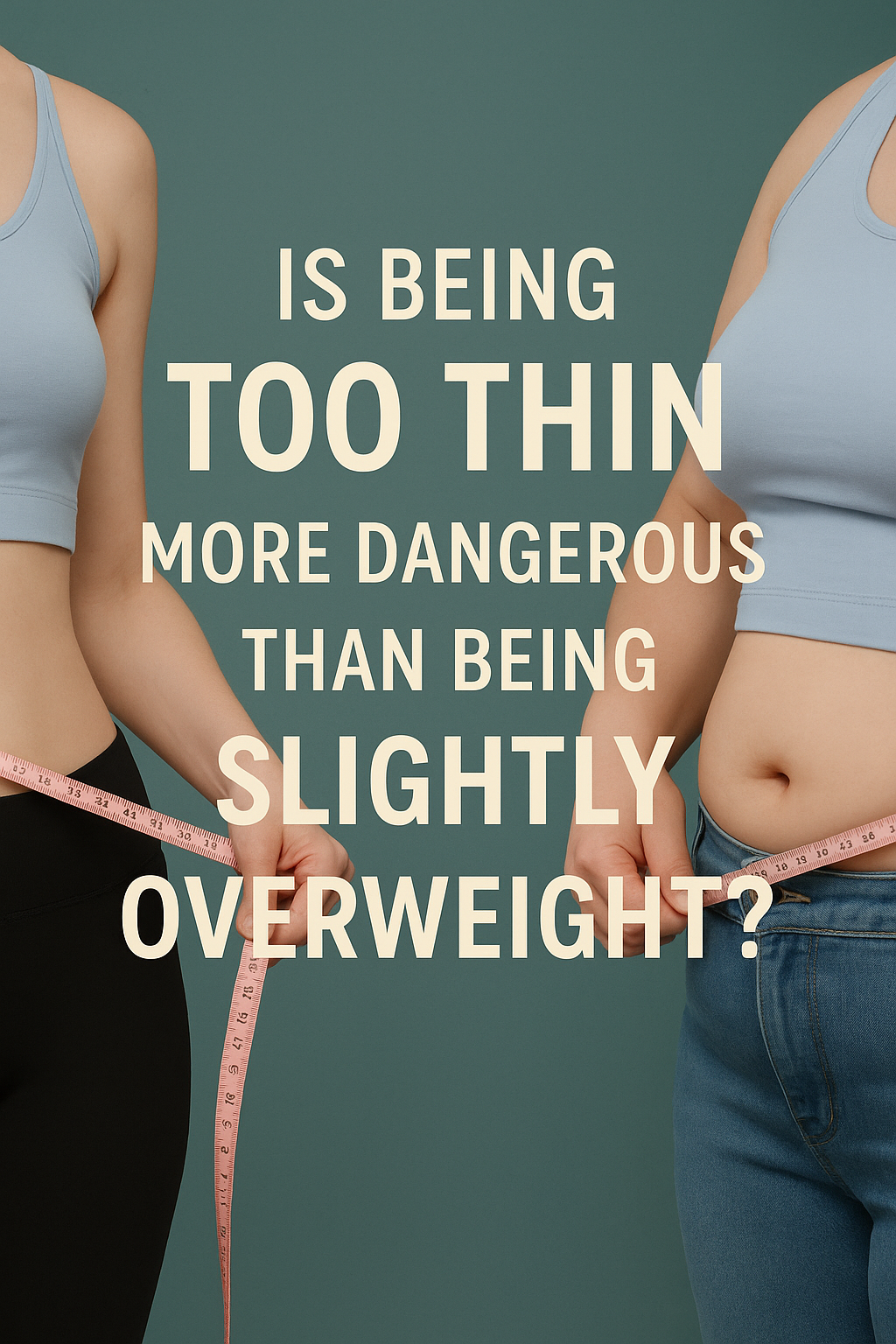
For decades we have been told the same thing: thinner is better. But a large study from Denmark tells a different story. Among nearly 86,000 people, those with a very low body mass index were about 2.7 times more likely to die during five years of follow-up than people at the upper end of the "normal" weight range. People who were moderately overweight did not appear to be at any higher risk at all.
Life isn't only about the numbers on the scale. It is about the whole picture: how we care for our body and what "reserve systems" it has to fall back on when times get hard. This recent research from Denmark offers a completely new perspective...
When "thin" stopped feeling like strength
Few people have explored the extremes of body weight as publicly as actor Christian Bale. For the 2004 film The Machinist, he went from about 81 kg to roughly 55 kg, and by his own account he was so thin that he could hardly walk up a flight of stairs. The filmmakers reportedly would not let him lose any more because of health concerns. Years later, after yet another dramatic transformation, Bale said he could not keep doing it, because he felt his "mortality" was "staring him in the face" (Men's Health Australia).
Most of us will never diet for a film role. Still, his story captures something the Danish researchers also observed: a body without reserves is a vulnerable body. Picture two neighbours in their late sixties. One is proud of being "as slim as at twenty". The other carries a few extra kilos but eats well, walks every day and has strong legs. When a bad flu season arrives, it is often the second neighbour who has more to fall back on.
What the Danish study found
Researchers from Steno Diabetes Center Aarhus and Aarhus University Hospital analysed health data from 85,761 people. A full 81.4% of them were women, and the median age at the start of the study was 66.4 years. Over the five-year follow-up, 7,555 people died, about 8% of participants. The results were presented at the annual meeting of the European Association for the Study of Diabetes (EASD) in Vienna (ScienceDaily: "Being too thin can be deadlier than being overweight, Danish study reveals").
Here is the key finding. People whose body mass index (BMI) was below 18.5, which is classed as underweight, were about 2.7 times more likely to die than the "reference" group with a BMI between 22.5 and 25. People with a BMI between 18.5 and 20.0 had roughly twice the risk of the reference group. Even those with a BMI between 20 and 22.5, which is still officially "normal", had about a 27% higher risk.
What is BMI? Body mass index is your body weight divided by the square of your height, expressed in kg/m². According to the World Health Organization, a BMI of 25 or more is considered overweight in adults, and 30 or more is considered obesity. A BMI below 18.5 is generally considered underweight.
On the other hand, people who were overweight (BMI 25–30) or had mild obesity (BMI 30–35) did not have a higher death rate than the reference group (BMI 22.5–25).
Only with more pronounced obesity (BMI 35–40) did the researchers see a modestly higher risk, about 23%. In the group with severe obesity (BMI 40 and above), the risk was more than double (News-Medical: "High BMI and obesity may not always increase mortality risk").
A note on context: this research was presented at a scientific conference. The participants were mostly older adults, mostly women, and people who were already having medical scans for health reasons. That means the findings may not apply equally to everyone, especially younger people. The study shows associations, not proof of cause and effect.
Thinness is not a synonym for health
When we hear the words "thin" or "slim", we often picture an ideal. The research suggests that this isn't necessarily so. If your body doesn't have enough reserves, it may struggle when challenges arrive, such as an illness or a dip in immunity.
The researchers partly explain this with a phenomenon called "reverse causation". Some people lose weight because of an illness, not the other way round. In those cases, low body weight may be a sign of a hidden problem rather than its cause.
The study's lead researcher, Dr Sigrid Bjerge Gribsholt of Aarhus University Hospital in Denmark, explains that both underweight and obesity are major global health challenges. She notes that underweight is tied to malnutrition, weakened immunity and nutrient deficiencies. She also suggests that the BMI range linked to the lowest mortality, once thought to be 20 to 25, may be shifting upward over time thanks to medical advances and better general health.
Thinness in itself is not always the main problem. The real issue is a state in which the body lacks enough energy, nutrients or support. We call this undernutrition: the body doesn't have enough building blocks (nutrients) to function normally and to maintain the immune system, repair tissues and keep hormones in balance. The WHO estimates that around 390 million adults worldwide were underweight in 2022, so this is far from a rare concern.
The hidden factor: visceral fat
The study's co-author, Professor Jens Meldgaard Bruun of Steno Diabetes Center Aarhus, also points to the importance of visceral fat. Visceral fat is fat tissue stored deep inside the abdomen, around the liver, intestines and other organs. It is not the fat under the skin that we can see and pinch. It sits inside the body, and it is much less visible.
Bruun describes visceral fat as very metabolically active and able to release substances that may harm metabolic health. Two people with the same BMI can therefore have quite different risk profiles, depending on where their fat sits.
A separate study published in the European Heart Journal ("Sex-specific body fat distribution predicts cardiovascular ageing") took this further. Led by scientists from the MRC Laboratory of Medical Sciences and Imperial College London, it analysed body imaging from more than 21,000 participants in UK Biobank. The researchers found that more visceral fat was associated with faster ageing of the heart and blood vessels, even in people with a normal or low body weight (ScienceDaily summary).
For example, men who store fat mainly around the belly (the "apple" shape) tended to show faster heart ageing. In women, fat stored more around the hips and thighs (the "pear" shape) appeared to be linked with a heart in better condition. In other words, it's not just how much fat we have, but also where we have it. The British Heart Foundation, which helped fund the research, notes that a healthier diet and more physical activity can help reduce visceral fat levels.
What this means and why it concerns all of us
Neither extreme thinness nor severe obesity guarantees a healthy, long life. The key is balance. A very low weight may be linked to higher risk, and so may very high weight. If your BMI is very low (below 18.5), it is worth finding out why, for example eating habits, poor appetite or an underlying health issue, ideally with your doctor.
Don't boast about slimness alone. Being slim but with little muscle mass, a poor diet or a lot of visceral fat is not the same as being healthy. If you are slightly overweight (BMI 25–30), that does not automatically mean poor health, but it is wise to pay attention to movement, diet and how your fat is distributed. Also check your body shape: are you more of an "apple" (more fat around the belly) or a "pear" (more around the hips)? With the apple shape, it pays to be a little more attentive.
Health authorities such as Australia's Better Health Channel also point out that waist circumference may be a better predictor of health risk than BMI alone, because BMI cannot tell fat from muscle.
Your diet should be balanced: enough protein, healthy fats and fibre. A simple visual guide such as the Harvard Healthy Eating Plate can help. Sleep and movement matter just as much. Both of them! If you'd like to know how rest affects your waistline, read When you sleep too little, your belly grows.
How to get started
Here are a few steps that don't require expensive equipment or specialised tests:
- A daily walk or light exercise (20–30 minutes): this isn't "training". It can be a walk with a friend, a stroll after lunch or some gardening. Regular movement on its own helps support healthy fat and muscle metabolism. The WHO recommends at least 150 minutes of moderate activity per week for adults.
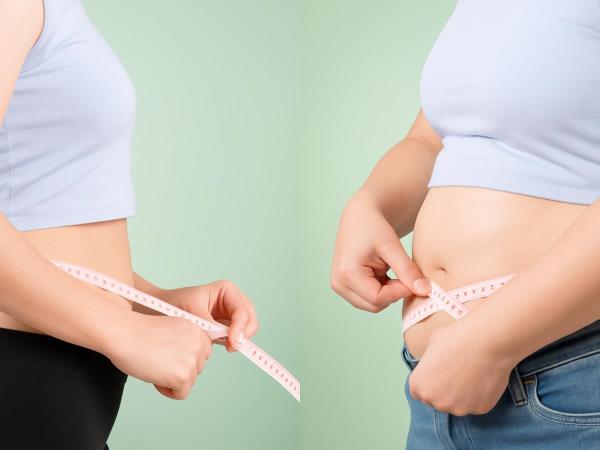
- A simple "where is my fat stored" check: after a bath or shower, stand in front of the mirror and notice where the softer areas are: around the belly or around the hips. If it's mostly the belly, it may be worth paying more attention to your lifestyle. Measuring your waist with a tape measure gives you an even clearer picture.
- Food that gives you energy: don't skip breakfast. Try, for example, oat flakes with nuts, or yoghurt with fruit. Lunch and dinner should include plenty of vegetables, whole grains, healthy fats (olive oil, avocado) and protein (eggs, fish, legumes). It also helps to know Why is it dangerous to eat these foods for breakfast and which Foods that Sabotage Your Diet.
- Do a "measurement" once a week: weigh yourself, measure your height and calculate your BMI (simply: weight in kg {-15433} height² in m²). For example, 60 kg at 1.65 m gives 60 {-15433} 2.72 = about 22. If your BMI is below 18.5, take note and consider talking to your doctor. If it's between 25 and 30, look at other factors as well, such as body shape and waist size.
- A feel for your health: listen to your body! If you've lost your appetite, have no energy or often feel tired for no clear reason, that is a signal worth taking seriously. With thinness, the background is often a nutritional gap or an underlying health issue. With higher weight, it is often a slower metabolism and unevenly stored fat. In both cases, a check-up with your doctor is a sensible first step.
Everyday food choices shape long-term wellbeing in quieter ways too. For more on that, see 5 Foods That Shorten Your Lifespan.
Frequently asked questions
Does this mean being overweight is healthy?
No. The study suggests that moderate overweight was not linked to a higher death rate over five years in this mostly older population. It does not mean extra weight has no effect on wellbeing. Severe obesity was still clearly linked to higher risk, and fat around the organs may affect heart health even when weight looks "normal".
Is BMI still useful?
Yes, as a quick starting point. But it doesn't show muscle mass or where fat is stored. Combining BMI with waist circumference and how you feel day to day gives a more complete picture.
What should I do if my BMI is below 18.5?
Don't panic, but don't ignore it either. Look at your eating habits and appetite, and talk to your doctor or a registered dietitian. They can help rule out underlying causes and plan nourishing meals.
Conclusion
Being "very thin" is not automatically a sign of excellent health. Likewise, "mild obesity" is not necessarily a sign of poor health. What matters is a balanced diet, regular movement and a good awareness of where fat sits in your body, how it is distributed, and whether you have enough muscle and energy.
If you keep a healthy relationship with your body, listen to science and use practical, homemade solutions, you will be much better placed on the path to a healthy and long life.
What matters is balance, not an obsession with the number on the scale.
Information on this website is for educational purposes only and is not medical advice.
expert, nutritionist
 Would you like to be informed about news on the website?














|

