





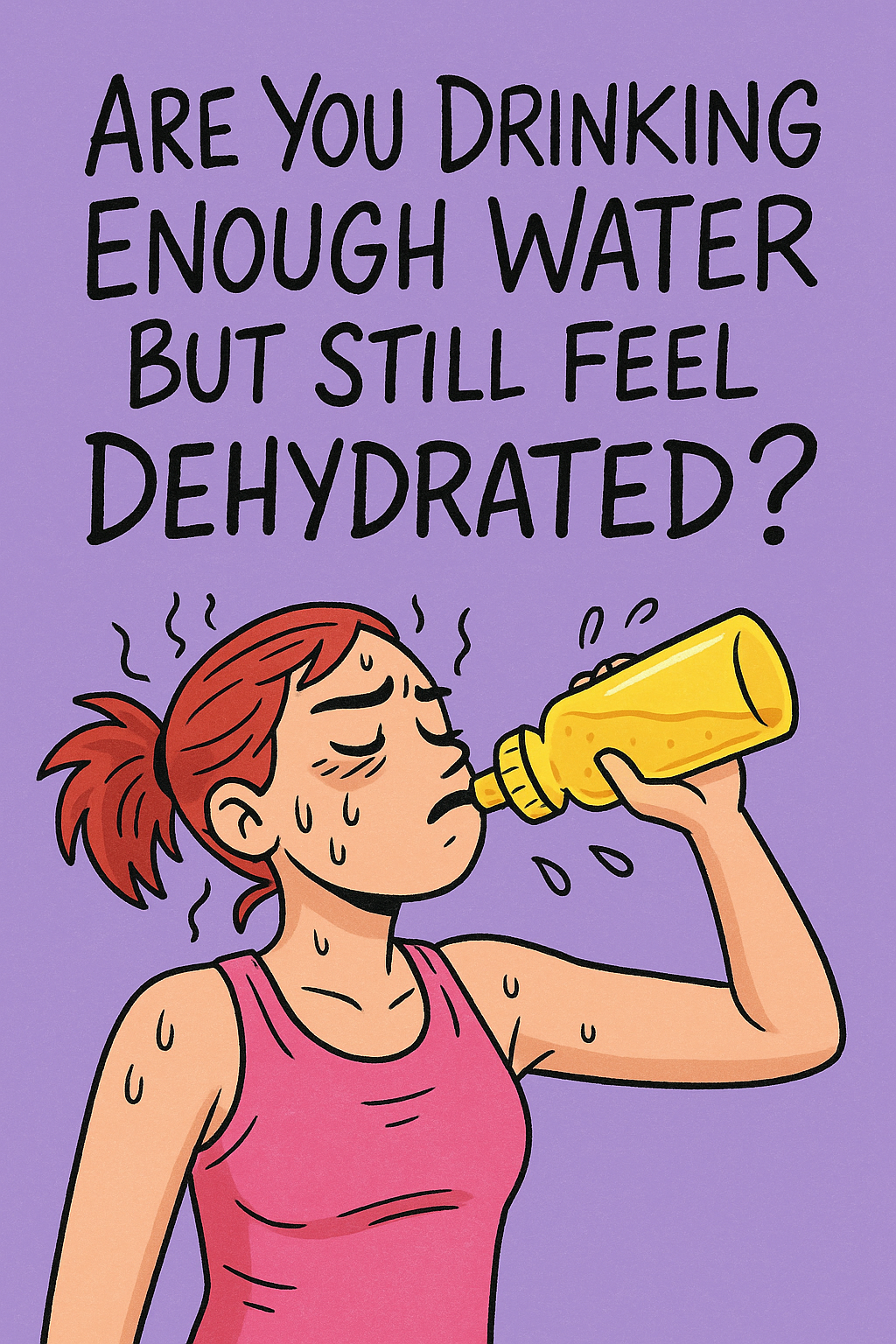
Are You Drinking Enough Water But Still Feel Dehydrated? Your Sleep, Your Sugar Habit — Even Your Flight — Could Be to Blame
expert, nutritionist
You drink your eight glasses. You carry a water bottle everywhere. And yet, some mornings, you wake up with a pounding head, a dry mouth, and a fog that no amount of coffee seems to lift. If that sounds familiar, the problem may not be how much you're drinking at all — it may be everything happening around your glass of water.
Country star Tim McGraw found this out the hard way. After a punishing stretch of international flights combined with an intense workout routine, he collapsed on stage in Ireland, later telling reporters the episode was brought on by "lots of flying and dehydration." He wasn't skipping water — his body was simply losing it faster than he could replace it. It's a dramatic example of something much smaller and much more common: dehydration that has nothing to do with forgetting to drink.
The human body isn't just a jug you top up throughout the day. It's a remarkably sensitive system where fluid balance is tangled up with sleep, food, environment, and daily habits. Dehydration happens whenever the body loses more fluid than it takes in — and that loss can be driven by factors that have little to do with how many glasses of water you actually swallowed.
Fluid balance is closely tied to overall wellbeing, and even mild, everyday dehydration has been associated with headaches, low energy, and trouble concentrating, according to resources compiled by the World Health Organization's water, sanitation and health program. Many people underestimate how often this mild, low-grade dehydration creeps in — simply because they assume that if they're drinking "enough," they must be fine.
The trickiest part of dehydration is exactly that: it's easy to miss, because we assume we're drinking enough. In reality, several other everyday factors quietly shape our fluid balance. Here are four of them — each backed by research — along with a few old-fashioned, low-cost home habits that may help.
1. Too Little (or Too Much) Sleep May Leave You Dehydrated
Sleep isn't just downtime for your brain. While you sleep, your body releases hormones that help regulate how long fluid stays in your system. One of the key players is vasopressin, a hormone that signals the kidneys to hold on to water. Skimp on sleep, and this hormonal signal weakens — which may mean your body lets go of fluid faster than it should.
A large study published in the journal Sleep, which analyzed urine samples and sleep habits from more than 20,000 adults in the United States and China, found that people who regularly slept around six hours a night were noticeably more likely to show signs of inadequate hydration than those who slept a full eight hours — while sleeping nine hours or more showed no clear hydration benefit either. In other words, both too little and, to some extent, irregular sleep can work against your fluid balance. It's a pattern that fits with what's already known about how skimping on sleep quietly reshapes the body, from appetite hormones to fat storage.
Folk wisdom got here first. In many Balkan households, it was — and still is — common to leave a glass of water or herbal tea on the nightstand, ready the moment you open your eyes. It's a simple habit, but it lines up nicely with the science: a glass of water first thing in the morning is a gentle, effective way to help your body catch up after a night of fluid loss.
2. Airplane Cabin Air: A Quiet Moisture Thief
If you've ever stepped off a long flight feeling as wrung-out as if you'd run a race, you already know this one. Airline cabins are pressurized environments with unusually dry, recirculated air — often sitting around 10-20% humidity, compared with a comfortable 40-60% in a typical room.
A review published in the journal Nutrients examined how the airline cabin's dry, low-pressure environment affects the body's fluid balance during long-haul travel, noting that the combination of dry air, immobility, and shifting fluid distribution in the body can meaningfully affect hydration status — showing up as dry skin, a scratchy throat, and heavier-than-usual fatigue after landing. Add jet lag, travel stress, and the occasional in-flight drink, and it's easy to see why so many travelers arrive dehydrated without realizing it.
Old-school travelers had their own trick for this: packing apples for long journeys. It wasn't just a convenient snack — an apple is roughly 85% water and comes with fiber and vitamins that support the body's fluid balance. Long before "hydration drinks" appeared in airport kiosks, simple fruit was doing a similar job.
A practical, modern version of the same idea: try drinking an extra half-liter of water the day before you fly, and go easy on alcohol and carbonated drinks once you're in the air. A warm cup of tea is often a gentler choice than a sugary soda from the drinks cart.
3. Sugar: The Sneaky Culprit That Pulls Water Out of Your Cells
Plenty of people assume that any drink — including a soda — counts toward their daily fluids. In practice, sugar works against you. When you take in a lot of sugar at once, your body tries to dilute the extra concentration in your blood by pulling water out of your cells, which can leave you thirstier and needing the bathroom more often.
Researchers writing in the American Journal of Physiology tested this directly: after inducing mild dehydration in rats, they let the animals rehydrate with either plain water, water sweetened with stevia, or a sugar solution matching a typical soft drink. The result, published in the journal's Regulatory, Integrative and Comparative Physiology section, was striking: the sugar-sweetened water left the animals more dehydrated and caused more kidney strain than either plain water or the stevia-sweetened option, even though they drank more of it overall. Translated to everyday life, the "fix" many people reach for when thirsty — a cold, sweet soda — may work against the very problem it seems to solve. This lines up with other research linking sugary soft drinks to a range of downstream health effects.
Some context on the numbers: a typical can of soda contains around 35 grams of sugar — roughly seven teaspoons. Health authorities generally recommend that adults keep added sugar under about 25 grams a day, so a single can can already push past that guideline, on top of its effect on fluid balance.
The old folk rule still holds up well: if you're thirsty, reach for water; if you want flavor, reach for fruit. Fruit brings natural sugars, but also plenty of water alongside them — watermelon is roughly 92% water, oranges around 86%, and even a pear comes in above 80%.
4. Alcohol: An Old Familiar Thief of Water
Alcohol is a diuretic, meaning it speeds up how quickly your body produces urine — so you lose more fluid than you take in. Once again, vasopressin is at the center of it: alcohol suppresses this hormone, so the kidneys hang on to less water and flush more of it away.
Registered dietitians commonly note that just a couple of glasses of wine can noticeably affect hydration, especially on an empty stomach — which helps explain why a night of drinking is so often followed by a morning headache and dry mouth: a mix of dehydration and the extra work alcohol gives your liver. This overlaps with points raised in coverage of why certain foods and drinks are risky choices first thing in the day, alcohol included.
According to the National Institute on Alcohol Abuse and Alcoholism (NIAAA), roughly one in six U.S. adults engages in binge drinking, a pattern strongly linked to short-term dehydration on top of its other, better-known risks.
A well-worn piece of advice holds up here too: for every glass of wine, have a glass of water. Following that simple ratio can meaningfully cut your odds of waking up parched. It also helps to pair alcohol with food — especially water-rich dishes like soups or salads — rather than drinking on an empty stomach.
How to Recognize Dehydration — and What to Try at Home
The signs of dehydration aren't always dramatic. Mild fluid loss can show up as a headache, trouble focusing, or simply feeling "off." In children, it may look like drowsiness or less interest in play; in older adults, it can present as confusion. Research among athletes has also shown that losing just a small percentage of body weight in fluid can noticeably affect physical performance — a reminder that even modest dehydration adds up.
You don't need an expensive electrolyte drink to help your body bounce back. A few simple, traditional options can go a long way:
- A glass of water with a small pinch of salt — sodium helps the body hold on to fluid.
- Homemade broth or soup — it delivers both water and minerals at once.
- Water-rich fruit — watermelon, cucumber, or berries are refreshing and hydrating, and pair well with the vacation-friendly, high-water foods covered in this roundup of hydrating warm-weather picks.
In India, a simple drink called "nimbu pani" — water with lemon, a pinch of salt, and a touch of sugar — has been used for generations as a homemade take on an electrolyte beverage. It costs almost nothing and does a surprisingly effective job.
Water Is Only Part of the Story
Dehydration is rarely just about how much water you drink. As we've seen, sleep, travel, everyday food choices, and alcohol can all tip the balance. Marketing for pricey "hydration formulas" would have us believe we need a special product to stay properly hydrated — but the truth is, most of what helps is already sitting in your kitchen. A glass of water, some water-rich fruit, and a decent night's sleep remain some of the simplest, most affordable tools available.
Above all, it helps to listen to your body. If you're feeling unusually tired, your mouth feels dry, or a headache won't quit, a hidden drain on your hydration could be part of the picture. And when in doubt, the oldest remedy in the book is still a good place to start: a glass of plain water.
Information on this website is for educational purposes only and is not medical advice.
expert, nutritionist
 Would you like to be informed about news on the website?












|

