


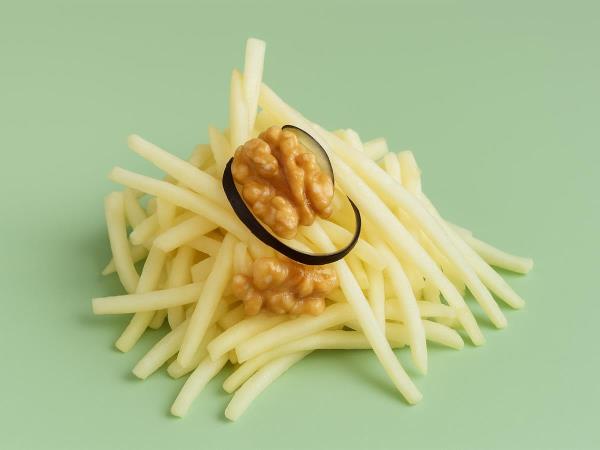
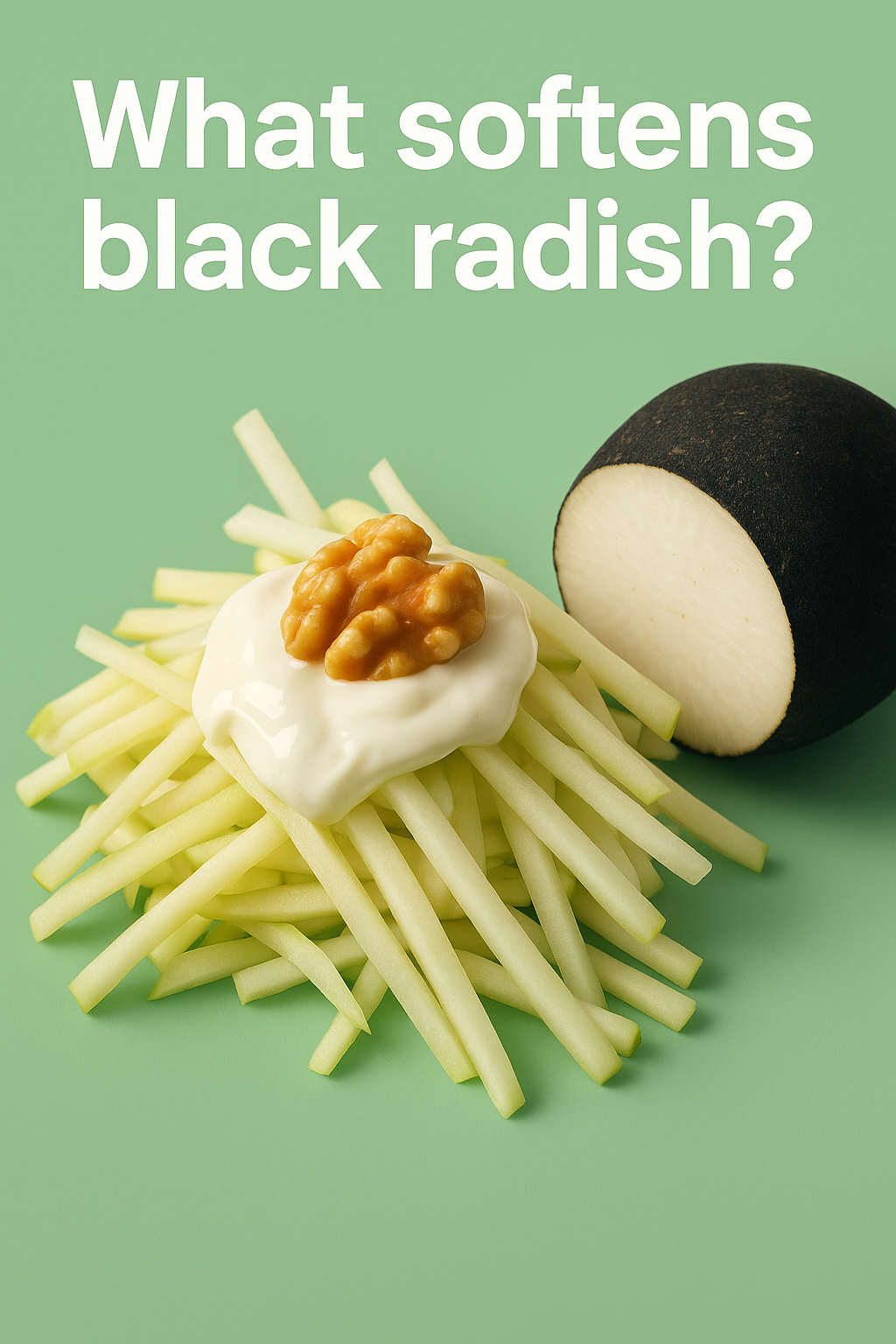


The Winter Salad That Surprises Everyone: How Tart Apple Turns Fiery Black Radish Soft and Gentle
expert, nutritionist
Most people walk right past it at the market. Dark, rough, almost charcoal-coloured on the outside, the black radish looks more like a lump of coal than something you would want to eat raw. Bite into one unprepared and you will understand why: it is the hottest, most pungent radish of them all. And yet, with one small trick and two humble partners — a sour apple and a spoonful of honey yogurt — that fiery root turns into one of the most pleasant winter salads you can make.
Even food professionals have struggled with it. A New York food writer once confessed in a lengthy piece titled Eat the Winter Radish that her early experiments with black radish — salads, mash, pickles and roasts — all turned out disappointing, until she discovered that blending it into a creamy, yogurt-style dressing finally made its sharpness enjoyable. That is exactly the idea behind this recipe.
On the other end of the spectrum is Farmer Lee Jones of The Chef's Garden, the Ohio grower who supplies some of America's best restaurants. When asked about his favourite vegetable, he likes to answer with a question — "What season is it?" — and in winter, the answer is often radishes, with the peppery, white-fleshed black radish among his top picks. Chefs agree: in Los Angeles, chef Jeremy Fox has served shaved black radishes on toast at his restaurant Rustic Canyon. Clearly, this old-fashioned root deserves a second look.
Why Black Radish Is Worth Getting to Know
The black radish (Raphanus sativus var. niger), also called Spanish black radish or Gros Noir d'Hiver, is a hardy winter vegetable and a member of the cruciferous family, alongside cabbage, broccoli and Brussels sprouts. According to The Nibble, it provides vitamin C as well as minerals such as potassium, magnesium and iron — welcome nutrients during the darker months when fresh local produce is scarce.
Its sharp taste comes from sulfur-containing plant compounds called glucosinolates. A study published in the Journal of Agricultural and Food Chemistry (Hanlon et al., 2007) found that black radish is especially rich in one of them, glucoraphasatin, which made up more than 65% of its glucosinolates. In traditional European and Mexican folk practice, black radish has long been associated with digestion and bile flow, and a review in Phytotherapy Research (Castro-Torres et al., 2013) discusses these traditional uses. It is worth noting, however, that most of this research was done in laboratory and animal settings, so black radish is best enjoyed simply as a flavourful part of a varied, balanced diet rather than as a remedy.
The Perfect Partners: Apple, Yogurt, Honey and Walnuts
What makes this salad work is balance. The tart apple brings juiciness and gentle sweetness that softens the radish's heat. Apples also contribute fibre, including pectin, and plant compounds such as quercetin, as described by the Harvard T.H. Chan School of Public Health's Nutrition Source.
The yogurt dressing rounds everything off with creaminess and a pleasant tang, while honey adds just enough sweetness to calm the radish's bite. Plain yogurt is a classic fermented food that many people enjoy as part of a healthy everyday diet (see Harvard's overview of yogurt). Walnuts, finally, add crunch, plant protein and healthy fats — they are an excellent source of the plant-based omega-3 fatty acid ALA, according to the International Tree Nut Council's Nuthealth.org, and nutrition experts at UC Davis Health point to research linking regular walnut intake with a healthier gut microbiome.
Combining crunchy vegetables with a creamy yogurt dressing and nuts is something we often recommend at Foodwhisper. If you enjoy this idea, you will also like Cabbage and Watermelon in One Bowl: The Combination Your Body Actually Craves This Fall, and our guide When Vegetables Become a Meal: What Is Salad Missing To Really Fill You Up, which explains why nuts, seeds and homemade yogurt dressings turn an ordinary bowl of vegetables into a satisfying meal.
Black Radish and Apple Winter Salad with Honey Yogurt Dressing
Preparation time: about 15 minutes | Serves: 3–4 as a side dish
Ingredients:
- 300 g black radish
- 1 large tart apple
- 100 g plain yogurt
- 1 tablespoon lemon juice
- 1 tablespoon mustard
- 1 tablespoon runny honey
- a handful of chopped walnuts (plus a few walnut halves for garnish)
Preparation:
- Peel the radish and cut it into very thin matchsticks. Sprinkle with salt and let it rest for a few minutes. This small step draws out some of the moisture and noticeably softens the radish's sharpness. If your radish is particularly fiery, you can briefly rinse it after salting — a tip also recommended by The Nibble — and pat it dry.
- Wash the apple and cut it into matchsticks as well, then add it to the radish. Toss gently so the apple doesn't brown.
- Add the honey, mustard, lemon juice and chopped walnuts to the yogurt and stir until smooth.
- Pour the dressing over the salad and mix gently.
- Garnish with walnut halves and serve.
Tips for the Best Result
- Choose the right apple: a tart, crisp variety such as Granny Smith, Boskoop or Jonagold gives the best contrast to the radish.
- Cut as thin as you can: the finer the matchsticks, the milder and more pleasant the radish tastes. A mandoline or julienne peeler makes this quick.
- Toast the walnuts: a minute or two in a dry pan brings out their aroma and makes the salad even more inviting.
- Serve fresh: the salad is at its crunchiest within an hour or two of preparation.
- Make it a meal: serve it alongside roasted potatoes, baked fish or a slice of whole-grain bread, or add some cheese for a light lunch.
What Readers Say
Many home cooks who try this combination for the first time are surprised. One reader told us she had avoided black radish since childhood because she remembered it as "too hot to eat," but after salting it and mixing it with apple and honey yogurt, her whole family asked for seconds. Another reader now makes a double batch in winter and keeps it on the table as a fresh, crunchy side dish next to heavier seasonal meals.
Looking for more ways to get through the cold months with simple, warming habits? Try our article Warm Water with Turmeric Against Winter Troubles.
A Few Words of Caution
Black radish is quite pungent, so people with a sensitive stomach may want to start with a smaller portion. Anyone with a nut allergy can simply leave out the walnuts or replace them with toasted pumpkin seeds. Honey should never be given to babies under one year of age, as advised by the U.S. Centers for Disease Control and Prevention. If you have a medical condition or follow a special diet, it is always a good idea to talk to your doctor or a registered dietitian before making major changes to your eating habits.
Information on this website is for educational purposes only and is not medical advice.
expert, nutritionist
 Would you like to be informed about news on the website?














|

