






Grandma's Wisdom Has a Name: Why Intuitive Eating Succeeds Where Diets Fail
expert, nutritionist
Here is a fact the diet industry would rather you didn't hear: when psychologists at the University of California, Los Angeles reviewed 31 long-term diet studies, they found that one third to two thirds of dieters eventually regained more weight than they had lost. The full analysis, published in American Psychologist, carried a blunt title: "Medicare's search for effective obesity treatments: diets are not the answer". Yet the alternative may be as old as our grandmothers: eat when you are hungry, not when you are sad.
Our grandmothers' secret was simple. They managed their weight without diets, without apps for counting calories or steps, and often without a bathroom scale. They lived actively, worked in the fields, walked everywhere and ate the way their bodies told them to. Today we would call this intuitive eating. It sounds like a complicated term, but in reality it means something very simple: listen to your body and give it food when it truly needs it.
This approach is not some new wisdom from the laboratory. It is the quiet voice of grandmothers who believed that we should eat when we are hungry, not when we are bored.
A Pop Star's Lesson: No Strict Rules, No Forbidden Foods
Taylor Swift talked about this back in 2010. In an interview with WebMD, she explained that during the week she kept her meals simple and light, with salads, yogurt and sandwiches and no sugary drinks, while on weekends she happily enjoyed comfort foods such as burgers, fries, ice cream and home-baked cookies. She said she did not like creating unnecessary rules, and she summed up her attitude in one memorable line: "I'm never cutting out what I love."
It is a heartfelt message that anyone can understand. If you love doughnuts, eat them. But eat them when you are hungry, not as a consolation prize after a stressful day.
Her story also has a more serious side, which makes her message even more meaningful. A decade later, in her Netflix documentary Miss Americana, Swift spoke openly about a period when negative body image led her to stop eating at times, and about how she now works on accepting her body. In the world of pop culture, where the pressure on appearance is enormous, it takes courage to remind people not to forget common sense. There is nothing wrong with following what our grandparents did: be moderate in everything, because extremes are never good.
What Is Intuitive Eating and Why Is It So Popular Today?
The term was coined by two registered dietitians, Evelyn Tribole and Elyse Resch, who described it in their book Intuitive Eating. Their framework is built on ten principles, from rejecting the diet mentality and honoring your hunger to respecting your fullness and practicing what they call gentle nutrition. As the University of British Columbia nutrition team points out, intuitive eating is not simply "eating whatever you want." It takes care, awareness and attention to recognize what your body is really asking for.
After the 2020 pandemic, when many people struggled with stress, anxiety and unhealthy habits, interest in natural ways of caring for our health grew enormously. On social media, the hashtag #intuitiveeating has become one of the most popular wellness topics. This is no coincidence. The world is tired of diets, rules, bans and the endless feeling of guilt with every bite.
The science is catching up. A large meta-analysis of 97 studies, published in the International Journal of Eating Disorders in 2021, found that intuitive eating is consistently associated with:
- a more positive body image,
- higher self-esteem,
- greater overall wellbeing,
- and fewer signs of problematic eating behavior.
The researchers note that most of these studies were cross-sectional, so more long-term research is still needed, but the overall picture is encouraging.
To put it even more simply: when we stop punishing the body and start listening to what it needs, the mind calms down, digestion often feels more comfortable, and food becomes something normal again instead of a battle. If you want to explore this idea further, read our article Diet without dieting and 2 kg less per week.
The Real Problem: We Eat When We Are Not Hungry
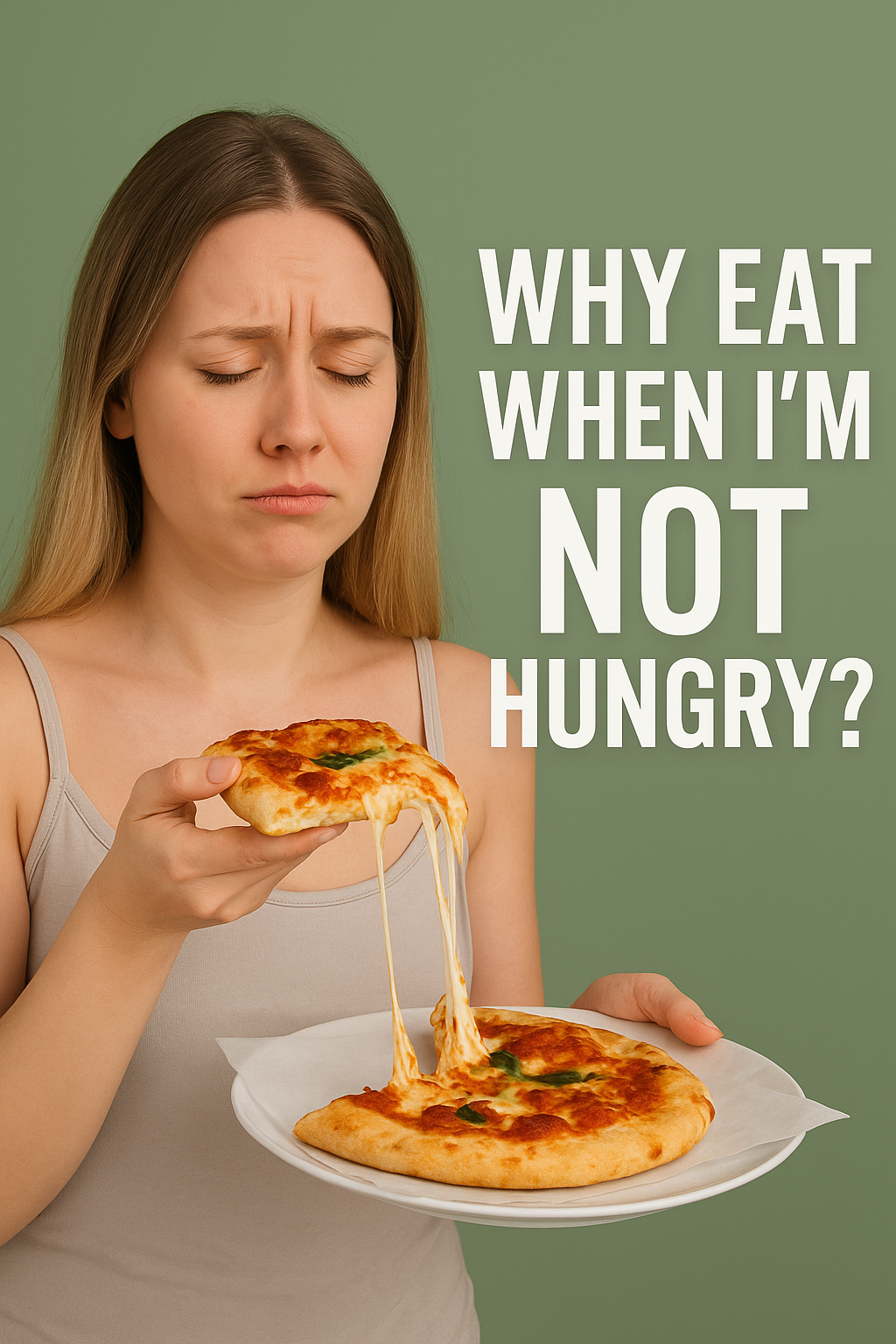
The main problem of today's world is that we eat when we are not hungry. Many of us eat because of emotions rather than hunger. We eat when we are sad, tired, nervous, scared or bored.
Physical hunger is something else. Experts at the Mayo Clinic Health System describe the key differences:
- Physical hunger builds gradually. You feel it in your stomach, you feel empty, sometimes slightly tired, and your stomach may start to growl. Almost any food will satisfy it, and once you are full, you can stop eating without guilt. In that moment, food truly helps.
- Emotional hunger comes on suddenly and lives in the head. We want one specific food, most often chocolate, chips or ice cream. Not because the body needs energy, but because we are looking for comfort. After eating, we often feel guilty... and that is a vicious circle.
Emotional eating tends to go hand in hand with poor sleep and a low mood, and the three can feed one another. If late-night cravings sound familiar, you may find our article When you sleep too little, your belly grows eye-opening.
How to Listen to Your Body, the Way Our Grandmothers Did
There is no magic formula. The key is calm and observation. Grandmothers would say: first a glass of water, then listen to your stomach. Signals of thirst and hunger can be surprisingly easy to confuse, so try this simple rule:
- When you feel like eating, ask yourself: am I hungry, or am I bored?
- Drink a glass of water (about 200 to 300 ml).
- Wait 10 minutes.
- If you are still hungry, eat. If not, your body did not need food.
It sounds childishly simple, but sometimes the best solutions are very simple.
Why Strict Diets Often Fail
Diets promise quick results, but the long-term numbers tell a different story. According to the UCLA research team, people on diets typically lose 5 to 10 percent of their starting weight in the first six months, yet many regain more than they lost within four or five years. Why? Because a diet is not a natural way of life. It feels like a punishment. And nobody can endure punishment for long.
Strict rules can also backfire in subtle ways: when we label foods as "forbidden," they often become even more tempting. Many "diet" foods can quietly work against us too, as we explain in Hello, and Fattening: Foods that Sabotage Your Diet.
When we listen to our body instead, we give it what it needs. No stress, no guilt, no resistance, no rewarding ourselves with food. Just normality.
How to Start Intuitive Eating at Home
The greatest advantage of this method is that it is free. You do not need to buy anything new, and you do not need apps, gadgets or supplements. Just a quiet mind and trust in your own body.
Steps:
- Do not eat while watching television or with your phone in your hand. A 2026 review of 50 studies in The American Journal of Clinical Nutrition found that eating while distracted tends to increase how much we eat later in the day, and passive distractions such as TV appear to have the clearest effect.
- Before a meal, take three slow breaths to calm your thoughts.
- Eat slowly and chew each bite about 15 to 20 times.
- Halfway through the meal, stop and check: am I still hungry?
- Grandmothers had a rule: eat until you are satisfied, not stuffed like a barrel.
Modern science supports the slow approach. In a study at the University of Rhode Island, published in the Journal of the American Dietetic Association, women who ate the same meal slowly consumed about 10 percent fewer calories, yet felt more satisfied at the end of the meal and said they enjoyed it more.
Old Folk Tips That Modern Science Takes Seriously
Traditional wisdom often has a grain of truth, so it is worth considering some of the old recommendations, always in moderation:
- Warm soup to start. A bowl of warm, light soup gently wakes up digestion. Research from Penn State University found that people who started lunch with a low-calorie, broth-based vegetable soup ate about 20 percent fewer total calories at that meal. Choose clear soups rather than heavy cream-based ones.
- Bitter teas. Bitter herbal teas, such as wormwood tea (wormwood is a plant with a bitter taste that is traditionally used to support digestion), have long been used to help regulate appetite. Use them occasionally and in small amounts: wormwood contains a compound called thujone, and sources such as WebMD's herbal database advise that it is not suitable during pregnancy. If you take medication or have a health condition, ask your pharmacist or doctor first.
- Apple cider vinegar before a meal. A spoonful of apple cider vinegar before a meal (always diluted in water!) has been used by older generations for better digestion. A small study at Lund University in Sweden, published in the European Journal of Clinical Nutrition, found that adding vinegar to a bread meal was linked to a gentler rise in blood sugar and a greater feeling of fullness. Drink it through a straw to protect your teeth, and skip it if you have a sensitive stomach or reflux. For more everyday foods we often use the wrong way, see Foods We Use Incorrectly.
The home-grown logic is simple: slowly, moderately, and with respect for food. And if your stomach often feels heavy after meals, you may also enjoy Get Rid of Bloating and Excess Water.
When Food Is a Joy, Not an Enemy
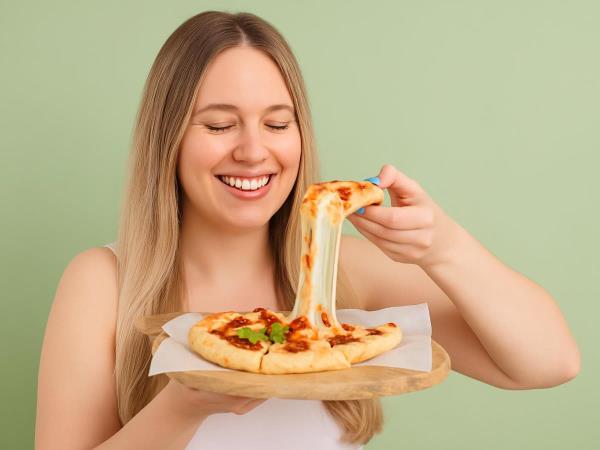
Intuitive eating is not an excuse to eat pizza and ice cream every day. It is an invitation to rediscover true hunger, the right amount, and genuine respect for our bodies. To eat local, seasonal, warm, homemade food. To let food become a gift, not a problem.
And if food feels like a constant battle, or eating causes you ongoing distress, there is no shame in asking for help. A registered dietitian or your family doctor can help you find a balanced approach that suits you.
Information on this website is for educational purposes only and is not medical advice.
expert, nutritionist
 Would you like to be informed about news on the website?











|

