




Boiling Water Twice: Should You Really Worry?
expert, nutritionist
Every day, millions of people top up the kettle with leftover water and flick it on again. It's an easy habit {-15454}€” and one that sparks surprising controversy. The truth sits somewhere between "completely harmless" and "mildly worth thinking about," and understanding exactly where requires a quick look at what boiling actually does to water.
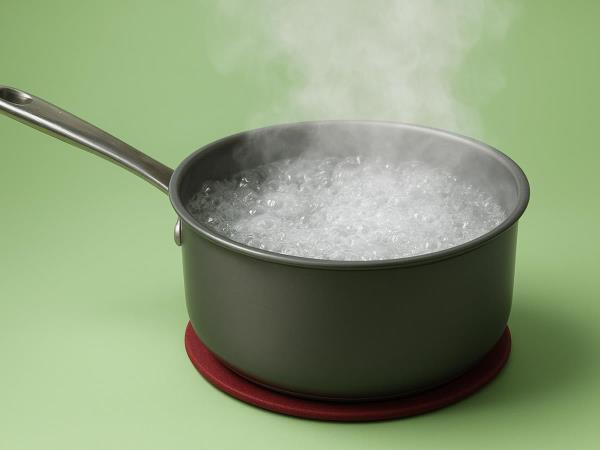
When water reaches 100 {-15486}{-15696}C, dissolved gases escape as steam and some volatile compounds evaporate with them {-15454}€” which is one reason boiled water is generally considered safer to drink than unboiled tap water. The CDC recommends bringing water to a rolling boil for one minute before consuming it, in order to kill protozoa, bacteria, and viruses. The problem is what doesn't leave with the steam: dissolved minerals and chemical compounds stay behind in a progressively smaller volume of water. When water boils, some of it escapes as steam, while anything dissolved in it {-15454}€” minerals and contaminants like arsenic or nitrate {-15454}€” remains behind in a slightly smaller volume.
The Core Chemistry of Re-boiling
Re-boiling drinking water, mineral water, and spring water does change its chemistry because the water contains other compounds. Each boiling cycle evaporates a small amount of water while leaving dissolved substances behind, so their concentration inches upward with every pass. Re-boiling tap water does concentrate minerals and other chemicals in the water. The critical question {-15454}€” the one most alarming headlines skip {-15454}€” is whether that concentration increase is enough to matter for health.
The honest scientific answer, backed by multiple independent analyses, is: almost certainly not, unless your tap water was already borderline contaminated to begin with. Re-boiling does not significantly increase the concentration of undesirable chemicals already in water, and there is generally no health risk if you boil water, let it cool, and re-boil it. A more detailed breakdown from water chemistry researchers confirms the numbers: reaching a level of concern at the EPA's maximum allowed arsenic concentration of 0.010 mg/L would require boiling away roughly 80 percent of the water in the kettle repeatedly {-15454}€” not just one extra pass. And for nitrates specifically, most research on boiling water containing nitrate found levels unchanged or slightly reduced.
So the nuanced take is this: the warning quietly assumes your water is already contaminated {-15454}€” for water that is already safe, re-boiling keeps it safe. The three substances most often cited in re-boiling warnings are nitrates, arsenic, and fluoride {-15454}€” and each deserves its own look.
1. Nitrates and Nitrosamines
Nitrates are naturally present in water at low levels, but they also enter groundwater from fertilisers, manure, and septic systems. An experimental study on the health risk of nitrates in repeatedly boiled water found that repeated boiling significantly concentrates nitrates, posing serious health risks {-15454}€” though this effect was most relevant in source water already carrying elevated nitrate loads. When nitrates are repeatedly exposed to high heat, one concern is their conversion to nitrosamines. Due to high temperature, nitrates can transform into nitrosamines, which are considered carcinogenic.
Nitrates in drinking water have been studied in relation to various cancers. The US National Cancer Institute's Division of Cancer Epidemiology and Genetics (DCEG) has published research linking drinking-water nitrate to elevated risks of colon, rectum, kidney, and bladder cancers, though it is important to note that these associations come from epidemiological studies and reflect long-term, high-dose exposure {-15454}€” not occasional re-boiling of clean tap water. The WHO reference level for nitrate in drinking water is set at 50 mg/L, a threshold that well-managed municipal water supplies in most developed countries stay well below.
2. Arsenic
Inorganic arsenic is a confirmed carcinogen and is the most significant chemical contaminant in drinking water globally. The WHO's arsenic fact sheet is unambiguous on the main route of exposure: contaminated water used for drinking, food preparation, and irrigation of food crops poses the greatest threat to public health from arsenic. Long-term exposure to arsenic from drinking water and food can cause cancer and skin lesions, and long-term exposure to inorganic arsenic mainly through drinking water and food can lead to chronic arsenic poisoning. Effects documented in humans include peripheral neuropathy, gastrointestinal symptoms, skin lesions, diabetes, renal effects, cardiovascular disease, and cancer.
Arsenic contamination of groundwater is widespread and there are regions where it represents a significant public health problem. WHO estimates that 140 million people in at least seventy countries have been drinking water containing arsenic above the provisional guideline value of 10 micrograms per liter. However, it is worth stressing that this is a problem of source water quality, not of domestic boiling habits. Boiling water does not remove arsenic {-15454}€” but re-boiling only meaningfully increases arsenic's concentration and health risk if the starting level is already elevated. If your municipal water meets regulatory standards, an extra boil cycle will not push arsenic into dangerous territory.
3. Fluoride
Fluoride behaves like arsenic in this context: boiling does not remove fluoride, and re-boiling increases its concentration levels and therefore the likelihood of adverse health effects {-15454}€” but only if baseline levels are problematic. The WHO has set a guideline of 1.5 mg/L fluoride as the permissible limit in potable water. Although fluoride at appropriate levels helps prevent tooth decay and strengthens bones, excessive fluoride in drinking water causes dental and skeletal fluorosis.
Children are the group most worth protecting here. Fluoride in drinking water at half the maximum allowed level or more may cause mottling of children's teeth, usually in children under nine years old. The cumulative properties of fluoride in the human body mean that prolonged exposure, particularly through drinking water, may result in adverse health consequences. This is a particular concern in regions where natural groundwater fluoride is high {-15454}€” not typically an issue in well-regulated European supplies, but worth verifying if you rely on a private well.
What About Calcium Build-up?
Repeated boiling of hard water also concentrates calcium salts, the same process that creates the white chalky scale inside your kettle. This is not a health concern with clean drinking water, although re-boiling hard water may lead to chalky white scale deposits inside the kettle and hot water heater. The original Slovenian article mentioned a possible link between concentrated calcium salts and kidney or gallstones if consumed in large quantities. The relationship between dietary calcium and kidney stones is more nuanced than it first appears {-15454}€” Foodwhisper has covered this in depth in The Surprising Reason Calcium Might Protect Your Kidneys. The short version: when calcium is consumed together with a meal, it can bind to oxalate {-15454}€” a compound found in many plant foods and a common building block of kidney stones {-15454}€” while both are still in the stomach and intestines. Concentrated calcium from water alone, in reasonable daily quantities, is unlikely to drive stone formation in healthy individuals.
Three Practical Things to Remember
- Your source water is what matters most. Re-boiling is not the real risk {-15454}€” what is already in your water is. If your tap water meets national drinking water standards, an extra boil changes very little. If you rely on a private well or live in an area with known groundwater contamination, get your water tested.
- Boil fresh each time. The simplest and most practical habit is to fill the kettle only with as much water as you need and boil it once. This avoids accumulating multiple boiling cycles and also saves energy.
- Boiling is not a cure-all. Boiling only reliably handles microbes {-15454}€” not chemicals like PFAS, lead, arsenic, or nitrate. For chemical contaminants, a certified water filter is the appropriate tool, not repeated heating.
The Bottom Line
Re-boiled water is not poison. As the original article rightly points out, we encounter far more potent substances every day {-15454}€” in processed food, polluted air, and poorly stored produce. The legitimate concern about re-boiling is real but narrow: it applies mainly to people whose tap water is already carrying elevated loads of nitrates, arsenic, or fluoride, and who habitually top up and re-boil large amounts over long periods. For everyone else, the most sensible rule is simply to boil only as much as you need, as fresh as possible {-15454}€” not because yesterday's water is toxic, but because it's a good, easy habit that keeps your kettle clean and the chemistry of your water as straightforward as possible.
If you are curious about how nutrients and minerals behave under heat more broadly, Foodwhisper's piece on Why soaking vegetables in water is not recommended and 4 mistakes that make your food lose up to 70% of its nutrients explore the same underlying principles in the context of cooking.
Information on this website is for educational purposes only and is not medical advice.
expert, nutritionist
 Would you like to be informed about news on the website?















|

