






Read the Label Before You Buy Hot Dogs Again: The Codes on the Package Worth Knowing
expert, nutritionist
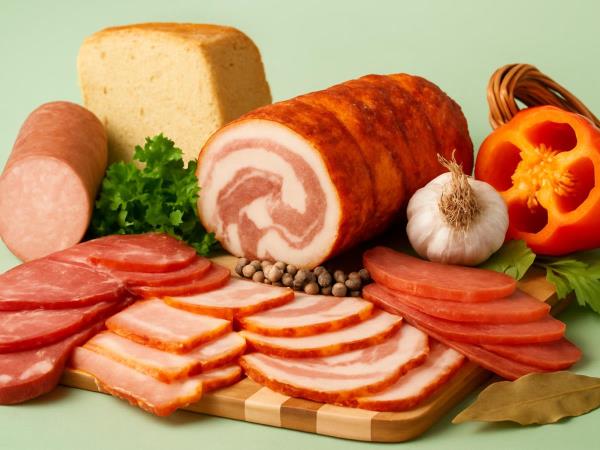
One hot dog a day. That is roughly 50 grams of processed meat, and according to the World Health Organization, eating that amount every day is associated with an estimated 18% higher relative risk of colorectal cancer. It is not a reason to panic over a single barbecue, but it is a very good reason to turn the package over and read what is actually inside before it lands in your shopping cart.
British chef Jamie Oliver found out how few people do that. In an April 2011 episode of his TV show Food Revolution, he showed a horrified studio audience how cheap beef trimmings, the kind usually sold for pet food, could be treated with ammonia and turned into filler for burger meat. He called the product "pink slime." The demonstration, reported by CBS News, sparked a nationwide debate about what really goes into processed meat. Shortly afterward, McDonald's confirmed it had stopped using ammonia-treated beef trimmings in its U.S. burgers. Oliver's demonstration was theatrical, and the industry criticized it as exaggerated. Still, it made millions of people ask a simple question for the first time: what exactly am I eating?
Many of our readers tell a similar story. They started reading labels "just out of curiosity" and ended up changing which brands they buy, or switched to fewer but better-quality products.
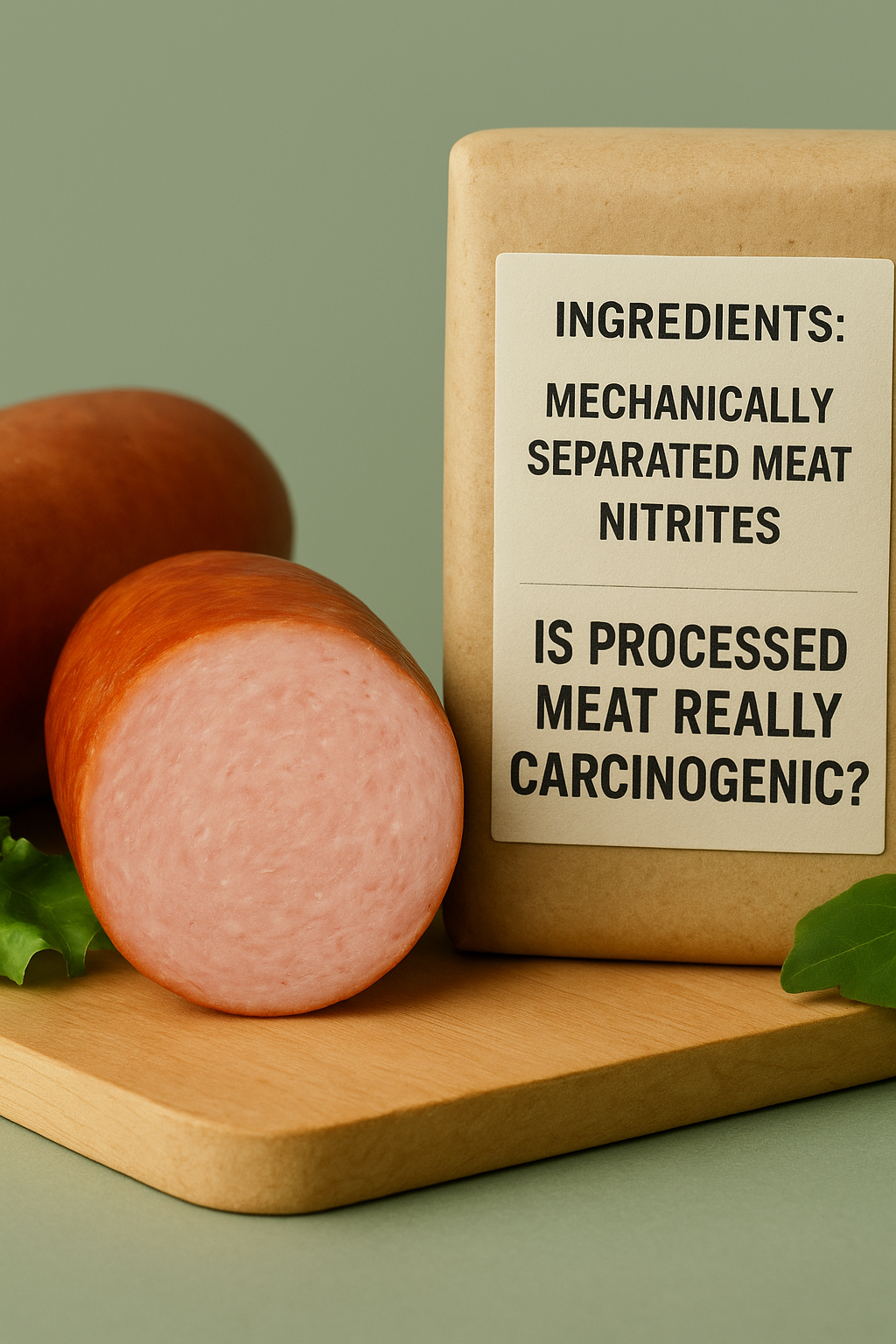
Is processed meat really carcinogenic?
After the International Agency for Research on Cancer (IARC), the cancer agency of the World Health Organization, classified processed meat as "carcinogenic to humans" (Group 1) and red meat as "probably carcinogenic" (Group 2A), a storm broke out. The storm hit both producers and everyone who cannot imagine a day without meat, sausages, hot dogs, bacon, prosciutto or p{-15454}t{-15447}. The findings were published in The Lancet Oncology (Bouvard et al., 2015).
The classification is widely misunderstood, so it is worth being precise. Group 1 also includes tobacco and alcohol, but this does not mean processed meat is as dangerous as smoking. The category describes how strong the scientific evidence is, not how large the risk is. The American Cancer Society notes that the link is strongest for colorectal cancer. The risk grows with the amount eaten, and no completely risk-free amount has been established.
Defenders of processed meat often point out that the absolute increase in risk for an individual is small compared with other lifestyle factors. That is true. But if there are simple ways to reduce exposure, the better path is to educate consumers. Producers also want their customers to be satisfied, and they tend to adapt quickly when shoppers start asking questions. So it is in everyone's interest that we make, and eat, better food.
That is why we offer a few tips on how to separate the wheat from the chaff when choosing meat products.
1. MSM: mechanically separated meat
It all starts, of course, with reading the label. If you see the term MSM or "mechanically separated meat" (often "mechanically separated chicken" or "pork"), you are looking at meat recovered by pressing or scraping the remaining tissue off bones under high pressure. You will most often find it in sausages, hot dogs and p{-15454}t{-15447}.
MSM is legal and must be declared on the label in the EU. However, the European Food Safety Authority (EFSA) has noted that it differs from regular meat. Its structure is broken down, it can contain small bone fragments and more calcium, and it is more perishable. Nutritionally, it is a lower-quality raw material, which is why it ends up in the cheapest products. If you have a choice, a product made from whole cuts of meat is generally the better pick.
2. E249, E250, E251 and E252: nitrites and nitrates
Flavor enhancers, emulsifiers and preservatives are a story of their own. The codes E249, E250, E251 and E252 stand for potassium and sodium nitrite and nitrate. These are curing agents, not simply extra salt. They give ham and hot dogs their pink color and characteristic taste. Most importantly, they protect against Clostridium botulinum, the bacterium that causes botulism.
The concern is that nitrites can form nitrosamines, compounds linked to cancer, both in the food itself (especially at high temperatures) and in the digestive tract. In its 2017 re-evaluation, EFSA concluded that nitrites added at permitted levels stay within safe limits for most people. It also noted, however, that highly exposed children may slightly exceed them and that more research on nitrosamines is needed. The EU subsequently tightened the maximum permitted levels through Commission Regulation (EU) 2023/2108.
The debate is far from over. A large French study of more than 100,000 adults, published in The BMJ in 2026 (the NutriNet-Sant{-15447} cohort), found that higher sodium nitrite intake was associated with a higher risk of prostate cancer. Higher potassium nitrate intake was associated with higher overall cancer risk and breast cancer risk. Because this is an observational study, it cannot prove cause and effect. The practical takeaway is moderation: choose products with shorter ingredient lists, avoid charring cured meats, and serve them with plenty of vegetables.
3. E407: carrageenan
One very common additive in meat products is carrageenan (E407), a thickener and stabilizer extracted from red seaweed. You may have read that it is "highly carcinogenic" and damages the intestinal wall. The science does not support such strong claims. In its 2018 re-evaluation, EFSA found no concern regarding carcinogenicity or genotoxicity of food-grade carrageenan. The intestinal damage seen in older animal studies was mostly linked to degraded carrageenan (poligeenan), which is not permitted as a food additive.
EFSA did, however, call the current safe intake level "temporary" and asked for better data, so the question is not fully closed. Some people with a sensitive digestive system report that they feel better when they avoid it. One important lesson from the original warning still stands: carrageenan is a natural plant-based thickener, and not everything natural is automatically good for your health. Don't be swayed by promises that "only natural ingredients" were used. Read the whole list.
4. E450, E451 and E452: phosphates
If you see E450 (diphosphates), E451 (triphosphates) or E452 (polyphosphates), it is worth pausing. Phosphates help processed meat bind water. This makes the product juicier and heavier, which means you are partly paying for water.
Phosphates are not carcinogenic. In its 2019 assessment, EFSA did, however, find that infants, toddlers and children may exceed the safe daily phosphorus intake even with average diets. People with reduced kidney function are a particularly vulnerable group. So pay special attention to how often such foods end up on children's plates. Older adults and anyone with kidney problems should keep an eye on them too.
5. E621: glutamate (MSG)
If the label lists the flavor enhancer monosodium glutamate (E621), it does not automatically mean the product contains no meat. It does often signal a recipe that relies on flavor enhancers rather than on the quality of the meat itself. EFSA has set a safe daily intake for glutamates, which most people can exceed only with a diet very high in processed foods.
The far more reliable indicator is the meat percentage, which manufacturers in the EU must state on the label under Regulation (EU) No 1169/2011. It works much like juices, where a drink may contain only 20% fruit juice and the rest is water and additives. Meat is expensive, so some producers bulk up their products with water, starch, soy protein and flavorings. A hot dog with 85% meat and one with 50% meat can look identical on the shelf.
6. Look at the meat itself, and be careful at the grill
Pay attention to the appearance of fresh meat as well. Fine streaks of fat within the muscle, known as marbling, depend on the breed, the cut and the animal's diet, and they usually mean better flavor and juiciness. If meat releases a lot of water in the pan, the cause is most often added brine or phosphates, or stress before slaughter, which produces pale, watery meat. It is not proof of hormone use. In the European Union, hormonal growth promoters in livestock have been banned for decades.
Grilling deserves a word of caution too. When meat is cooked at very high temperatures or charred over an open flame, compounds called heterocyclic amines (HCAs) and polycyclic aromatic hydrocarbons (PAHs) can form. The U.S. National Cancer Institute notes that these compounds can damage DNA in laboratory studies. For cured products like hot dogs, high heat can also increase nitrosamine formation. To reduce exposure:
- avoid charring and cut off blackened parts;
- flip meat often and cook at moderate heat;
- marinate meat before grilling;
- grill vegetables alongside it and make them the bigger part of your plate.
Your quick label checklist
- Meat percentage: the higher, the better.
- MSM / mechanically separated meat: a sign of a lower-quality raw material.
- E249–E252 (nitrites, nitrates): fine occasionally, but keep cured meats as a "sometimes" food.
- E450–E452 (phosphates): often mean added water; limit them in children's diets.
- E407 (carrageenan) and E621 (glutamate): not dangerous at usual intakes, but often signs of a heavily processed recipe.
- Ingredient list length: the shorter, the better.
For more on everyday food choices that matter over the long run, read 5 Foods That Shorten Your Lifespan, Why is it dangerous to eat these foods for breakfast and Hello, and Fattening: Foods that Sabotage Your Diet.
Nobody is asking you to give up your favorite sausage forever. Health organizations such as the World Cancer Research Fund recommend eating very little processed meat. That means treating it as an occasional pleasure rather than a daily staple, and choosing better-quality products when you do. And it all starts with thirty seconds spent reading the label.
Information on this website is for educational purposes only and is not medical advice.
expert, nutritionist
 Would you like to be informed about news on the website?














|

