


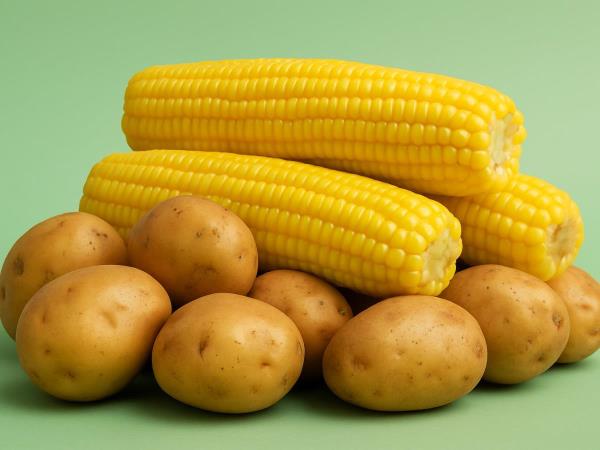


The Potato of the Future: Less Acrylamide When Fried and Less Food Waste – Is Genetically Engineered Food the Answer?
expert, nutritionist
Imagine a French fry that browns just as beautifully as always but forms far less of a compound that food safety experts have been worried about for more than two decades. That is the promise of a potato that America's farmers have been allowed to grow since 2014. But there's a twist: the man who led its development later turned into one of its loudest critics.
When the Creator Starts to Doubt
The scientist who headed the biotech research behind this potato spent more than a decade on the project and, by his own account, created thousands of experimental versions every year. A few years after leaving the company, he did something unusual in the industry: he wrote a book in which he renounced much of his own work. In an essay and a book discussed on Montana Public Radio, he argued that the potatoes don't truly prevent bruising but mainly hide it, and that newer versions lost some of their appeal when fried. In an interview with EcoWatch, he explained that his main worry is that unintended effects of genetic changes can never be fully ruled out.
The company strongly disagrees with these views, and regulators reviewed the potato before approving it. Still, his story is a good reminder that even the people closest to a new food technology can end up seeing it very differently.
What Exactly Was Approved?
After the US Department of Agriculture (USDA) gave the green light to a genetically engineered potato, a whole wave of discussion followed, and it is very likely that other foods will follow the same path. So what is it all about?
The company J.R. Simplot, a privately owned business from Idaho and one of the biggest suppliers of frozen French fries in the world, developed the potato and sells it under the name Innate. According to Chemistry World, the USDA approval allowed the company to begin commercial planting. The first generation was approved in November 2014, and the US Food and Drug Administration (FDA) completed its review the following year.
The company published a list of changes, and at least one of them is especially important. The potato produces less of the amino acid asparagine, which is one of the building blocks of acrylamide. As a result, the company says it can form up to 70 to 75 percent less acrylamide during frying, according to reports in Potato Grower and the Grand Forks Herald. The potato also bruises less: it develops fewer of the dark spots that make shoppers and cooks throw potatoes away. These are all features that suit retailers and food processors perfectly.
Interestingly, the company stresses that it did not add genes from other species. Instead, it switched off some of the potato's own genes. That's why it chose the name "Innate."
What Is Acrylamide and Why Should We Care?
Acrylamide is not added to food. It forms naturally when starchy foods are fried, roasted or baked at high temperatures, through the same browning process (the Maillard reaction) that gives fries their golden color and irresistible taste. Researchers at the Nestl{-15447} Research Center and the University of Reading showed back in 2002 that asparagine is the key ingredient in this reaction.
In 2015, the European Food Safety Authority (EFSA) concluded that acrylamide in food is a public health concern. This was based mainly on animal studies. As the European Food Information Council (EUFIC) explains, the evidence in humans is still not conclusive, but health agencies recommend lowering our intake as a precaution. Apart from fried potatoes, the main sources are coffee, biscuits, crackers, crispbread and toasted bread.
Not every expert is equally worried, though. A nutritionist and toxicologist from the University of Nevada told Chemistry World that he considers the potato a solution to a "non-issue," pointing to studies that found no clear link between dietary acrylamide and most common cancers.
Less Waste – A Real Benefit
The new potato can also stay in storage longer without the brown spots and soft patches that send so many tubers to the bin. According to Potato Grower, the company estimated that 40 percent less bruising could save around 400 million pounds of potatoes a year in restaurants and stores alone. The second generation, approved by the USDA in 2015, was also designed to resist late blight, the disease behind the Irish potato famine, and to keep better in cold storage, as Agri-Pulse reported.
Is It Actually "Healthier"?
This is where we need to be careful. The effects of this redesigned potato are still being studied. According to the company, its nutritional composition is essentially the same as that of a regular potato, apart from the lower asparagine content. So it is not a "superfood," and there is no evidence that it prevents disease, protects the heart or affects blood pressure or blood sugar any differently than an ordinary potato. If only all food were that simple, right?!
From a nutritionist's point of view, the way you cook a potato matters far more than its genes. A large, long-term study by Harvard researchers published in the BMJ in 2025 found that eating fries three times a week was linked to a roughly 20 percent higher risk of type 2 diabetes, while baked, boiled or mashed potatoes showed no such link, as the San Francisco Chronicle reported. A low-acrylamide fry is still a fry: it has the same oil, the same salt and often the same oversized portion.
If you want to dig deeper into what fried food may mean for your wellbeing, read our article Does French fries really increase the risk of anxiety and depression? and our overview 5 Foods That Shorten Your Lifespan.
Will You Find It in Your Fries?
Not necessarily. Right after the approval, McDonald's said it was not considering using genetically engineered potatoes in its restaurants, even though Simplot has long been one of its main fry suppliers. In the early 2000s, a genetically modified potato from Monsanto was taken off the US market because farmers and consumers showed little interest, as the National Agricultural Law Center recalls.
Simple Ways to Get Less Acrylamide From Your Own Kitchen
You don't need a special potato to cut back on acrylamide at home. The FDA and EFSA suggest a few easy habits:
- Aim for golden, not brown. The darker and crispier the fry or toast, the more acrylamide it usually contains.
- Boil or steam more often. These methods don't trigger acrylamide formation.
- Soak raw potato slices in water for 15 to 30 minutes before frying or roasting, then pat them dry.
- Don't store raw potatoes in the fridge. Cold storage can raise their sugar content, which leads to more acrylamide when they are cooked. A cool, dark pantry is best.
What Comes Next?
And that's not all. The potato is just one of a new wave of genetically engineered crops meant to offer something to shoppers, not only to farmers. A non-browning apple from Okanagan Specialty Fruits followed a similar path, and more foods are likely to follow.
Once, people believed genetics would mainly bring higher yields. Now a whole new field is opening up, where engineered foods are promoted as better for consumers than their natural counterparts. Whether that turns out to be true will depend on independent research, honest labeling and, ultimately, on what we choose to put on our plates.
Hmm ...
Information on this website is for educational purposes only and is not medical advice.
expert, nutritionist
 Would you like to be informed about news on the website?















|

