


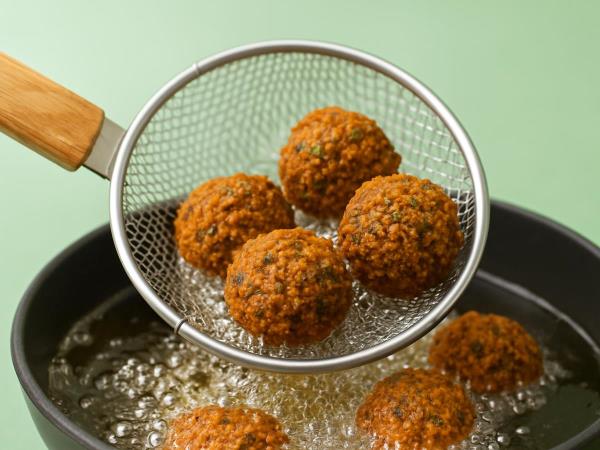


Fried Food and a Shorter Life? Spanish Researchers Found a Surprising Twist
expert, nutritionist
One serving of fried food a day. That is all it took for women in a large American study to have an 8% higher risk of dying early. For fried chicken, the numbers were even more striking: just one serving a week was linked to a 13% higher risk. Then researchers in Spain looked at the same question, and the link largely disappeared. The difference? Most Spaniards fry with olive oil.
The woman who lived to 122 and poured olive oil on everything
Few people embody the Mediterranean love of olive oil quite like Jeanne Calment. The Frenchwoman from Arles holds the record as the oldest verified person who ever lived, according to Guinness World Records, reaching 122 years and 164 days. She often credited her long life to a diet rich in olive oil, which, as Olive Oil Times recounts, she poured over her meals and even rubbed into her skin. She also smoked for most of her life and loved chocolate and port wine, so no one can credit her longevity to olive oil alone. Still, her story raises a fair question: could the oil we cook with make a real difference to our long-term health?
Many of our readers tell us they grew up believing that anything fried is automatically "bad," while their grandparents in Mediterranean villages fried fish, vegetables and potatoes in olive oil almost every day and lived into their nineties. Science now offers a more nuanced picture.
What the 18-year American study found
Fried food is generally considered one of the less healthy parts of the modern diet. A major study published in The BMJ in 2019, "Association of fried food consumption with all cause, cardiovascular, and cancer mortality", led by researchers from the University of Iowa College of Public Health, put numbers to this belief.
The researchers analyzed data from 106,966 postmenopausal women aged 50 to 79 who took part in the Women's Health Initiative, one of the largest health studies ever conducted in the United States. The women were enrolled between 1993 and 1998 and followed until 2017. Participants reported how often they ate fried food, which included fried chicken, fried fish and shellfish, French fries, tortilla chips and other fried snacks.
The results were notable:
- Women who ate at least one serving of fried food per day had an 8% higher risk of death from any cause compared with women who ate none.
- Eating fried chicken at least once a week was associated with a 13% higher risk of death from any cause and a 12% higher risk of death from heart and blood vessel disease.
- For fried fish and shellfish, the risk of death from any cause was 7% higher, and the risk of cardiovascular death 13% higher.
- Interestingly, no clear link was found between fried food and cancer deaths.
As The BMJ's own news summary noted, the authors concluded that cutting back on fried foods, especially fried chicken and fried fish, could have a meaningful public health impact. It is worth remembering that this was an observational study: it shows an association, not proof that fried food directly causes early death. Women who ate more fried food also tended to have other habits, such as eating fewer vegetables and whole grains, that may have played a role.
If you enjoy fries in particular, you may also want to read our article Does French fries really increase the risk of anxiety and depression?
Why frying can be a problem
Frying becomes problematic mainly because of poor-quality or repeatedly reused oil, which breaks down in an uncontrolled way at high temperatures. As oil degrades, it forms so-called polar compounds and other by-products of oxidation. Starchy foods such as potatoes can also form acrylamide when fried at high heat; the US Food and Drug Administration (FDA) recommends simple steps to limit it, such as frying to a golden yellow rather than dark brown color.
In addition, fried food absorbs large amounts of fat, which significantly increases its calorie content. A registered dietitian from Baylor College of Medicine explains in "The truth about fried food" that the type of food, the coating and the frying method all affect how much oil ends up on your plate. Very high, prolonged heat can also produce advanced glycation end products, compounds linked to inflammation when consumed regularly over the long term.
The American results suggested that in a typical US diet, it may not matter much which food is fried, since the frying process itself appeared to be the common factor. But then something else came to light...
The Spanish surprise
A comparable study from Spain told a very different story. Published in The BMJ in 2012, "Consumption of fried foods and risk of coronary heart disease: Spanish cohort of the European Prospective Investigation into Cancer and Nutrition study", it was led by Professor Pilar Guallar-Castill{-15437}n of the Autonomous University of Madrid. The researchers used data from 40,757 adults aged 29 to 69 who were part of the Spanish branch of the EPIC study, a large European project on diet and health.
Over about 11 years, they found no association between fried food consumption and the risk of coronary heart disease or death from any cause, even among the people who ate the most fried food. According to ScienceDaily's report on the study, the authors stressed that their results came from a Mediterranean setting and probably would not apply in countries where solid or reused fats are common.
The main difference the researchers pointed to was the type of oil. In the Spanish study, 62% of participants fried with olive oil, and most of the rest used sunflower oil. As an accompanying BMJ editorial summed it up, frying itself may not be the main issue, as long as the oil used is a good one. The Spaniards also mostly fried fish, meat, potatoes and eggs at home, rather than relying on fast-food snacks.
This does not mean unlimited fried food is harmless. Another Spanish group, the SUN (Seguimiento Universidad de Navarra) cohort, in a study on fried food and hypertension, found that very frequent fried food intake was linked to a higher risk of high blood pressure. Moderation still matters, even in the Mediterranean.
Why olive oil handles the heat
Spaniards cook most of their food with olive oil, and it holds up well in the pan. A common myth says olive oil should never be heated, but extra virgin olive oil can comfortably withstand temperatures of around 180 {-15696}C (356 {-15696}F), which is typical for frying.
A 2018 laboratory study published in Acta Scientific Nutritional Health, "Evaluation of Chemical and Physical Changes in Different Commercial Oils during Heating", heated ten common cooking oils, including holding them at 180 {-15696}C for six hours. As Olive Oil Times reported, extra virgin olive oil produced the fewest harmful polar compounds, while canola, grapeseed and rice bran oils produced the most. For full transparency, the laboratory that ran the tests is connected to an Australian olive oil producer, and the oils were heated without food, so more independent research would be welcome.
Part of olive oil's stability comes from its high share of monounsaturated fat, and in extra virgin oil, from natural antioxidants called polyphenols. The Mayo Clinic Health System notes that these polyphenols have been linked to heart health. A 2022 Harvard-led study, summarized by the British Heart Foundation in "Does eating olive oil mean you'll live longer?", also found that people who used more than half a tablespoon of olive oil a day had a lower risk of dying from cardiovascular disease than those who rarely used it.
For more on this golden ingredient, see our article Olive oil on an empty stomach: healthy habit or myth?
A nutritionist's tips for smarter frying
- Choose stable oils. Olive oil, especially extra virgin, is a good option for home frying. Avoid solid fats and hydrogenated shortenings.
- Don't reuse oil too often. Oil that has turned dark, foamy or smells sharp has broken down and is best discarded.
- Watch the temperature. Around 160–180 {-15696}C is ideal. If the oil is smoking, it is too hot.
- Fry to golden, not dark brown. This helps limit acrylamide in potatoes and other starchy foods.
- Drain well. Place fried food on paper towels to remove excess oil.
- Fry fish and vegetables more often than processed snacks. This is closer to the traditional Mediterranean pattern.
- Keep it occasional. Pair fried dishes with salads, vegetables and whole grains, and use other cooking methods such as baking, steaming and grilling on most days.
Curious which other everyday foods are worth limiting? Read 5 Foods That Shorten Your Lifespan.
The bottom line
Large studies suggest that frequent fried food, particularly in a typical Western diet, may be linked to a higher risk of early death and heart problems. The Spanish experience, however, shows that the picture is more complicated: when frying is done at home with olive or sunflower oil, as part of a Mediterranean-style diet, the link with heart disease was not observed. So if you do enjoy something crispy now and then, reaching for a bottle of good olive oil may be one of the simplest choices you can make.
Information on this website is for educational purposes only and is not medical advice.
expert, nutritionist
 Would you like to be informed about news on the website?














|

