


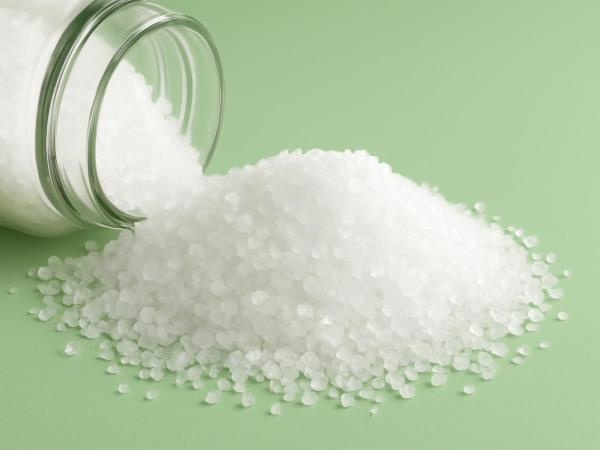


Epsom Salt: The Bitter Mineral Behind 400 Years of Baths, Laxatives and Garden Lore {-15230}{-13416}{-15454}‚{-15700}{-15454}€{-14949} and What It Really Does
expert, nutritionist
In the drought-stricken summer of 1618, a cowherd named Henry Wicker found a water hole on Epsom Common, south of London, and his thirsty cattle refused to drink from it. The water turned out to be strongly bitter, and when it evaporated it left behind a salt with a remarkable effect on the human gut. According to the history of Epsom compiled by The Jockey Club, it took another twelve years before the water's powerful purgative qualities were recognized. After that, Epsom became a fashionable spa town and "Epsom salts" became a household name across Europe.
In Slovenian it is simply called grenka sol, or "bitter salt," and anyone who has tasted it will understand why. Chemically, Epsom salt is magnesium sulfate heptahydrate: magnesium sulfate bound to seven water molecules. Despite the name, it has nothing in common with the sodium chloride on your dinner table.
We know quite a lot about this mineral, yet its reputation still runs well ahead of the science. People use it to unwind after a stressful day, to soften skin, to ease aching muscles, and even to make their potted plants grow better. Some of these uses are well grounded and others are mostly folklore. Here is how they stack up.
A 400-year-old laxative that really works
Long before anyone added it to a bath, magnesium sulfate was swallowed. It was one of the most widely used laxatives for centuries, even though nobody understood how it worked. The diarist Samuel Pepys was one of its more enthusiastic users. On a July morning in 1667 he rode out to the Epsom well and, as he recorded in his diary entry for 14 July 1667, "I did drink four pints, and had some very good stools by it."
Today we know why it worked so well. Magnesium sulfate belongs to the group of osmotic (saline) laxatives. The gut absorbs magnesium poorly, so the dissolved salt holds water inside the intestine instead of letting the body absorb it. The extra water softens the stool and gets things moving. Magnesium laxatives, including Epsom salt, work by pulling water into the intestines, and they usually take effect within 30 minutes to six hours, not within minutes as is sometimes claimed.
The catch is that the effect can be very strong. Diarrhea, an upset stomach and abdominal cramps are common, and doses must never exceed what the package label or a doctor recommends. Michigan Medicine's drug information warns that using too much magnesium sulfate can cause serious, even life-threatening side effects. Oral magnesium sulfate can also make it harder to absorb other medicines, especially antibiotics, so other medications should be taken at least two hours before or after it. People with reduced kidney function face the highest risk, because side effects from high magnesium intake are rare except in people whose kidneys work significantly less well.
For occasional sluggishness there are gentler options. Fiber, fluids and a few kitchen habits, such as those described in Olive oil on an empty stomach: healthy habit or myth?, are usually a better place to start than a salt that can send you running.
The bath: relaxing, but not because of skin absorption
The most popular modern use of Epsom salt is in the bath, either a full soak or a foot bath. The idea is that magnesium passes through the skin and relaxes muscles from the inside. That part does not stand up to scrutiny. A 2017 review in Nutrients, "Myth or Reality-Transdermal Magnesium?", looked at the available evidence on magnesium absorbed through the skin and concluded that the claims are scientifically unsupported.
That does not make the bath useless. Many people find an Epsom salt soak genuinely soothing, and the warm water itself does real work. Cleveland Clinic notes that there is little scientific evidence behind Epsom salt baths, but integrative medicine specialists still often suggest them for muscle pain and stress because the risk is low. Their suggested method is to dissolve about 300 grams (1{-15230}‚Ä{-13411} cups) in a tub of warm water and soak for around 15 minutes. Avoid using it in a whirlpool or a tub with jets unless the manufacturer says it is safe.
If you mainly want help unwinding, timing may matter more than the salt. A systematic review and meta-analysis of human studies, published in Sleep Medicine Reviews in 2019, found that a warm bath or shower at about 40{-15230}{-13416}{-15454}‚{-15700}{-15454}€{-14949}42.5 {-15230}‚{-15486}{-15696}C was linked with better self-rated sleep quality. Taken one to two hours before bed, even a ten-minute soak helped people fall asleep faster. Epsom salt played no part in those studies. The benefit came from the warm water.
Sore muscles, sprains and bruises
Epsom salt soaks have long been used for aching muscles and stiff joints, and product labels still list soaking to help relieve minor sprains and bruises among its uses. Good clinical evidence that the salt itself reduces pain or swelling is lacking, though, and a plain warm bath may work just as well. If cramps keep you up at night, see The Midnight Cramp Cure Sitting in Your Fridge Door, which covers a remedy with more research behind it. If your legs feel heavy by evening, Why Your Legs Feel Like Lead by Evening - And the Free Fixes That Actually Work describes the old warm-and-cold foot bath technique.
Foot baths and skin care
An Epsom salt foot bath is one of the simplest pleasures: warm water, a handful of salt and fifteen minutes with your feet up. Your skin will often feel smoother and fresher afterward, and the softened skin is easier to buff with a pumice stone. A salt scrub can also lift away dead skin cells on the surface. That is a mechanical effect, though, and the salt does not "remove dead cells inside the body" as some claims suggest.
Claims that Epsom salt cures acne or warts, or eliminates foot odor, rest on anecdote rather than evidence, so it is best to treat them with caution. Persistent skin problems are worth showing to a pharmacist or doctor.
One important exception: people with diabetes should skip long foot soaks. The CDC advises people with diabetes to wash their feet in warm, not hot, water and not to soak them. Diabetes UK explains that soaking makes the skin soggy and more easily damaged. The same caution applies to broken or raw skin.
Hemorrhoids: the warm water does most of the work
Epsom salt is often recommended for hemorrhoids. The well-established remedy is actually the warm bath itself. The U.S. National Institute of Diabetes and Digestive and Kidney Diseases recommends sitting in a shallow tub of warm water, called a sitz bath, several times a day to relieve pain, along with plenty of fiber and fluids. Adding Epsom salt is a matter of personal preference. However, laxatives that cause diarrhea can irritate hemorrhoids further, so drinking Epsom salt is not a good idea here.
In the garden: helpful only when the soil needs it
Many gardeners swear that a sprinkle of Epsom salt gives them bigger, lusher and longer-lasting plants. Magnesium is an essential plant nutrient, and Epsom salt does help where the soil is genuinely short of it. Most garden soil isn't. Horticulturist Linda Chalker-Scott of Washington State University has examined the claims in detail in "Epsom salts: miracle, myth{-15230}{-13416}{-15454}‚{-15700}{-15486}{-15706}or marketing" and in the university's extension fact sheet Epsom Salt Use in Home Gardens and Landscapes. Her conclusion is that plants without a magnesium deficiency don't benefit, and that overuse can upset the soil's nutrient balance.
The sensible approach is to test your soil first. If the test shows a magnesium shortage, which is more likely in container plants watered for a long time with soft water, a modest dose of Epsom salt can make a visible difference. If it doesn't, save your money.
What about magnesium in your diet?
Because Epsom salt is mostly magnesium, it is tempting to see it as a magnesium supplement. Swallowing it mainly gives you a laxative effect, and the bath doesn't raise your magnesium levels in any meaningful way. Food is the reliable route. Nuts, seeds, legumes and leafy greens are all good sources, and poppy seeds are surprisingly rich, as explained in The Tiny Seed Hiding 83% of Your Daily Magnesium - and a Surprising Wealth of Healthy Fats. If you suspect you are running low, read How do you identify magnesium deficiency in the body? and talk to your doctor before reaching for supplements.
The bottom line
- Proven: taken by mouth, it is an effective but strong short-term laxative. Use it only as directed and be careful with kidney problems or other medicines.
- Pleasant, with limited evidence: baths and foot soaks for relaxation, tired muscles and softer skin. Most of the benefit probably comes from the warm water.
- Not supported: magnesium absorbed through the skin, and cures for acne, warts or foot odor.
- In the garden: useful only when a soil test shows a magnesium deficiency.
Try it! Pour a handful of Epsom salt into a basin of warm water, put your feet in after a long day, and enjoy a ritual that people have been reaching for since the cows of Epsom turned up their noses at that bitter spring four centuries ago.
Information on this website is for educational purposes only and is not medical advice.
expert, nutritionist
 Would you like to be informed about news on the website?











|

