





Leftovers Tonight? These Are the Foods You Should Never Reheat {-15454}€” and the Reason Will Surprise You
expert, nutritionist
Most of us have done it without a second thought: last night's roast goes straight back into the oven, the soup gets a quick blast in the microwave, and dinner is served. But reheated food carries real risks {-15454}€” some short-term, like bacterial food poisoning, and some that accumulate over time, particularly from the oxidation of fats that forms during repeated heat exposure. Reheated food has significantly fewer nutrients and healthy ingredients, and some types of food become genuinely harmful or toxic in the process. Whenever possible, eat fresh food {-15454}€” or eat leftovers cold.
The foods below are the ones where reheating causes the most concern. If you are reaching for them at dinner after they were first cooked at lunch, it is worth pausing to understand why.
1. Roasted Red Meat
Pork roast, veal, and lamb are among the most problematic leftovers to reheat. The issue starts at the first cooking: the formation of heterocyclic amines and DNA adducts linked to colorectal cancer risk is associated with the intake of red and processed meats cooked at higher temperatures. A comprehensive review published on PubMed explains that the potential mechanisms of carcinogenesis from red meat may include the endogenous formation of genotoxic N-nitroso compounds, heterocyclic amines, and polycyclic aromatic hydrocarbons produced through high-temperature cooking, as well as iron and agents associated with meat processing, all of which may cause oxidative stress.
Critically, the risk does not end with the first cook. Cooking, storage, and reheating methods significantly affect the safety of meat products, as thermal processing of meat leads to lipid oxidation and protein degradation, and excessive oxidation of meat lipids produces precursors of highly reactive aldehydes that become a source of oxidative stress. In plain terms: every trip back into the heat adds another layer of chemical change to already-cooked red meat.
It is important to note that the research on red meat and cancer risk is observational rather than causal {-15454}€” studies find associations, not proof of cause and effect. High red meat intake has been linked with an increased risk of colorectal cancer and adenomas, but this reflects the overall pattern of consumption, not any single reheating event. That said, the chemical changes are real, and minimising repeated high-temperature exposure to cooked red meat is a reasonable, well-supported precaution.
2. Poultry
Chicken is the food that food-safety experts most consistently flag as a reheating risk {-15454}€” and for good reason. Reheating chicken can be a breeding ground for bacteria, particularly Salmonella and Campylobacter, which multiply rapidly between 4 {-15486}{-15696}C and 60 {-15486}{-15696}C {-15454}€” a window known as the "danger zone." If cooked chicken is left at room temperature for too long, these bacteria can multiply and produce toxins that may not be destroyed even by reheating. This is why the original Slovenian article's advice to eat cold chicken rather than piping-hot reheated chicken can actually make sense: the bacteria haven't had a chance to colonise a freshly cooled portion that has gone straight into the fridge.
Reheated chicken added to a salad is a particularly common source of infections. Every time you cool and reheat chicken, it passes through the temperature danger zone (4 {-15486}{-15696}C{-15454}€“60 {-15486}{-15696}C) where bacteria multiply rapidly. The UK Food Standards Agency advises reheating food only once; by the third reheat, chicken will have passed through the danger zone multiple times, significantly increasing bacterial risk.
The same caution applies whenever you buy rotisserie chicken or pre-cooked poultry from a takeaway or fast-food outlet {-15454}€” you rarely know how many heat cycles it has already been through. As Foodwhisper notes in How to recognize fresh food, old or already spoiled food is not only less tasty but can seriously harm your health, and according to the European Food Safety Authority (EFSA), there are more than 23 million cases of food poisoning in the EU every year, many of which are caused by spoiled foods.
If you do reheat poultry, food safety authorities are clear on the threshold: the USDA recommends reheating chicken to an internal temperature of at least 165 {-15486}{-15696}F (74 {-15486}{-15696}C), which is hot enough to kill any bacteria that may be present. A food thermometer is the only reliable way to verify this.
3. Meat-Based Soups and Broths
A vegetable soup reheated the next day is one of the pleasures of home cooking. A meat broth left to sit for two or three days is a different matter. The original article's observation that meat-based soups develop a sour or acidic taste over time reflects genuine chemistry: any soup showing separation, sliminess, or sulfur-like odours indicates proteolysis or lipid oxidation, not just microbial growth. That slightly "off" tang you notice in a three-day chicken soup is a real warning sign, not just a flavour quirk.
Bacterial risk in soup is also significant. The most common bacteria that can grow in soup are Staphylococcus aureus, Salmonella, and Clostridium perfringens. After four days, pathogenic bacteria like Staphylococcus aureus produce heat-stable toxins that survive reheating. According to Michigan State University Extension, soup can be stored safely in the refrigerator for three to four days when cooled properly.
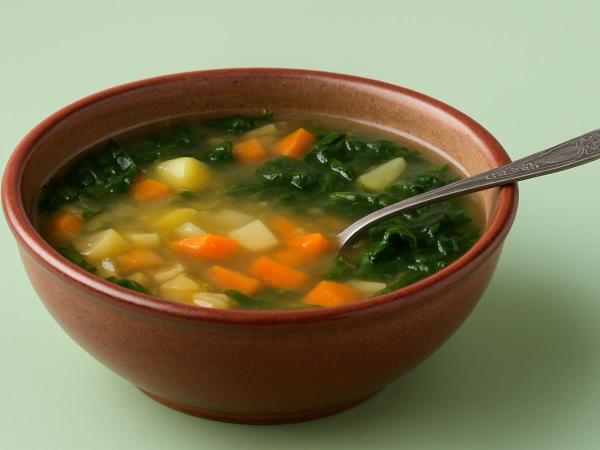
Vegetable soups {-15454}€” especially green ones, whose chlorophyll helps preserve freshness {-15454}€” fare noticeably better. Reheat any soup only once: each cooling and reheating cycle moves it through the danger zone (40 {-15486}{-15696}F{-15454}€“140 {-15486}{-15696}F / 4 {-15486}{-15696}C{-15454}€“60 {-15486}{-15696}C), allowing bacteria to multiply exponentially.
Smart Storage: What to Do Instead
The practical takeaway from all of this is straightforward. You should only reheat food once. For meat soups specifically, do not store them in metal containers {-15454}€” the acids in the broth can react with certain metals {-15454}€” and if you are keeping soup for more than a day or two, the freezer is safer than the fridge. According to USDA guidelines, refrigerated homemade soup lasts exactly 3{-15454}€“4 days at {-15454}‰{-15708}4.4 {-15486}{-15696}C, while frozen soup maintains safety and quality for 2{-15454}€“3 months at {-15454}‰{-15708}{-15454}{-15736}’18 {-15486}{-15696}C.
Seal food airtight as soon as possible, pack it in small containers, and freeze it promptly {-15454}€” this is especially worth doing with any soup or stew that contains meat. Portion it before freezing so you only ever thaw and heat exactly what you need, avoiding the temptation of a second reheat entirely.
For more on how cooking method and temperature affect what ends up on your plate, see Foodwhisper's Boil the Tomato, Leave the Spinach Raw: What Heat Really Does to Your Food, as well as the site's dedicated guide Foods You Should Not Reheat, which covers additional high-risk categories including eggs, rice, and nitrate-rich vegetables.
Information on this website is for educational purposes only and is not medical advice.
expert, nutritionist
 Would you like to be informed about news on the website?















|

