




Two Ingredients, a Thousand Years of Tradition: The Horseradish and Vinegar Remedy That Clears Sinuses and Eases Headaches
expert, nutritionist
The ancient Greeks had a saying about it: radish is worth its weight in lead, beetroot is worth its weight in silver {-15454}€” and horseradish is worth its weight in gold. That proverb is backed by more than poetic licence. Horseradish rescues the respiratory system, as we have explored before, and the two-ingredient remedy described below draws on thousands of years of practical use across Europe {-15454}€” from folk healers who kept a jar of it on the shelf every autumn to the grandmothers who swore you could clear a blocked nose simply by holding the root under it and inhaling.
Why Horseradish Works {-15454}€” The Chemistry Behind the Fire
When you grate fresh horseradish root, you break open plant cells and trigger a chain reaction. Allyl isothiocyanate (AITC) {-15454}€” the volatile oil responsible for that eye-watering heat {-15454}€” exhibits strong antimicrobial activity against Gram-positive and Gram-negative bacteria. This is not purely a laboratory curiosity: the oil released when horseradish root is cut may have powerful antibacterial properties, and consuming horseradish is known to cause a burning sensation in the sinuses, nose, and throat {-15454}€” the very effect that makes it so useful as an inhalant. Isothiocyanates in the vapour phase show stronger antibacterial activities against all tested bacterial strains, which is exactly what happens when you breathe the steam of a horseradish and vinegar mixture.
"The spiciness of horseradish also increases mucus production in your sinuses," explains one nutritionist. "This helps flush out microbes and clear the infection." In other words, that sudden watery rush you feel is the body doing precisely what it is supposed to do.
What the Research Actually Says
Horseradish's reputation as a natural antibiotic for the airways is not based solely on tradition. Germany's Commission E has approved horseradish for supportive treatment of urinary tract infections and respiratory infections such as acute bronchitis, colds, sore throats, and sinusitis. On the clinical side, researchers studied the effectiveness of an herbal preparation containing horseradish in treating lung and sinus infections. They found that the herbal therapy was just as effective as standard antibiotic drugs for clearing sinusitis and bronchitis, and the researchers concluded that the herbal preparation is safer than conventional treatments like antibiotics. That prospective cohort study, published in a German-language pharmacological journal, can be read via its PubMed record (PMID 16618018). It is worth noting that there have been no double-blind, placebo-controlled trials on horseradish alone, and more studies are needed before firm clinical claims can be made.
The link to sinus-related headaches is also worth qualifying carefully. Many headaches attributed to the sinuses are, according to a 2021 systematic review in Brain Sciences, actually migraine or tension-type headaches with sinus-like symptoms. The majority of publications indicate that migraine and tension-type headache are the most prevalent causes of so-called sinus headache. When sinus congestion is the genuine culprit, however, decongestant approaches {-15454}€” including steam inhalation {-15454}€” have a long history of relieving the associated pressure and pain.
The Recipe: Two Ingredients, Ten Days of Patience
The preparation could not be simpler. You will need:
- 500 g ({-15486}{-13411} kg) freshly grated horseradish root
- 500 ml ({-15486}{-13411} litre) homemade or good-quality wine vinegar
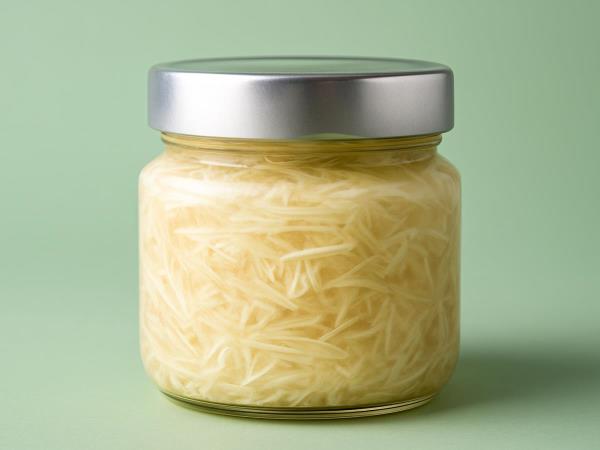
Use a fresh root rather than a jarred, pre-prepared product {-15454}€” the volatile compounds degrade quickly once the root is processed and preserved. It is best to use a glass preserving jar. Grate the horseradish first and pour the wine vinegar over it. Close the jar tightly and place it somewhere at room temperature, away from direct sunlight. Shake the jar well every day {-15454}€” multiple times if you like. After ten days the remedy is ready.
How to Use It
For Blocked Sinuses
If you want to treat the sinuses, inhale the vapours of the mixture for at least five minutes every day. Cover your head with a towel and try to breathe calmly and as deeply as possible. This is the same principle as a classic steam inhalation, except the horseradish adds its own decongestant chemistry to the warm vapour.
For Headaches Associated With Sinus Congestion
If you want to treat headaches, soak a towel in the mixture and place it on your forehead or the affected area overnight. This is a traditional compress approach; it may ease the sensation of pressure in the forehead and around the eyes. If your headaches are frequent, severe, or not related to congestion, it is always worth seeing a doctor to rule out other causes.
As a Preventive Measure in Winter
Inhaling horseradish and wine vinegar is considered a good preventive protection against winter illnesses. In traditional German medicine, horseradish has been used for more than 500 years as a remedy for colds and flu. Home remedies built around horseradish have circulated for decades among home cooks looking for a natural pick-me-up {-15454}€” and this particular preparation fits neatly into that tradition.
A Few Practical Notes
Horseradish is very pungent, so it is best to use it sparingly. It may irritate the mouth, sinuses, or stomach if used in high amounts. When inhaling, start with shorter sessions and move your face further from the jar if the vapour feels too intense {-15454}€” there is no benefit in overwhelming the mucous membranes. Although horseradish is natural, it is not suitable for everyone, so anyone with asthma, gastric ulcers, kidney disease, or who is pregnant should check with a healthcare provider before using concentrated horseradish preparations.
If you enjoy the root in other forms, you might also want to read about Horseradish, Lemon, and Honey: The Grandmother's Trio That Refuses to Go Out of Style for another take on winter wellness, or learn what happens when you try What happens if you eat horseradish on an empty stomach?.
The beauty of this old recipe is exactly what made it survive millennia: two ingredients, no special equipment, and results your sinuses will notice within minutes of opening the jar.
Information on this website is for educational purposes only and is not medical advice.
expert, nutritionist
 Would you like to be informed about news on the website?















|

