



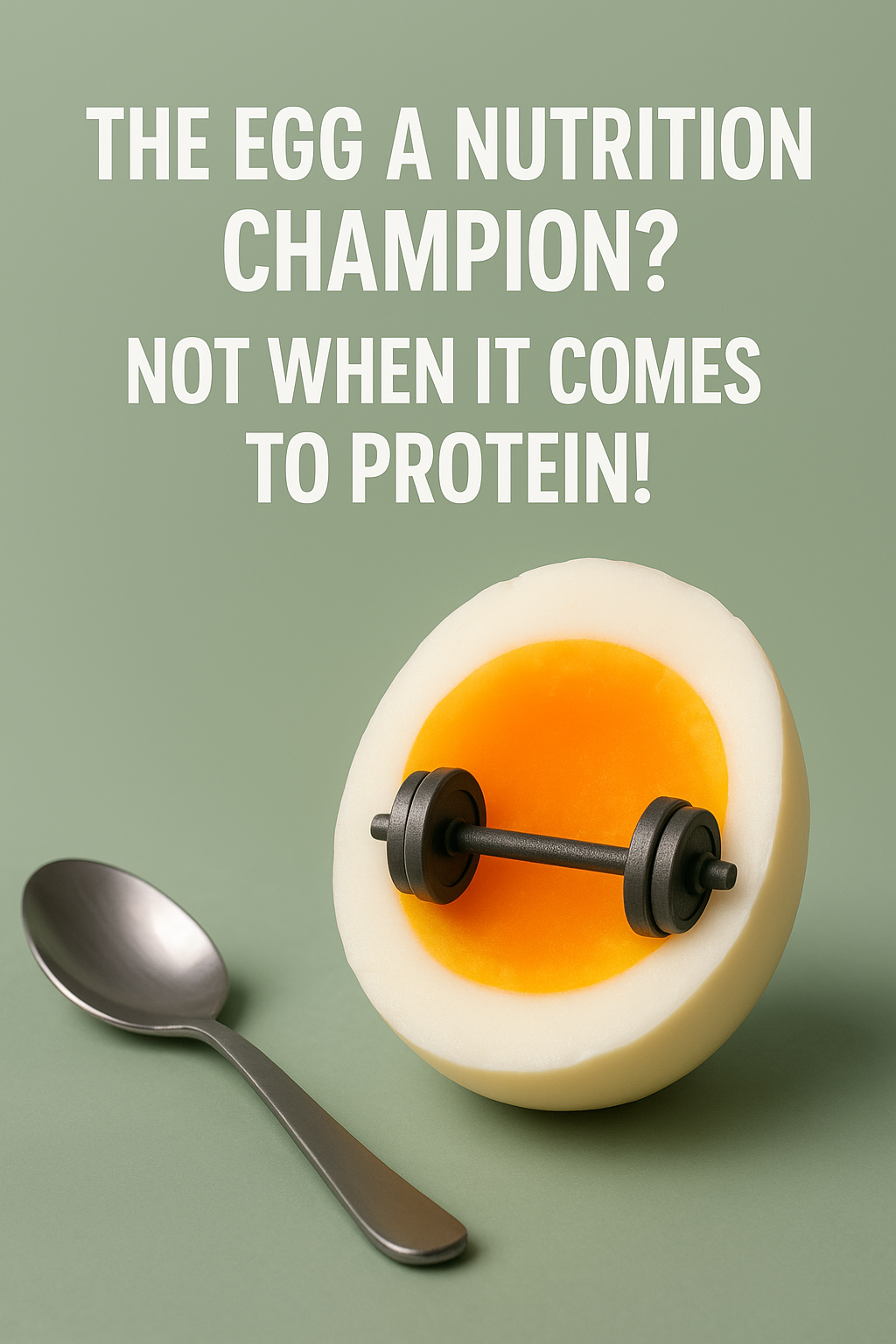


The Egg a Nutrition Champion? Not When It Comes to Protein! These 5 Foods Easily Beat It...
expert, nutritionist
Ask almost anyone to name the ultimate protein food and the answer comes back fast: the egg. It's cheap, it's versatile, and it has been the bodybuilder's breakfast for generations. But put the numbers side by side and the picture changes. A large egg contains roughly 6 grams of protein, which works out to about 12–13 grams per 100 grams. Spirulina, in its dried form, comes in at up to 57%. Gram for gram, the humble egg is left far behind. Discover 5 foods that are real protein treasures.
Few people know this better than Arnold Schwarzenegger. Seven-time Mr. Olympia and the most famous bodybuilder in history, he built his career on meat, eggs and dairy. In later life, on his doctors' advice, he cut his meat intake dramatically. He now says he eats a mostly plant-based diet and has spoken openly about how he gets his protein from lentils, salads and veggie burgers instead of steak. As he put it in one interview, he realised that "you really don't have to get your protein from meat". He hasn't given up animal foods completely, but, as The Jerusalem Post reported, he now relies largely on plant proteins to maintain his muscles. In his Arnold's Pump Club newsletter, he has also written that plant-based protein powders can offer muscle-building benefits similar to whey when the serving is large enough. His story is a good reminder that the egg is only one of many paths to a protein-rich plate.
What Exactly Are Proteins?
Proteins are complex organic molecules made up of at least 50 amino acids linked together in chains. We distinguish between simple proteins and conjugated proteins (proteids), which also contain a non-protein component. They are central to cellular metabolism, and because our body is not able to synthesize all the amino acids it needs, proteins are an essential part of the diet. The body needs them to build and repair its own tissues (muscles, skin, hair, enzymes, hormones and immune cells), and they can also serve as a source of energy.
How much do we need? According to the European Food Safety Authority (EFSA), healthy adults need about 0.83 grams of protein per kilogram of body weight per day. For a person weighing 70 kg, that's roughly 58 grams. Needs can be higher for active people and older adults. You can read more in our articles No Protein, No Health: Why This Nutrient Is Essential for Every Cell in Your Body and The timing of protein intake is crucial for older adults.
Quantity Isn't Everything: Why the Egg Still Matters
To be fair to the egg, it has a strength that raw numbers don't show: protein quality. In 2013 the Food and Agriculture Organization of the United Nations (FAO) recommended a newer method of measuring protein quality called DIAAS (Digestible Indispensable Amino Acid Score). It looks at how well each essential amino acid is actually digested and absorbed. Eggs, milk and meat score at the top, and soy is close behind. Many other plant proteins score lower on their own, which is why combining different sources is a smart idea.
Cooking matters too. A study published in The Journal of Nutrition found that the body absorbed noticeably more protein from cooked eggs than from raw ones. So the egg remains an excellent food. It simply isn't the protein heavyweight many people assume.
Where Can We Find Plenty of Protein?
All of the figures below are approximate and refer to 100 grams of food. Values can differ between products, so the nutrition label on your package is always the best guide. The data is broadly in line with the USDA FoodData Central database.
1. Spirulina
Spirulina is a microscopic blue-green alga (technically a cyanobacterium) that has been used as food for centuries, for example around Lake Texcoco in Mexico and Lake Chad in Africa. In 100 grams of dried spirulina there is around 56–57% protein, along with iron, beta-carotene and a good range of B vitamins. It is such a concentrated source that NASA-funded research studied spirulina as a possible food for astronauts on long space missions, noting that under good growing conditions its protein content could approach 70% of its organic weight.
Here's an honest correction to a popular claim, though. A tablespoon of spirulina powder weighs about 7 grams, which gives you roughly 4 grams of protein. That's a nice boost, but it doesn't cover your daily protein needs. As Examine.com points out, typical amounts of spirulina cover only a fraction of daily requirements. It's best thought of as a supplement to your meals, stirred into a smoothie or juice, not a replacement for them.
One more thing vegetarians and vegans should know: research from Journal of Nutritional Science and Vitaminology found that most of the vitamin B12 in spirulina tablets is pseudovitamin B12, a form the human body cannot really use. Spirulina should therefore not be counted on as a reliable B12 source.
Good to know: choose spirulina from reputable producers that test for contaminants. According to WebMD, it may interact with certain medications, including blood thinners, immunosuppressants and diabetes medicines. It also isn't recommended for people with autoimmune conditions without a doctor's advice.
2. Soy
Soy has a long history in East Asia. Archaeologists from the University of Oregon, publishing in PLoS ONE, found evidence that people were already growing soybeans in northern China around 5,500 years ago. People soon realised that, thanks to its high protein content, soy could stand in for meat. That's how tofu, tempeh, soy milk and miso became staples of Asian cuisine.
Soy is one of the few plant foods with a near-complete set of essential amino acids. It also offers B vitamins (thiamine, riboflavin and folate) and fibre, and dried soybeans contain around 36–37 grams of protein per 100 grams. Keep in mind that cooking adds water, so a portion of cooked soybeans or tofu delivers less per 100 grams, typically 12–17 grams.
What about genetic modification? It's true that soy is the world's most widely grown genetically modified crop. According to figures from the International Service for the Acquisition of Agri-biotech Applications (ISAAA), around 77% of soybean area worldwide was planted with biotech varieties in 2017. However, non-GM soy is far from extinct. In Europe, GM soy can't be grown commercially, and organisations such as Donau Soja promote GM-free soybeans grown across the continent. If this matters to you, look for "organic" or "non-GMO" on the label.
For more on plant sources, read Plant Proteins for a Longer Life.
3. Greek Yogurt
Greek yogurt differs from regular yogurt because it is strained to remove much of the liquid whey. This makes it thicker and creamier, and also concentrates its protein. Full-fat versions also contain more fat than ordinary yogurt, but low-fat and fat-free versions are widely available. Greek yogurt was traditionally made from sheep's milk, while today cow's milk versions are the most common.
In 100 grams of plain Greek yogurt there are about 10 grams of protein, and some strained brands go higher. That's roughly double what you'll find in regular yogurt. As a fermented food with live cultures, it can be a pleasant part of a digestion-friendly diet, and many people find it a filling start to the day. A bowl with fruit and a sprinkle of seeds makes a balanced breakfast. Choose plain varieties and sweeten them yourself, since flavoured ones often contain a surprising amount of added sugar.
Why breakfast protein matters is explained in 4 Bad Breakfast Habits.
4. Cheese
The group of hard cheeses made from cow's milk is known for rich flavour, an enticing aroma and a recognisable look, sometimes with holes in the texture, as with Emmental. During the long ripening process water evaporates and protein becomes concentrated. Hard cheeses such as Parmesan, Emmental or Gruyère contain around 27 to 35 grams of protein per 100 grams, about three times more than an egg. They are also an excellent source of calcium.
A small correction to a common belief: most of the fat in cheese is saturated, not unsaturated, and many hard cheeses are fairly salty. That doesn't mean you need to avoid cheese. It's a good reason to enjoy it in modest portions, for example a slice or two, or some grated cheese over a dish. Even a small amount brings plenty of protein.
5. Pumpkin Seeds
When you miss a snack while watching TV, choose pumpkin seeds instead of chips. Hulled pumpkin seed kernels contain around 30 grams of protein per 100 grams, more than most other common seeds. They also provide healthy unsaturated fats, fibre, antioxidants and an impressive amount of minerals, especially magnesium and zinc. A small handful (about 30 grams) gives you roughly 9 grams of protein, more than a large egg. All this will help you feel full and can contribute to your overall well-being.
The caveat is calories: pumpkin seeds contain about 560 kcal per 100 grams, so a handful is a sensible portion. For practical tips, see You Bought Protein Food: Did You Fall for a Marketing Trap?
Protein at a Glance (per 100 g, approximate)
| Food | Protein |
|---|---|
| Egg (whole) | ~12.5 g |
| Spirulina (dried) | ~57 g |
| Soybeans (dried) | ~36 g |
| Hard cheese (e.g. Parmesan) | ~27–35 g |
| Pumpkin seed kernels | ~30 g |
| Greek yogurt (plain) | ~10 g |
The Bottom Line
The egg deserves its good reputation, especially for the quality of its protein, but it's far from the only protein champion. Spirulina, soy, Greek yogurt, hard cheese and pumpkin seeds can all help you build a more varied, protein-rich menu. The key is variety: mixing animal and plant sources, and spreading protein over the day instead of eating it all at dinner. To avoid the most common pitfalls, read 3 mistakes when consuming protein.
Information on this website is for educational purposes only and is not medical advice.
expert, nutritionist
 Would you like to be informed about news on the website?












|

