


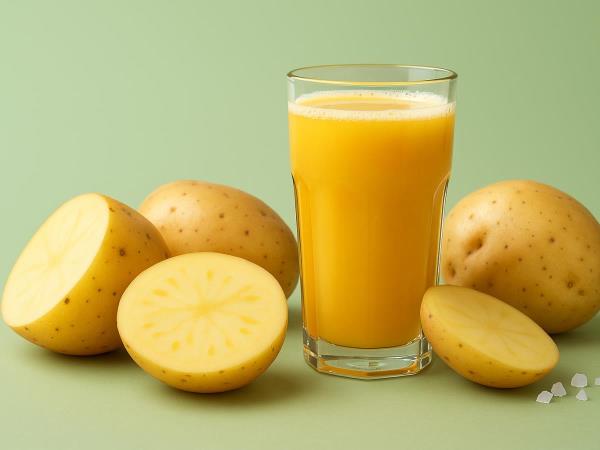


The Potato Secret Most People Don't Know: The Raw Juice Traditionally Sipped for Liver and Digestive Wellness
expert, nutritionist
The humble potato has a reputation problem. We blame it for weight gain and fill our plates with it fried, salted and smothered in butter. But in the folk medicine of Central Europe and Japan there is a very different potato: raw, freshly pressed and sipped slowly from a small glass in the morning. A few researchers have started taking that old habit seriously.
One of our readers, a retired schoolteacher in her sixties, tried it after years of heartburn following heavy dinners. "My grandmother swore by it, but I thought it was just one of those village stories," she wrote. "I drank half a glass of fresh potato juice before breakfast for about a week. The taste was earthy, a bit like raw nuts, and the burning after meals clearly calmed down. I still keep a few potatoes aside just for juicing." Her experience is personal, not proof, but it matches what many people report and what a small clinical study has hinted at (more on that below).
Potatoes are not the enemy
Potatoes themselves are not harmful. The problem is how we use them, and the combinations that burden the body instead of strengthening it. Deep-fried chips, heavy cream sauces and huge portions are a very different thing from a plain potato. If you want to rethink everyday staples, see our article Foods We Use Incorrectly. For a healthier way to enjoy cooked potatoes, try The 3-Ingredient Muffin-Tin Trick That Turns Leftover Potatoes Into Golden, Crispy Bites.
Potatoes contain B vitamins (especially B6), vitamin C, plenty of potassium, and smaller amounts of calcium, iron, phosphorus and copper. You can check exact values in the USDA FoodData Central database, and Medical News Today gives a good overview of the potato's nutritional profile. Fresh juice keeps much of the water-soluble vitamin C and potassium. Because most of the starch and fibre are left behind in the pulp, the juice is light rather than filling.
How do we make potato juice?
The process is simple. Take one medium-sized potato, peel it and cut it into small cubes. Put the cubes in a juicer and press out the fresh juice. If you don't have a juicer, use an ordinary blender with a splash of water, then strain everything through a clean cotton cloth.
Important safety step: choose firm, fresh potatoes and never use potatoes that are green, sprouted, damaged or bitter. Cut away any green patches and "eyes" generously. Potatoes naturally contain glycoalkaloids (mainly solanine and chaconine), and these concentrate in green and sprouting parts and just under the skin. The European Food Safety Authority (EFSA) risk assessment of glycoalkaloids, published in the EFSA Journal in 2020, notes that high intakes can cause nausea, vomiting and diarrhoea. Peeling and using only good-quality tubers keeps levels low.
The juice is best fresh, because it oxidises and darkens within minutes. Drink it slowly and, if possible, without additives. If you really don't like the taste, sweeten it with a teaspoon of honey or mix it with a little carrot or apple juice. Start small: a few tablespoons at first, building up to around half a glass (about 100 ml).
Traditionally, potato juice is taken on an empty stomach, at least half an hour before breakfast, usually as a short course of a week or two rather than a permanent habit.
What does research actually say?
Digestive comfort. This is the best-studied area. In a pilot study by Sigrun Chrubasik and colleagues, published in Phytomedicine (2006): "Efficacy and tolerability of potato juice in dyspeptic patients: a pilot study", 44 people with indigestion drank about 100 ml of potato juice twice a day for a week. About two-thirds reported some improvement in their symptoms and the juice was well tolerated. The authors stress, however, that placebo-controlled studies are still needed. A later systematic review in Phytotherapy Research (2010), "Medicinal use of potato-derived products", reached the same conclusion: the results are encouraging, but the evidence is still limited. Swiss health insurer CSS also lists potato juice among traditional home remedies for an irritated stomach and heartburn.
Stomach lining and inflammation. Laboratory and animal research, such as the study "Spray-Dried Potato Juice as a Potential Functional Food Component with Gastrointestinal Protective Effects" in Nutrients (2018), suggests that compounds in potato juice may help protect the stomach lining and calm inflammation. In 2013, researchers presented a poster at the Society for General Microbiology (now the Microbiology Society) conference showing that a potato extract was active against Helicobacter pylori in the lab. This work is summarised by A.Vogel. Test-tube results don't always carry over to people, though, so this is a promising lead rather than a proven effect.
Liver and gallbladder. In folk tradition, potato juice is said to "cleanse" the liver and gallbladder. Stories also circulate that some Japanese traditional practitioners recommend it as part of their approach to liver complaints. We could not find clinical studies confirming a liver-cleansing effect in humans. The liver does its own detoxifying work, and what supports it best is an overall healthy diet, limited alcohol and a healthy body weight. Hepatitis is a serious condition that needs medical diagnosis and treatment, as the NHS explains, and potato juice cannot replace that. If you enjoy fresh juices as part of a liver-friendly diet, see also Detox Juice and Cancer Remedy.
Joints, immunity, cholesterol and other claims. Folk medicine also credits potato juice with easing joint stiffness and arthritis, strengthening the immune system, lowering cholesterol and helping with constipation. The vitamin C and antioxidants in potatoes do contribute to normal immune function. However, the National Capital Poison Center (Poison Control) notes that the evidence for effects on inflammation, blood pressure and cholesterol is still preliminary. Since the juice contains very little fibre, its effect on cholesterol and digestion is likely modest. For extra warming, anti-inflammatory support in the colder months, you might also enjoy Warm Water with Turmeric Against Winter Troubles.
Glycoalkaloids and cancer research. Potato glycoalkaloids have been studied in laboratories for their effects on tumour cells. This research is at a very early stage and mostly done on cells in a dish, and as Poison Control points out, there is not enough evidence to recommend potato juice for cancer prevention. Remember, too, that the same compounds are the reason for the safety advice above. More is not better.
Who should be careful?
- People with kidney disease or anyone told to limit potassium, because potato juice is rich in it.
- People with diabetes, who should watch how it affects their blood sugar.
- People with inflammatory bowel disease: the Crohn's & Colitis Foundation is a good source of dietary guidance during flare-ups, and raw vegetable products are often best avoided then.
- Pregnant or breastfeeding women and children, who should skip regular use unless a doctor agrees.
- Anyone taking regular medication or with an ongoing liver, gallbladder or stomach condition, who should talk to their doctor first.
If you notice nausea, cramps or diarrhoea, stop drinking the juice.
The bottom line
Raw potato juice is an inexpensive, old-fashioned tonic with an interesting history and some early, encouraging research, especially for occasional indigestion. Made from fresh, peeled, non-green potatoes and taken in small amounts for a short time, it can be a curious addition to a balanced diet. It is not a cure, and it is no substitute for medical care, but it is a good reminder that the "ordinary" potato is far more interesting than its reputation suggests.
Information on this website is for educational purposes only and is not medical advice.
expert, nutritionist
 Would you like to be informed about news on the website?














|

