





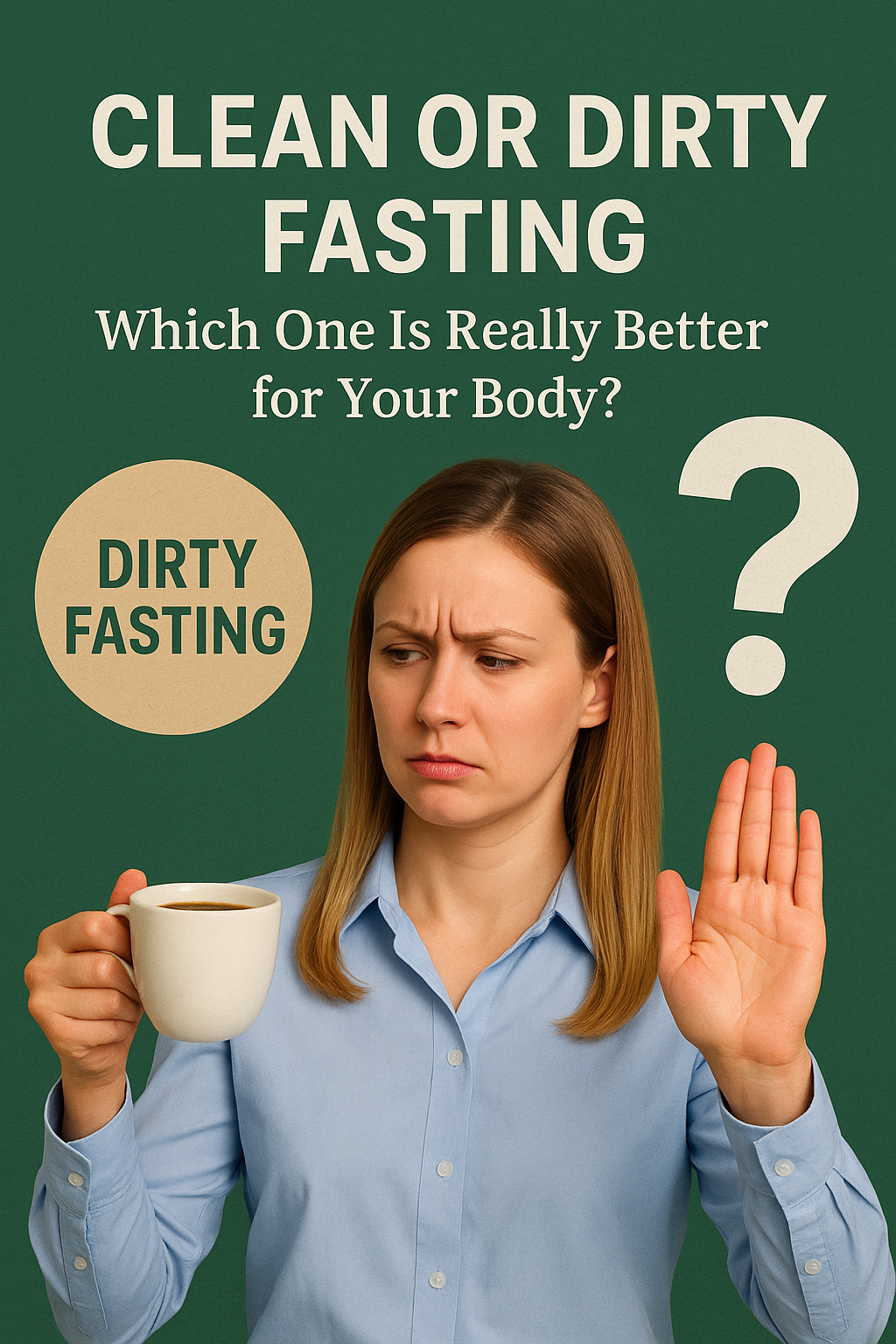
Clean or Dirty Fasting: Which One Is Really Better for Your Body?
expert, nutritionist
Your morning splash of milk in coffee, a spoonful of bone broth, a glass of green juice – do any of these "ruin" your fast? Ask ten people who fast and you'll likely get ten different answers. This small question has split the intermittent fasting world into two camps: those who fast "clean" and those who fast "dirty." The good news? The gap between the two is narrower than the online debates suggest. And for most people, the habit that matters most is simply staying consistent.
A Famous Morning Without Breakfast
One of the best-known fans of time-restricted eating is actress Jennifer Aniston. In an interview with the UK magazine Radio Times, she explained that she skips food in the morning and noticed a big difference after going 16 hours without solid food (The Irish Times reported on her routine). Interestingly, she also mentioned starting some mornings with a glass of celery juice. As nutrition experts quoted by Health pointed out, anything containing calories – even celery juice – technically breaks a strict fast. In other words, one of the world's most famous intermittent fasters may well have been practicing a "dirty" fast without calling it that.
Readers often tell us a similar story. One reader shared that she gave up fasting twice because black coffee on an empty stomach felt unbearable. On her third attempt she allowed herself a small splash of milk, and that tiny change was what finally helped her stay on track for months.
What Is Fasting, Exactly?
Fasting means limiting the amount of food we eat within a certain period of time. A fast can last a whole day, or just a few hours. The most popular versions are 12-, 14- and 10-hour fasts. The most popular of all is the 16-hour fast, which works on the 16:8 principle: you eat within an 8-hour window and fast for the remaining 16 hours. In practice, this often means eating normally between noon and 8 p.m. and eating nothing between 8 p.m. and noon the next day – most of which you spend asleep. You can read more about how this schedule works in this overview from Healthline.
The first day of such a routine is usually the hardest. Many people find their body adapts to the new rhythm after about 3 to 5 days. That's why it is so important to get through the first day – after that, it tends to get easier.
Clean vs. Dirty Fasting: The Real Difference
Clean fasting means consuming nothing with calories during the fasting window – only water, black coffee and plain, unsweetened tea. This is the traditional approach described by institutions such as Johns Hopkins Medicine.
Dirty fasting allows a small number of calories during the fasting window – for example a splash of milk in coffee, a little bone broth or a few sips of juice. Popular guides usually set the limit at around 50 calories, as explained in this article from Healthline. However, it's worth knowing that this "50-calorie rule" comes from internet consensus rather than clinical trials – a point made clearly in this analysis by Takeroon.
So the 16:8 schedule itself is neither clean nor dirty – it all depends on what you drink and nibble during those 16 hours.
What Happens in the Body During a Fast
The processes that take place during fasting are quite complex. As hours pass without food, insulin levels gradually decrease, while the hormones glucagon and epinephrine (adrenaline) rise and signal fat cells to release stored fat. Some of this fat travels to the liver, where it can be converted into ketones. These ketones can then become an alternative source of energy for the brain, instead of glucose, which is its usual fuel. This "metabolic switch" is described in detail in a well-known review by Rafael de Cabo and Mark Mattson published in the New England Journal of Medicine.
A clean fast is generally seen as the way to keep this process as uninterrupted as possible. With a dirty fast, the effect depends on what you consume. A small amount of fat (such as a splash of cream) is thought to affect insulin less than sugary drinks or juice. Even so, nobody can say exactly where the line lies for each person.
What Does the Research Suggest?
Studies suggest that intermittent fasting may support heart and metabolic health, may help some people manage blood pressure and blood sugar, and may help with weight management. A randomized controlled trial published in the Journal of Diabetes Investigation (via PubMed Central) found that adults with obesity and type 2 diabetes following 16:8 or 14:10 schedules lost more weight and saw improvements in metabolic markers compared with a control group. The 16:8 group lost the most weight.
At the same time, it's important to keep expectations realistic. A 2026 report by Medical News Today notes that 16:8 eating looked promising for weight loss but did not stand out for blood pressure control. A recent evidence review discussed by FlaglerLive found that intermittent fasting performed about as well as standard dietary advice, not dramatically better.
Most of these studies tested strict, clean fasting windows. Almost no research directly compares clean and dirty fasting. How dirty fasting works is still not fully understood, and above all, it likely works a little differently in every body. Many people believe fasting – in either form – has benefits we haven't yet discovered. The honest answer is that we don't yet have enough data to understand every process that happens during a fast.
So, Which One Should You Choose?
One thing is clear: the best fasting plan is the one you can actually stick to. If you can comfortably manage a clean fast, it is the most predictable option and the closest to what has been studied. But if a splash of milk in your morning coffee is the difference between quitting on day two and keeping going for months, a dirty fast may be the more practical choice for you.
Whichever version you choose, keep these points in mind:
- Give yourself time. Allow at least 3 to 5 days for your body to get used to the new rhythm before deciding whether it works for you.
- Keep the "extras" truly small. If you fast dirty, stick to tiny amounts and favor options like a splash of milk or plain broth over juice, sweetened drinks or snacks.
- Quality matters in the eating window. Fasting does not cancel out a poor diet. Your meals should be rich in vitamins, minerals and other micronutrients, and above all varied. It's also worth knowing which Hello, and Fattening: Foods that Sabotage Your Diet can quietly undo your efforts.
- Watch your portions. Eating within eight hours doesn't mean eating without limits. Pay reasonable attention to how much you eat.
- Don't forget sleep. Rest plays a bigger role in appetite and weight than many people realize – see When you sleep too little, your belly grows.
- Stay hydrated. Water, black coffee and plain tea are allowed in both versions.
Breakfast myths also deserve a mention here. Contrary to popular belief, research summarized by Examine suggests that extending your overnight fast does not, by itself, slow down your resting metabolic rate. What matters more is your overall eating pattern.
Who Should Be Careful?
Fasting is not suitable for everyone. If you are pregnant or breastfeeding, have diabetes (especially if you take medication that lowers blood sugar), have a history of eating disorders, are underweight or have any chronic health condition, talk to your doctor or a registered dietitian before you start. Longer or more extreme fasts in particular should only be done with professional guidance – a point we also explored in Can What You Eat Really Change How Often You Get Sick? Here's What the Evidence Actually Shows. And if you're tempted by plans that promise dramatic results in just a few days, read The 3-Day Diet Menu Every Bride Seems to Be Talking About first.
If you prefer a gentler approach without strict eating windows, you may also enjoy Diet without dieting and 2 kg less per week.
Frequently Asked Questions
Does coffee with milk break a fast?
Strictly speaking, yes – any calories technically end a clean fast. In a dirty fast, a small splash of milk is usually considered acceptable.
Is dirty fasting still "real" fasting?
Not in the strict sense. Still, it may keep you close to a fasted state and can make the routine easier to maintain, which for many people is what matters most in the long run.
How long does it take to get used to 16:8?
Many people find the first day the hardest and feel more comfortable after 3 to 5 days, though everyone adapts at their own pace.
Information on this website is for educational purposes only and is not medical advice.
expert, nutritionist
 Would you like to be informed about news on the website?















|

