


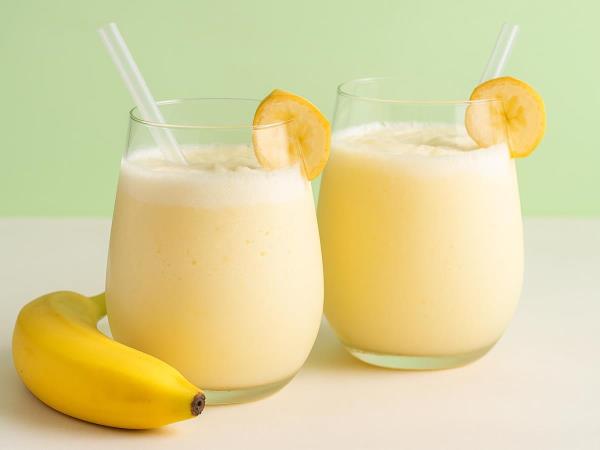


Tap or Spring? How a Glass of Sparkling Mineral Water Turns an Ordinary Smoothie Into an Energy Booster
expert, nutritionist
Most of us never think twice about the water we pour into a blender. Tap or bottled, it all seems interchangeable. But there's a quiet distinction hiding in the world of bottled water that few people ever explore: the difference between ordinary bottled tap water and water drawn from a genuine natural mineral spring — water that has spent thousands of years dissolving minerals deep underground before it ever reaches a glass.
A guest at the historic Rogaška Slatina health resort once described the moment she first tasted water straight from the spring in the resort's drinking hall: sharper, saltier, almost metallic compared to anything from a supermarket shelf. It wasn't just a curiosity — it was a reminder that not all water is created equal, and that some of it has a story worth telling.
Only Two True Mineral Springs
Slovenia is dotted with what hydrologists call thermal springs — springs where the water emerges warmer than 20{-15696}C and carries at least 1,000 mg of dissolved solids and 250 mg of dissolved CO2 per litre. Thermal springs are relatively common. Genuine mineral springs are not. In fact, Slovenia is home to only two that meet the strict definition: Donat Mg, from the spa town of Rogaška Slatina, and Radenska, from the springs of Radenci.
What sets a mineral spring apart is the combination of its journey and its chemistry. According to the Rogaška Medical Center, Donat Mg forms at a depth of 280 to 600 metres, where water slowly dissolves rock rich in magnesium, calcium, sulphates and hydrogen carbonates — a process that, using carbon-dating methods, is estimated to take roughly 8,000 years. That same source confirms Donat Mg carries more than 1,000 mg of magnesium per litre, making it one of the most magnesium-rich waters in the world, alongside significant natural CO2.
Radenska tells a similar story from a different corner of the country. Its three springs near the Austrian border produce water with roughly 3,000 mg of total dissolved minerals per litre and several grams of naturally occurring CO2, according to Fine Liquids' profile of the source. Historically, the water was even served at the imperial court in Vienna and the Vatican before it became the everyday sparkling water found in Slovenian shops today. The Radenci Health Resort notes that its CO2-rich water has traditionally been offered as part of wellness routines focused on circulation and general relaxation — though, as with any spa treatment, this is a traditional wellness practice rather than a medical prescription, and anyone with a health condition should check with a doctor first.
By strict definition, water this rich in dissolved CO2 — more than 1,000 mg per litre — is technically called "kislica," or acidulous water, a term still used across Central Europe for naturally sparkling mineral springs.
Why Mineral Water Makes Such an Interesting Smoothie Base
Here's where it gets useful for anyone standing in front of a blender. Ordinary tap water is essentially a neutral carrier — it dilutes, but it doesn't add anything. A natural mineral water, on the other hand, arrives already carrying magnesium, calcium, potassium, sodium and bicarbonates, plus a natural fizz from its own CO2. Blend that with fruit, and you get a drink that combines the vitamin content of the fruit with a naturally occurring mineral profile that plain water simply can't offer.
There's a catch, though, and it's an important one: this kind of smoothie doesn't keep. The CO2 in mineral water reacts differently depending on which fruit you pair it with, and the moment you blend, oxidation begins. A review published in the journal Journal of Food Science and Technology on fresh vegetable and fruit smoothies confirms that vitamin C — one of the most fragile nutrients in any blended drink — degrades steadily once fruit tissue is broken down and exposed to oxygen, with the rate of loss depending heavily on storage time and temperature. The takeaway lines up neatly with old kitchen wisdom: make it, drink it, don't let it sit.
A Wellness Enthusiast's Take
One long-time visitor to Rogaška Slatina, who has been making the trip to the spa town for over a decade, describes an almost ritual-like habit picked up during her stays: filling a glass straight from the drinking hall each morning, then bringing a bottle home to experiment with in her own kitchen. "It never tastes like anything from a shop," she said, "and once you blend it with fruit, you notice the fizz argues with the banana a little — you really do have to drink it fast." It's a small, personal observation, but it echoes exactly what the food science says about CO2 and freshly blended fruit.
A Five-Minute Energy Smoothie
For a taste of what this actually looks like in practice, here's a simple recipe built around acidulous mineral water. As with any smoothie, feel free to swap the fruit for whatever you have on hand.
Ingredients:
- 1 dcl (about 3.4 fl oz) acidulous mineral water
- 3 bananas
- Juice of 1 lemon
- 1 tablespoon honey
- Cinnamon, to taste
Preparation:
Blend the bananas and lemon juice first until smooth, then add the remaining ingredients and blend briefly to combine. Bananas bring natural sweetness along with potassium, magnesium and B vitamins, while the lemon juice's acidity helps slow down vitamin C oxidation once the drink is exposed to air — a detail confirmed by food-science reviews on blended fruit. Feel free to swap the bananas for any other fruit or vegetable you enjoy.
For more inspiration along these lines, Foodwhisper has a few related reads worth checking out: 5 drinks that are stronger than dietary supplements for more lemon-and-banana blender combinations, Tasty and Healthy Meals from the Blender for a broader look at what a blender can do beyond smoothies, and 3 tricks to never be hungry, which touches on mineral water as a lower-calorie alternative to sweetened soft drinks.
The Bottom Line
Not every bottle labeled "mineral water" tells the same story. True mineral springs like Donat Mg and Radenska are geological rarities, shaped by thousands of years underground before they ever reach a glass — and that history is part of what makes them an interesting base for a fruit smoothie, not just a health-food trend. As always, a smoothie is a tasty addition to a varied diet, not a substitute for one, and this article is for general interest and educational purposes only, not medical advice.
Information on this website is for educational purposes only and is not medical advice.
expert, nutritionist
 Would you like to be informed about news on the website?












|

