






Date: 07/20/2026 - GOOD TO KNOW
When you eat may be more important for your heart than what you eat – at least for women
AUTHOR:
Zvone Stor
expert, nutritionist
expert, nutritionist
A study of 112 women showed that every additional 1% of calories eaten after 6 p.m. worsens heart health – raising blood pressure, BMI, and blood sugar.
A recent study conducted among 112 women, with an average age of 33, revealed something extremely important. Among the participants, 44% were Latina, which is interesting, as certain ethnic groups have specific dietary habits that may be more or less beneficial for health. In this study, scientists tracked what – and especially when – these women ate for two years in a row and compared this with the health of their hearts.
How was the study actually carried out?
Each woman recorded in a mobile app what she ate, when, and in what quantity for seven days during two separate periods – first at the beginning of the study, then again a year later. This wasn’t just a simple survey, but a detailed dietary log. Afterwards, the researchers used a heart health scoring system developed by the American Heart Association called Life's Simple 7.
This is a set of seven key factors that significantly influence your heart health:
The rule is simple: more points mean a healthier heart.
And what did they find?
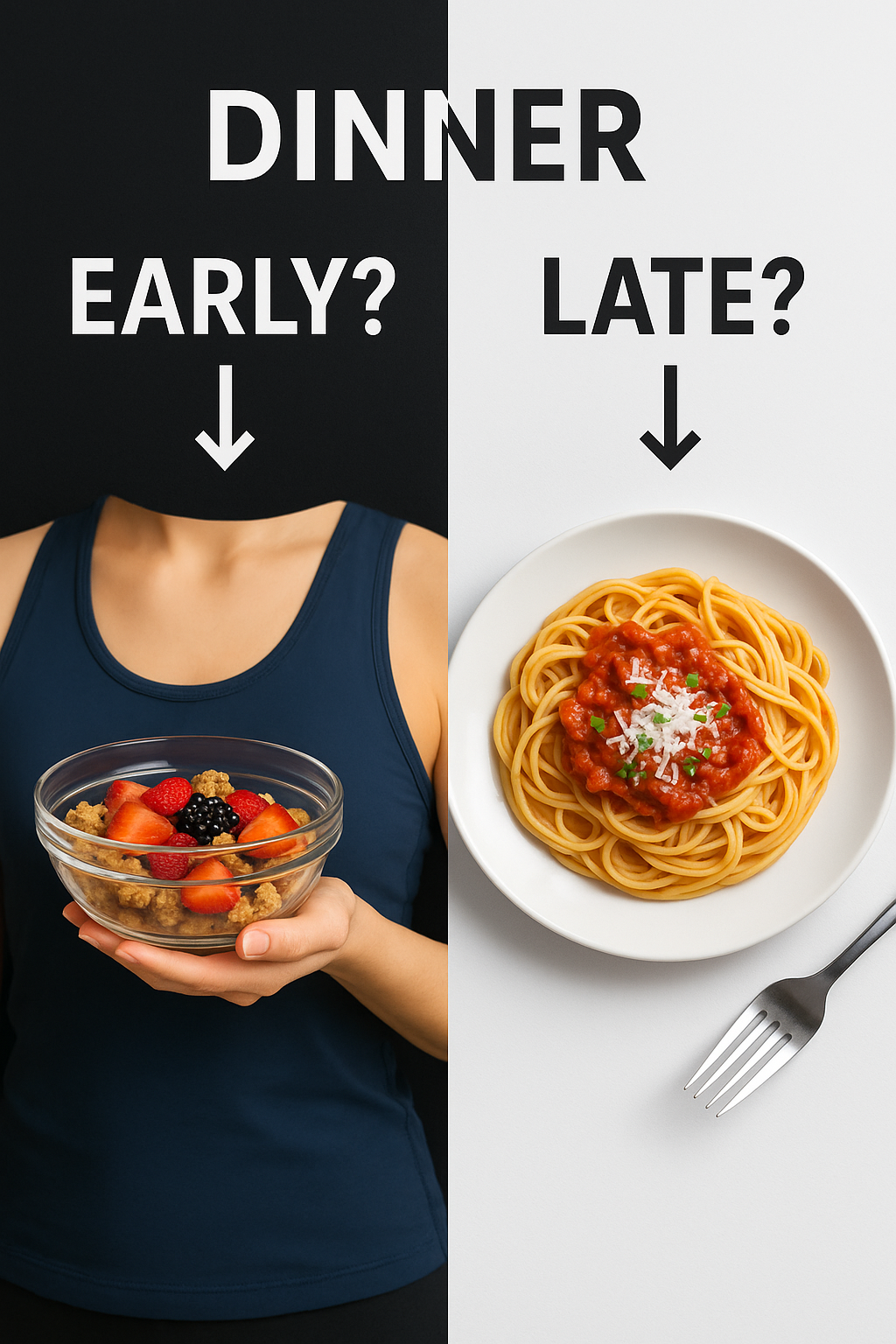
Late dinner: poorer metabolism and higher risk of heart problems
As many as 85% of women ate the majority of their daily calories after 6 p.m. But here’s the catch: those who ate a higher portion of food after this hour had worse results in nearly all heart health indicators.
For every extra 1% of calories consumed after 6 p.m., heart health slightly deteriorated. To put it more simply: if someone typically ate 2,000 calories a day, 1% would be just 20 calories – that’s just one cookie or a piece of bread with cheese! Even such a small change, if it happens regularly, affects the body.
Women who ate dinner late had:
So, if you eat pizza or dessert at 9 p.m., the body processes this food more slowly and prefers to store the excess energy – as fat. And here’s where problems start.
Why is this especially important for women?
The female body is somewhat different from the male, mainly due to hormones like estrogen and progesterone, which affect metabolism, blood pressure, and blood sugar regulation. Some studies suggest that the effects of late eating appear faster and are more pronounced in women than in men.
A study published in the Journal of Clinical Endocrinology & Metabolism showed that women who ate dinner late had higher insulin resistance and poorer glucose control compared to those who ate dinner earlier – with just a two-hour difference!
What do old folk practices say?
Looking back, it quickly becomes clear that people once had much more structured eating habits. In many households, people ate three times a day: breakfast at around 6 a.m., lunch between 11 a.m. and 1 p.m., and dinner at around 5 p.m. In the evening, it was common to have nothing more than soup or dairy dishes, as it was believed the body needed rest at night, not extra weight in the stomach.
In Ayurveda, the ancient Indian medicine that many consider the mother of all natural healing, the main meal should be around noon, when digestive strength is at its peak. In the evening, only light foods should be eaten, which don’t burden the body.
And wouldn’t you know, modern science is now confirming exactly that!
How many people actually eat dinner too late?
According to the American National Institutes of Health data from 2023, as many as 60% of adults consume more than 30% of their daily calories after 7 p.m. In Europe, we don’t have exact figures, but several studies indicate that about 70% of people eat dinner after 7 p.m., with 25% doing so after 9 p.m.
Many do this because during the day they simply don’t have time for a proper meal (work, commuting, kids, errands, etc.). Thus, dinner becomes the main meal of the day. But the body doesn’t welcome this with enthusiasm.
What can you do?
You don’t have to suddenly never eat dinner after 6 p.m. again, but if you want a healthier heart, better sleep, and lower disease risk, we warmly recommend the following:
Why is sleep important, too?
By the way, poor sleep is directly linked to an unhealthy heart. If you eat late, your body has a harder time falling asleep and resting properly. According to the American Heart Association, people who sleep less than 6 hours per night and eat dinner late have a 40% higher risk of heart disease.
Final thought
It may seem like one late dinner doesn’t matter much. But if it becomes a habit, it can trigger a chain reaction that affects your heart, weight, and wellbeing in the long run.
If possible, eat earlier. Your heart will thank you and your sleep will also be more restful. Make sure your plate is full of health – at the right time!
Information on this website is for educational purposes only and is not medical advice.
How was the study actually carried out?
Each woman recorded in a mobile app what she ate, when, and in what quantity for seven days during two separate periods – first at the beginning of the study, then again a year later. This wasn’t just a simple survey, but a detailed dietary log. Afterwards, the researchers used a heart health scoring system developed by the American Heart Association called Life's Simple 7.
This is a set of seven key factors that significantly influence your heart health:
- Smoking,
- Physical activity,
- Diet,
- Body weight,
- Blood pressure,
- Blood sugar level
- Cholesterol.
The rule is simple: more points mean a healthier heart.
And what did they find?
Late dinner: poorer metabolism and higher risk of heart problems
As many as 85% of women ate the majority of their daily calories after 6 p.m. But here’s the catch: those who ate a higher portion of food after this hour had worse results in nearly all heart health indicators.
For every extra 1% of calories consumed after 6 p.m., heart health slightly deteriorated. To put it more simply: if someone typically ate 2,000 calories a day, 1% would be just 20 calories – that’s just one cookie or a piece of bread with cheese! Even such a small change, if it happens regularly, affects the body.
Women who ate dinner late had:
- higher blood pressure,
- higher body mass index (which means a higher weight relative to height),
- poorer blood sugar control – which leads to increased risk of diabetes.
So, if you eat pizza or dessert at 9 p.m., the body processes this food more slowly and prefers to store the excess energy – as fat. And here’s where problems start.
Why is this especially important for women?
The female body is somewhat different from the male, mainly due to hormones like estrogen and progesterone, which affect metabolism, blood pressure, and blood sugar regulation. Some studies suggest that the effects of late eating appear faster and are more pronounced in women than in men.
A study published in the Journal of Clinical Endocrinology & Metabolism showed that women who ate dinner late had higher insulin resistance and poorer glucose control compared to those who ate dinner earlier – with just a two-hour difference!
What do old folk practices say?
Looking back, it quickly becomes clear that people once had much more structured eating habits. In many households, people ate three times a day: breakfast at around 6 a.m., lunch between 11 a.m. and 1 p.m., and dinner at around 5 p.m. In the evening, it was common to have nothing more than soup or dairy dishes, as it was believed the body needed rest at night, not extra weight in the stomach.
In Ayurveda, the ancient Indian medicine that many consider the mother of all natural healing, the main meal should be around noon, when digestive strength is at its peak. In the evening, only light foods should be eaten, which don’t burden the body.
And wouldn’t you know, modern science is now confirming exactly that!
How many people actually eat dinner too late?
According to the American National Institutes of Health data from 2023, as many as 60% of adults consume more than 30% of their daily calories after 7 p.m. In Europe, we don’t have exact figures, but several studies indicate that about 70% of people eat dinner after 7 p.m., with 25% doing so after 9 p.m.
Many do this because during the day they simply don’t have time for a proper meal (work, commuting, kids, errands, etc.). Thus, dinner becomes the main meal of the day. But the body doesn’t welcome this with enthusiasm.
What can you do?
You don’t have to suddenly never eat dinner after 6 p.m. again, but if you want a healthier heart, better sleep, and lower disease risk, we warmly recommend the following:
- Try to have your main meal before 6 p.m.
- Choose light evening meals – vegetable soups, cooked vegetables, some yogurt or cottage cheese.
- Avoid sweets, fatty foods, and alcohol after 8 p.m.
Why is sleep important, too?
By the way, poor sleep is directly linked to an unhealthy heart. If you eat late, your body has a harder time falling asleep and resting properly. According to the American Heart Association, people who sleep less than 6 hours per night and eat dinner late have a 40% higher risk of heart disease.
Final thought
It may seem like one late dinner doesn’t matter much. But if it becomes a habit, it can trigger a chain reaction that affects your heart, weight, and wellbeing in the long run.
If possible, eat earlier. Your heart will thank you and your sleep will also be more restful. Make sure your plate is full of health – at the right time!
Information on this website is for educational purposes only and is not medical advice.
Author:
Zvone Stor
expert, nutritionist
expert, nutritionist
 Would you like to be informed about news on the website?
Just enter your e-mail
Late dinner health risks
Heart health and eating habits
Impact of eating after 6 p.m.
Circadian rhythm and metabolism
Eating habits and heart health
Late night eating and heart health
Impact of late dinner on heart health
Women's heart health and eating timing
Late night eating and blood pressure
Heart health and meal timing
Latest news

Why Do You Always Wake Up at the Same Time? Your Body Might Be Trying to Tell You Something
Read more >>


French Fries and Your Brain: What an 11-Year Study of 140,000 People Found About Fried Food and Mood
Read more >>

Selenium: The Tiny Mineral Your Body Can't Live Without — And Can Absolutely Have Too Much Of
Read more >>

A Spoonful of Coconut Oil on an Empty Stomach: The Quiet Morning Habit So Many People Swear By
Read more >>


Anemia on Your Plate: The Everyday Foods Quietly Helping — Or Sabotaging — Your Iron Levels
Read more >>

Why the Humble Egg Might Just Be Your Diet's Secret Weapon: 5 Reasons Nutritionists Keep Coming Back To
Read more >>


Yogurt, Banana or Citrus for Breakfast? Why Some "Healthy" Foods Can Backfire on an Empty Stomach
Read more >>



Why the Scale Won't Budge, Even On a Diet: The Overlooked Mineral Almost Nobody Talks About
Read more >>


Interaktive Widgets:
|

