


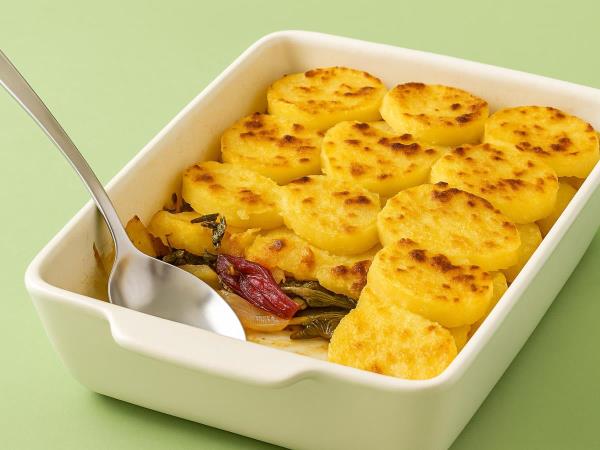




Grandma's Recipe, Science's Seal of Approval: Why Roasted Potatoes with Polenta Still Belong on Your Plate
expert, nutritionist
In 1995, Australian researchers fed volunteers equal-calorie portions of 38 everyday foods and tracked how full each one kept them. Croissants, cakes, muesli, steak and fish were all on the list. The winner was the plain boiled potato. In the satiety index study by Holt and colleagues, boiled potatoes scored 323% against white bread, which was set at 100%. That's about seven times higher than the croissant, which came last. The humble potato, long dismissed as "poor people's food", beat foods that cost far more.
That's what this old family dish is built on. The recipe looks almost too simple, but it carries small pieces of know-how that home cooks have handed down for generations. With prepared and ultra-processed food everywhere, it's easy to forget how much a cheap, unfussy meal can give you: you stay full, you get real nutrients, and it tastes good.
Why roasted potatoes with polenta can beat many expensive dishes
Potatoes are a lot more nutritious than their reputation suggests. According to USDA FoodData Central figures for raw potatoes with skin, 100 g contains about 425 mg of potassium, around 2 g of fibre and only 77 calories. The Harvard T.H. Chan School of Public Health notes that a medium potato with skin provides about 600 mg of potassium and 2{-15454}€“3 g of fibre. It also points out that potassium levels fall when potatoes are boiled, because the mineral leaches into the water. Roasting avoids that problem.
Polenta adds complex carbohydrates and a pleasant crunch. People often describe it as "slow-burning" fuel. That's only partly true: cornmeal is mostly starch, and how quickly it raises blood sugar depends on the grind and how it's cooked. Coarse, stone-ground cornmeal is generally the better choice. You can read more about the grain in our articles Polenta in the diet of athletes? and The Grandmother's Dish That Surprises: How 4 Days of Polenta Can Reset Your Menu.
What grandma knew, and what science says
Our grandmothers liked to say that potatoes "calm the stomach" and polenta "warms you from the inside". Some of that folk wisdom holds up. Potato cell walls are made largely of pectin, the same type of soluble fibre found in apples. Researchers who analysed potato cell wall polysaccharides note that pectic substances make up more than half of the tuber's cell wall material. Like other fibres, pectin adds bulk and supports normal digestion. It's not a "sponge" that cleans out your gut, but it does its quiet job.
Both potatoes and polenta also contain resistant starch, a form of starch that escapes digestion in the small intestine and is fermented by gut bacteria in the colon. Cooling cooked starchy food increases it. A human study published in Nutrients reports that boiled, baked or microwaved potatoes contain on average about 2.3 g of resistant starch per 100 g, compared with 5.6 g in potatoes that were cooked and then chilled. In that trial, women with elevated fasting glucose and insulin had lower blood sugar and insulin responses after eating chilled potatoes than after hot ones.
Can resistant starch keep hunger at bay? A 2021 meta-analysis of controlled trials in healthy adults found lower short-term appetite after resistant starch compared with control foods. The authors also found very high variation between studies, so the effect is real but modest and not guaranteed. It's a plausible part of why farm workers could get through long days on potatoes and polenta. Hard physical work and plenty of food overall mattered too.
How folk cooking fits into a modern diet
Folk cooking has always overlapped with folk medicine. When people had stomach trouble, they ate soft cooked polenta. When they felt worn out, they reached for oven-roasted potatoes, because, as the old folks said, "the body recovers with them". Those are traditions, not clinical findings, but the underlying idea is sound: simple, home-cooked food made from whole ingredients leaves less room for the added sugar, salt and additives that come with heavily processed meals.
One honest correction to the old view: potatoes are not a low-glycaemic food. In a Swedish study of potato products, boiled potatoes produced a higher blood sugar response than white bread. Several things soften that response, though: keeping the skin on, eating potatoes alongside protein, fat and vegetables, and letting leftovers cool before eating them. Roasted potatoes with polenta has no hidden additives and is gentle on most stomachs. Serve it with a salad, some yoghurt or a piece of fish or meat and you have a balanced meal rather than a pile of starch.
How to make roasted potatoes with polenta as healthy as possible
You don't need much. Coloured potatoes are a good choice if you can find them. A laboratory analysis of potato cultivars with white, yellow, red and purple flesh examined how phenolic content and antioxidant activity differ by flesh colour. University of Maine Cooperative Extension researchers found more than twice the antioxidant activity in purple potatoes as in tan-skinned, white-fleshed ones. Antioxidants are compounds that help neutralise reactive molecules called free radicals. Keep in mind that test-tube antioxidant capacity doesn't tell us exactly what happens in the body.
For the most nutrition, don't peel your potatoes. Just scrub them well. A study of dietary fibre in raw and cooked potatoes found that the skin holds considerably more fibre than the flesh. In microwaved potatoes, for example, the skin contained 22.6% fibre on a dry-weight basis versus 7.5% in the flesh. The Maine extension team also found five to ten times more antioxidant compounds in the skin than in the flesh. Cut away any green patches or sprouts before cooking.
Cut the potatoes into wedges and roll them in polenta. The corn coating keeps them from drying out and gives a crisp crust without soaking up too much oil. In the 19th century, folk healers treated polenta as an "alkaline" food that supposedly counteracted "acidity" in the body, which they blamed for fatigue, aching bones and low mood. Modern science doesn't support that idea. A systematic review in BMJ Open found no good evidence that dietary acid load matters for cancer. Your lungs and kidneys keep blood pH tightly regulated whatever you eat. What is true is that polenta is mild, naturally gluten-free and gentle on most stomachs.
For a complete meal you'll need:
- about 1/2 kg (1 lb) of potatoes. That much raw potato has roughly 385 calories, about 10 g of fibre and almost 400 ml of water, since potatoes are about 79% water
- polenta or coarse cornmeal for coating
- 2 tablespoons of oil
- salt and spices to taste, such as paprika and turmeric
Spices are a small step that adds flavour and a little extra. Turmeric's main active compound, curcumin, has been studied widely. The Linus Pauling Institute notes that most of the evidence for its antioxidant and anti-inflammatory activity comes from preclinical (laboratory and animal) studies. Curcumin is also poorly absorbed on its own. According to Harvard Health, eating turmeric with a fat such as oil can improve absorption, which is one more reason the oil in this recipe is useful. For more on this golden spice, see The Golden Secret in a Glass: Why Turmeric Lemonade Has Scientists and Doctors Paying Attention.
Preparation
- Preheat the oven to 200{-15486}{-15696}C (about 390{-15486}{-15696}F, or 180{-15486}{-15696}C fan).
- Scrub the potatoes, cut them into wedges of similar size so they cook evenly, and toss them in the oil.
- Season with salt and spices, then roll the wedges in polenta until they're evenly coated.
- Spread them in a single layer on a baking tray and roast for about 30 minutes, turning once, until golden.
Watch the colour. When starchy foods are roasted, fried or baked above about 120{-15486}{-15696}C, a compound called acrylamide forms in the browned crust. The European Food Safety Authority's scientific opinion concluded that human studies have not shown acrylamide to be a human carcinogen. However, results from animal studies indicate a concern, so it's sensible to limit exposure. The UK Food Standards Agency's advice for home cooks is simple: aim for a golden yellow colour or lighter, not dark brown. The FSA also recommends not storing raw potatoes in the fridge if you plan to roast or fry them, because cold storage can raise acrylamide levels. Keep them somewhere cool and dark instead. So take the tray out when the wedges are golden and crisp, not when they're deeply browned.
What can you do if you struggle with digestion, energy or feeling run-down?
Roasted potatoes with polenta is often the first dish people turn to when they want to go back to simple home cooking. A plate of warm, home-cooked food made from a few whole ingredients can feel settling, and the fibre, potassium and filling starch are real benefits. Swapping some ready meals and snacks for dishes like this is a reasonable step toward a less processed diet.
Of course, potatoes are no miracle cure. If you have persistent bloating, poor sleep or ongoing fatigue, a recipe won't fix it, and it's worth talking to your doctor. As part of a varied diet, though, this dish is light, warming and filling.
Folk cooking as everyday medicine
At a time when there seems to be a supplement for every problem, we'd like to invite you back to simplicity. Roasted potatoes with polenta is cheap, quick, nourishing and kind to the body. It brings back the old folk wisdom that food isn't only fuel: it's comfort, too, and the calm, familiar taste of home.
Make this recipe regularly and you may find that something this simple can lift how you feel.
Give it a try!
Information on this website is for educational purposes only and is not medical advice.
expert, nutritionist
 Would you like to be informed about news on the website?















|

