





Nicotine in Eggplant, Potatoes and Tomatoes: What It Really Means for Your Plate
expert, nutritionist
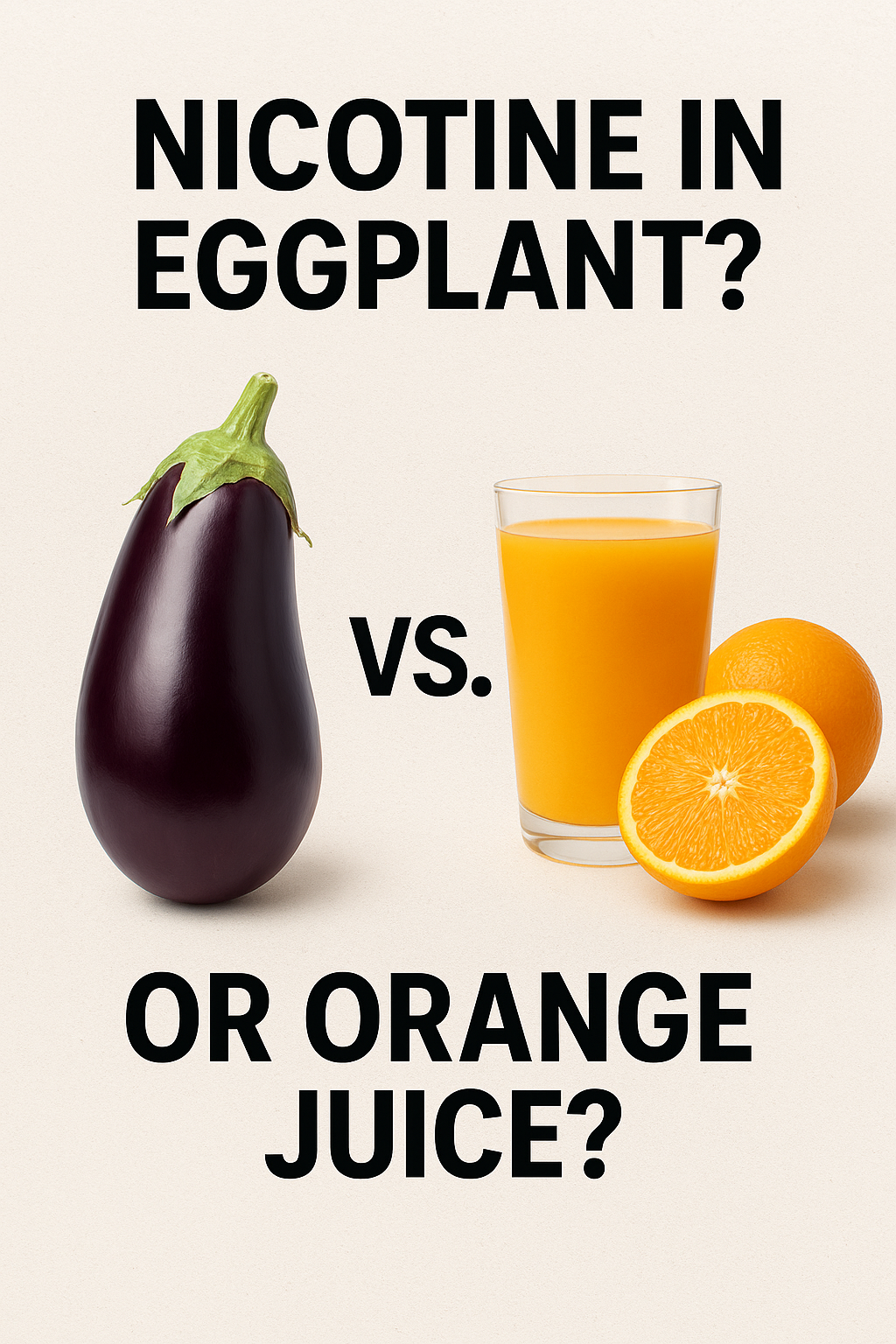
Here is a fact that surprises most people: according to a short report published in 1993, just 10 grams of eggplant contains about one microgram of nicotine. That's roughly what a non-smoker might absorb from spending about three hours in a room with a little tobacco smoke in the air. Tomatoes, potatoes and even tomato pur{-15230}Še contain it too. Before you throw out your moussaka, though, it's worth looking at what these numbers mean, what other researchers found when they checked them, and what really happens to nicotine in your body.
What nicotine is, and why plants make it
Nicotine is an alkaloid. By far the richest source is tobacco, but much smaller amounts turn up in other members of the nightshade family (Solanaceae), including tomatoes, potatoes, eggplant and peppers. For the plant, nicotine works as a chemical defence. In a field study by Steppuhn and colleagues, tobacco plants genetically engineered to make very little nicotine were attacked more often and lost about three times more leaf area to herbivores such as caterpillars and grasshoppers than normal plants.
People spotted this long ago. Tobacco extracts and nicotine-based sprays were used as insecticides for centuries, but their use gradually declined, and in the United States nicotine insecticides were banned outright by the Environmental Protection Agency in 2014.
How nicotine behaves in the body
Nicotine dissolves readily in water and is absorbed easily through mucous membranes and the skin. When it is inhaled from a cigarette it moves very fast. After a puff, high levels reach the brain in about 10 to 20 seconds, which is even faster than an intravenous injection. Its average elimination half-life is about two hours. The liver converts most of it into cotinine, which stays in the body much longer (about 16 hours). That's why cotinine tests are used to measure exposure to tobacco smoke.
A popular claim, and one the Slovenian original repeated, says that nicotine itself isn't addictive. That isn't true. Summarising the US Surgeon General's conclusions, the University of California, San Francisco notes that nicotine is the drug in tobacco that causes addiction, through processes similar to those behind addiction to heroin and cocaine. In medicine, nicotine has a legitimate use in nicotine replacement products, which are meant to help people quit smoking. It is not a substance anyone is advised to take for its own sake.
The original is right about one thing, though: other substances in tobacco smoke probably make the habit even harder to break. PET brain scans showed that smokers have about 40% less monoamine oxidase B (MAO-B) in their brains than non-smokers or former smokers. This enzyme breaks down dopamine. According to the US National Institute on Drug Abuse, nicotine itself doesn't lower MAO levels, so some other component of the smoke appears to be responsible. Laboratory work has identified beta-carboline alkaloids in cigarette smoke as potent MAO inhibitors. Researchers suspect this may add to nicotine's reinforcing effect, but the details are still being studied.
The 1993 vegetable study: the numbers
The vegetable figures come from a brief report by Edward Domino and colleagues, "The nicotine content of common vegetables", published in the New England Journal of Medicine in 1993. The authors wanted to know whether nicotine from food could skew the cotinine tests used to measure passive smoking. They estimated how much of each food would supply about 1 microgram of nicotine, the amount they linked to roughly three hours of light passive smoke exposure:
- Eggplant: about 10 g, the highest level of the vegetables tested
- Tomato pur{-15230}Še: about 19 g
- Green (unripe) tomatoes: about 23 g
- Cauliflower: about 60 g (despite the company it keeps on this list, cauliflower is a brassica, not a nightshade)
- Potatoes: about 140 g
- Ripe tomatoes: about 233 g
Two things stand out. First, ripening matters: green tomatoes contained roughly ten times more nicotine than ripe ones. Second, the much-repeated claim that ketchup is the culprit doesn't quite hold up. The study measured tomato pur{-15230}Še, not ketchup.
To put the eggplant figure in perspective: one cigarette delivers roughly 1 milligram of absorbed nicotine, a thousand times more than a microgram. So you would need around 10 kilograms of eggplant to match the nicotine of a single cigarette, and even then the comparison doesn't hold, because nicotine from food is absorbed and processed very differently from nicotine that is inhaled.
Should you worry? What other scientists said
The 1993 numbers caused a stir, but other researchers soon challenged them. In a letter to the BMJ, tobacco researcher Martin Jarvis argued that dietary nicotine would only matter "unless subjects eat 90 kg tomatoes a day". James Repace of the US Environmental Protection Agency calculated in another letter that even a generous daily serving of baked eggplant with tomato sauce would give at most around 15 micrograms of nicotine. And that assumes, as he put it, that none of the nicotine evaporates during cooking, which is doubtful.
Later measurements generally found even lower levels. A 1999 German analysis published in the Journal of Agricultural and Food Chemistry found that fresh tomatoes, potatoes, eggplants and peppers contained only about 2 to 7 micrograms of nicotine per kilogram, and confirmed that tomatoes lose nicotine as they ripen. An earlier study in Food and Chemical Toxicology did not detect any nicotine in eggplant or green pepper at all, while some black and instant teas contained more than the vegetables did.
More recently, fact-checkers at Science Feedback looked at the online claim that eggplant could replace nicotine patches. They calculated that you would need to eat somewhere between 70 and 210 kg of eggplant a day to get the same dose.
The bottom line: the nicotine in nightshade vegetables is a fascinating bit of plant chemistry, but at realistic portions it is far too small to matter for children, older people or anyone else. Tomatoes, potatoes, peppers and eggplant remain nutritious everyday foods.
Can food "flush" nicotine out of your body?
The original article ended with four foods meant to cleanse the body of nicotine. The honest answer is that your body already does this by itself. The liver breaks nicotine down, mainly into cotinine, and the kidneys excrete the rest. No juice or vegetable has been shown to "neutralise" a cigarette. Some of these foods still deserve their place on your plate, though, and there are a few surprises in the research.
1. Freshly squeezed orange juice
You will hear stories of heavy smokers who supposedly quit with the help of orange juice, and the idea that a glass of fresh juice cancels out one cigarette. Neither is backed by research. What is well established is that smokers need more vitamin C. The US National Institutes of Health Office of Dietary Supplements advises people who smoke to get 35 mg more vitamin C per day than non-smokers. The reason, according to the Institute of Medicine, is that smoking increases oxidative stress and the body's turnover of the vitamin. Fresh oranges and their juice are an easy way to cover that gap.
An interesting twist comes from a close citrus cousin. In a small study of 10 volunteers, grapefruit juice slowed the liver's conversion of nicotine into cotinine while increasing how quickly the kidneys cleared nicotine. The overall rate at which nicotine left the body did not change. In other words, citrus juice is no nicotine antidote, and grapefruit in particular can interfere with how the body handles a range of substances, including many medications.
2. Broccoli
There is no evidence that broccoli lowers nicotine levels in the blood. It is, however, an excellent source of vitamin C, which is helpful for smokers for the reasons above. One human trial is also worth knowing about. In a 12-week randomised trial with nearly 300 people in Qidong, a heavily polluted region of China, a drink made from broccoli sprouts increased the excretion of benzene by 61% and acrolein by 23% compared with placebo. Both are air pollutants, and smoking is also an important source of both. The trial used a concentrated sprout drink rather than ordinary broccoli, and it says nothing about undoing the harm of smoking. Still, it's a promising sign of how compounds in this vegetable family may support the body's own detox pathways.
3. Carrot juice
Carrots are a good source of beta-carotene (which the body turns into vitamin A) and vitamin K, and a glass of carrot juice can be part of a healthy diet. The claim that nicotine from vegetables needs up to three days to enter the bloodstream, and that carrots strengthen your "resistance to toxins", isn't supported by research. For smokers there is an important warning: getting beta-carotene from food is fine, but high-dose beta-carotene supplements are not. In the large Finnish ATBC trial, which involved more than 29,000 male smokers, beta-carotene supplements increased the incidence of lung cancer. In the American CARET trial, the group taking beta-carotene had 28% more lung cancer and 17% more deaths from all causes than the placebo group. Both trials were stopped early.
4. Water
And finally the simplest one. Nicotine is water-soluble and is excreted through the kidneys, but how fast this happens depends mainly on how acidic the urine is, not on how much you drink. Water won't "wash out" nicotine faster than your liver and kidneys already do. Staying well hydrated is still one of the best everyday habits, and if a slice of lemon or orange helps you drink more, go for it.
The takeaway
Yes, eggplant, tomatoes and potatoes contain traces of nicotine, a leftover from the chemical defences of the nightshade family. But the amounts are so tiny that later studies found them irrelevant at any realistic portion size. If you smoke, no juice or vegetable will cancel out the cigarettes. Quitting is the only thing that does. A diet rich in vitamin C, vegetables and plenty of water is a sensible support for smokers, ex-smokers and non-smokers alike.
Information on this website is for educational purposes only and is not medical advice.
expert, nutritionist
 Would you like to be informed about news on the website?















|

