





Winter Strawberries, Peaches, and Asparagus: Why They're Not Worth Your Money {-15454}€” and What to Buy Instead
expert, nutritionist
Picture a punnet of winter strawberries: glossy, perfectly shaped, and almost completely odourless. That missing scent is the giveaway. Is there such a thing as healthy frozen food? {-15454}€” a question Foodwhisper explored in depth {-15454}€” turns out to have a surprisingly optimistic answer, as long as you know which fresh produce to skip in winter and what to reach for instead. The science and the folk wisdom point in exactly the same direction: in the colder months, local, seasonal, and frozen options routinely beat long-haul "fresh" produce on both nutrition and price.
Research published in Postharvest Biology and Technology confirms that temperature management after harvest is the most important factor for maintaining vitamin C in fruits and vegetables, with losses accelerating at higher temperatures and over longer storage durations. And studies have reported vitamin C losses of up to 50% or more within a few days of refrigerated storage, depending on the commodity and processing conditions. When produce travels thousands of kilometres across continents before reaching the shelf, those losses compound every day.
1. Asparagus {-15454}€” the "royal vegetable" that loses its crown in winter
Fresh spring asparagus is genuinely special: firm, fragrant, slightly sweet. Winter asparagus is a different story entirely. Most of what appears in supermarkets between November and February has been flown or trucked from Peru or Mexico {-15454}€” a journey of more than 10,000 kilometres. By the time it reaches the display, the stalks have already turned woody, meaning the stem is tough and fibrous, almost like chewing a thin twig.
The nutritional gap is real. Laboratory analyses have found that winter asparagus contains measurably lower levels of folate (vitamin B9) and antioxidants compared with spring-harvested stalks. As Lee and Kader's postharvest review notes, the kinetics of degradation of ascorbic acid in asparagus during storage fit an exponential function {-15454}€” meaning the losses accelerate rather than plateau the longer it sits.
Better choice: Brussels sprouts
Brussels sprouts are one of the rare vegetables that actually improve with cold weather: a touch of frost converts some of their starches to sugar, making them noticeably sweeter. Brussels sprouts are considered one of the healthiest foods on our plates, containing a lot of vitamin C {-15454}€” which strengthens the immune system {-15454}€” and a lot of collagen, which keeps skin elastic and reduces wrinkles. They also contain beta-carotene, vitamin K, calcium, phosphorus, potassium, and folate, and are available all winter. As Foodwhisper's guide Why Brussels sprouts are better roasted than boiled explains, the best way to protect their nutrients is a short roast rather than a long boil.
2. Peaches {-15454}€” summer treasure that loses its magic in winter
If you spot peaches in a supermarket in December, they almost certainly travelled around 12,000 kilometres from Chile or Argentina. During that journey they ripen inside refrigerated containers {-15454}€” a process sometimes called artificial or chamber ripening, where the fruit matures without sunlight. Without sun, neither the flavour nor the full vitamin profile develops properly.
The nutritional shortfall of out-of-season, long-travelled peaches is well documented. Peaches are very good for dieting because they make you feel full, have a moderate amount of sugar, and are rich in vitamins A and C {-15454}€” but those properties depend heavily on the fruit being properly ripened. Frozen peaches, picked and processed at peak ripeness, preserve far more of that profile. As Foodwhisper's own roundup of The Best Frozen Fruits and Vegetables notes, peaches can also be delicious as a compote, which can be very well chilled.
Better choice: citrus fruits
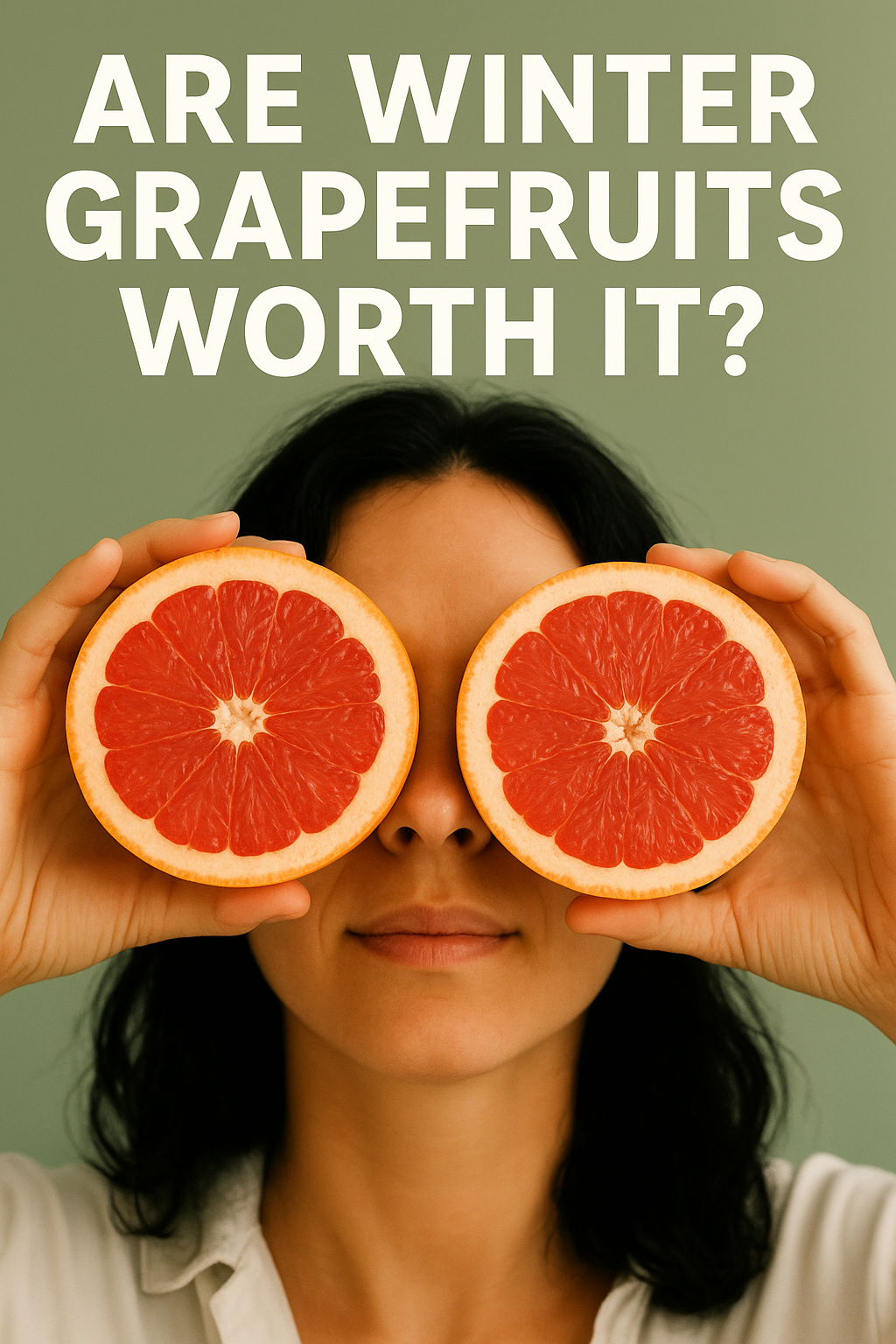
Oranges, lemons, and grapefruits are genuinely in season in winter, and they show it. A medium orange delivers around 70 mg of vitamin C, a lemon around 45 mg, and a grapefruit can reach 80 mg. As evenings cool and days shorten, vitamin intake often decreases {-15454}€” but during winter, kiwis are among the most vitamin-rich fruits, containing a lot of antioxidants, fibre, and vitamins A, B, C, and K, with antibacterial properties too. Citrus and kiwi together make a simple, affordable winter immunity duo.
3. Fresh peas {-15454}€” springtime sweetness that evaporates by winter
Few things in the vegetable world are as brief as the window when fresh peas are genuinely worth eating. Sugar conversion begins within hours of picking: research indicates that up to 30% of a pea's natural sugars can convert to starch within 48 hours of harvest. Winter "fresh" peas, having spent days or weeks in transit, are largely starch balls dressed up in green.
Better choice: frozen peas
Instead of immature fruit ripened in tanker warehouses and preserved with chemicals to look perfect, imagine fully ripe produce at its peak nutritional power, quickly frozen, packaged, and sent directly to your freezer. That is exactly what happens with commercially frozen peas. Fruits and vegetables destined for freezing are generally picked at peak ripeness, then washed, blanched, cut, frozen, and packaged within a few hours. Because vegetables are usually frozen immediately after harvesting, they generally retain many of their nutrients.
4. Corn on the cob {-15454}€” queen of summer, pale shadow in winter
Fresh summer corn is extraordinary. Winter corn on the cob is one of the more misleading items in the produce aisle: bright yellow, visually inviting, but gummy and flavourless because its natural sugars have long since converted to starch. Corn that has been sitting in cold storage for six to twelve weeks has essentially become a different food.
Better choice: frozen sweetcorn
Frozen sweetcorn is harvested and chilled at the height of summer, locking in its lutein content {-15454}€” the yellow plant pigment that supports eye health. Overall, the vitamin content of frozen commodities is comparable and occasionally higher than their fresh counterparts when that "fresh" produce has travelled a long distance. For corn in winter, frozen is straightforwardly the better buy.
5. Strawberries {-15454}€” the most tempting winter trap
Winter strawberries look the part. They are large, red, and photogenic. They are also, in most cases, nearly devoid of the aromatic oils that make strawberries smell and taste like strawberries. Research published in 2023 found that strawberries sold in winter can contain up to 90% fewer of the volatile fragrant compounds that give the fruit its characteristic scent. The old saying holds up: a strawberry that doesn't smell isn't really a strawberry.
Better choice: frozen wild berries
Frozen forest berries {-15454}€” blueberries, raspberries, blackberries {-15454}€” are harvested at peak summer ripeness and frozen within hours. Peer-reviewed research shows that frozen wild blueberries have twice the anthocyanin density of cultivated varieties, and that frozen blueberries stored for three months show no significant decrease in anthocyanin content from the fresh baseline. Studies show that blackberries have twice as many antioxidants as blueberries, strawberries, or raspberries, and do not lose much of their nutritional value even when frozen.
6. Tomatoes {-15454}€” summer king, winter disappointment
A winter supermarket tomato is typically hard, pale red, and almost tasteless. At its summer peak, a tomato is loaded with lycopene {-15454}€” the red carotenoid pigment studied for its antioxidant properties. Cold storage and long transit significantly reduce lycopene levels, and what remains is often less bioavailable.
Better choice: quality canned tomatoes or homemade sauce
This is a case where processing is genuinely on your side. Freezing, canning, and drying help lock in nutrients, and in some cases improve their bioavailability {-15454}€” the heat used in canning tomatoes breaks down cell walls, enhancing the release of lycopene and increasing its absorption in the body. As Foodwhisper's piece Boil the Tomato, Leave the Spinach Raw: What Heat Really Does to Your Food explains, tomatoes are famous for lycopene, but it is trapped inside the tomato's plant cell walls {-15454}€” raw tomatoes release only a fraction of it during digestion, while cooking breaks those walls down. Half a cup of canned tomatoes provides around 11.8 milligrams of lycopene compared to just 3.7 milligrams in one medium fresh, uncooked tomato. Your grandmother's jarred tomato sauce was nutritionally sounder than it may have seemed.
7. Blueberries {-15454}€” expensive luxury with diminishing returns
Winter blueberries can cost several times their summer price, yet their nutrient content is at its lowest point of the year. Imported from Chile or Peru, they have often been in transit long enough to show measurably higher rates of spoilage. The price-to-nutrition ratio is about as poor as it gets.
Better choice: frozen blueberries
Frozen fruit and vegetables can have up to 30% more fibre and minerals than their fresh equivalents {-15454}€” but only when those "fresh" alternatives have travelled a long distance to reach your plate. Anthocyanins remain stable in frozen blueberries for at least three months. The gap between frozen and fresh {-15454}€” when both are well handled {-15454}€” is negligible. The gap between frozen and long-haul winter imports is not.
How to eat well, wisely, and cheaply in winter
The pattern across all seven foods is the same: supermarkets in winter offer produce that looks fresh but has been transformed by distance and time into a nutritionally diminished version of itself. The consistent alternatives are:
- Local, in-season vegetables {-15454}€” root vegetables, brassicas, leeks, kale
- Frozen produce (without added salt, sugar, or sauces)
- Citrus fruits {-15454}€” genuinely in season, genuinely nutritious
- Fermented foods, particularly sauerkraut
- Quality canned tomatoes and other well-processed staples
Sauerkraut deserves a special mention as a winter classic that many people overlook. In many parts of Central and Eastern Europe it is impossible to imagine winter without it {-15454}€” usually eaten alongside stews, stuffed cabbage rolls, or as a salad. Its main advantage is that it boosts the immune system and contains a lot of vitamin C, vitamin A, folic acid, magnesium, iron, calcium, potassium, sodium, and healthy proteins {-15454}€” all of which are especially needed by the body in winter. Sauerkraut is also an excellent source of vitamin B12, making it especially valuable for vegans and vegetarians, and its probiotic bacteria support digestion and intestinal flora {-15454}€” particularly important during antibiotic treatment. Those with high blood pressure should enjoy it in moderation because of its salt content. For more on sauerkraut's benefits and who should be cautious, see Foodwhisper's dedicated guide: Who should not eat sauerkraut.
Scientifically, fermented foods regulate gut flora and increase the number of beneficial bacteria {-15454}€” a study published in the journal Cell found that regular consumption of fermented foods significantly reduced inflammatory proteins in the blood, including interleukin-6, TNF, and C-reactive protein, within six weeks.
The folk wisdom that says "in winter, eat what grows in the cold" turns out to be well-founded. Choose the right things in winter and you will spend less, waste less, and nourish your body more effectively than the glossy long-haul imports in the produce aisle ever could.
Information on this website is for educational purposes only and is not medical advice.
expert, nutritionist
 Would you like to be informed about news on the website?















|

