


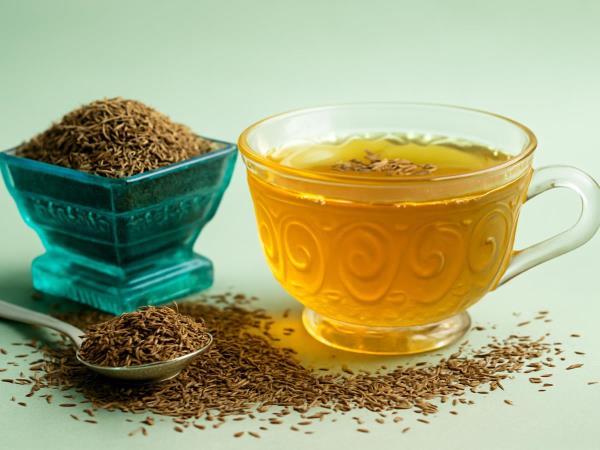



The Secret in Your Cup: Why a Pinch of Cumin Might Deserve a Place in Your Morning Tea
expert, nutritionist
Half a teaspoon. Less than a cent. And a flavour that changes your morning cup completely. While supermarket shelves are full of expensive "wellness" blends, one of the most-studied traditional drinks in the world comes from a spice you almost certainly already own. It gives tea a distinctive, warm, slightly spicy yet gentle taste. If you haven't guessed yet: it's plain, ordinary cumin.
Across India and the Middle East, cumin water (known as jeera pani) is a morning ritual many families have followed for generations. One of Bollywood's best-known actresses and fitness personalities has described her own version publicly. She soaks cumin overnight together with fennel and carom seeds, warms the mixture gently in the morning, adds a squeeze of lemon and drinks it before breakfast. She says it is the simplest part of her routine and the one that helps her feel "light" for the rest of the day.
A reader from Ljubljana told us a similar story: "I started adding a pinch of cumin to my chamomile tea after heavy winter dinners. I wouldn't call it magic, but the evenings feel much more comfortable, and I've grown to love the taste." Here is what science and nutrition experts say about this humble seed.
What's actually inside a pinch of cumin?
Cumin (Cuminum cyminum) belongs to the same plant family as parsley, dill, fennel and caraway. According to USDA FoodData Central, cumin seeds are a notably good source of iron for a spice. They also contain manganese, calcium and magnesium, plus small amounts of vitamins A, C and E. To be honest, a single pinch in your tea will not cover your daily vitamin needs. The bigger interest lies in cumin's aromatic essential oils, especially a compound called cuminaldehyde, and in its natural polyphenols.
Dietitians at Cleveland Clinic note that cumin used in normal culinary amounts is generally considered safe, which makes it an easy spice to experiment with.
1. A gentle helper for digestion and the immune system
Cumin's best-known traditional use is for digestion. It has long been used to ease occasional bloating and the heavy feeling after a big meal. Modern research is starting to look at this more closely. In a small pilot study published in the Middle East Journal of Digestive Diseases (Agah et al., 2013), 57 adults with irritable bowel syndrome took cumin extract drops for four weeks. They reported less abdominal discomfort and bloating. The study had no placebo group, though, so the results are encouraging but not conclusive.
When it comes to immunity, cumin brings iron, which the body needs for normal immune function, plus essential oils and small amounts of vitamins C and A. No single spice can "boost" your immune system by itself. However, a varied diet rich in herbs and spices is one of the simplest ways to support your overall wellbeing. If you enjoy warming spice drinks, you may also like our article Warm Water with Turmeric Against Winter Troubles. For more ideas on comfortable digestion, read Get Rid of Bloating and Excess Water.
2. A possible ally for healthy cholesterol levels
This is where cumin gets interesting for researchers. In a randomized, double-blind, placebo-controlled trial published in the Iranian Red Crescent Medical Journal (Taghizadeh et al., 2016), 72 overweight adults took either cumin-and-lime capsules (75 mg) or a placebo twice a day for eight weeks. The higher-dose group saw modest improvements in total cholesterol, LDL ("bad") cholesterol and triglycerides compared with placebo. They also lost a little weight.
A 2022 systematic review and meta-analysis in Phytotherapy Research pooled eight clinical trials. It found that cumin supplementation was associated with small reductions in total cholesterol and BMI, and the authors called for more high-quality studies. A 2025 trial in Frontiers in Nutrition tested an actual cumin herbal infusion together with a carbohydrate-controlled diet. Participants showed improvements in triglycerides, LDL cholesterol and fasting blood sugar compared with diet alone.
The honest takeaway: most studies used concentrated extracts or capsules, not a pinch in a teacup, and the effects were modest. As one patient consistency habit, cumin tea fits nicely into a balanced, heart-friendly lifestyle. It does not replace medication or medical advice. As with most dietary changes, consistency matters: the trials ran for at least eight weeks.
3. Rich in natural antioxidants
Herbs and spices are among the most antioxidant-dense foods we eat. A large analysis of more than 3,100 foods published in Nutrition Journal (Carlsen et al., 2010) found that spices and herbs as a group topped the antioxidant rankings. A review in Antioxidants (Yashin et al., 2017) describes the polyphenols and flavonoids that give spices like cumin this activity.
Antioxidants help the body manage oxidative stress caused by free radicals, which our bodies produce every day through normal metabolism, pollution and stress. That's good news for healthy people too: you don't need a health problem to benefit from a spice-rich diet. Cumin is in good company here. Oregano is another kitchen spice that makes a surprisingly pleasant infusion, as we explain in Incredible properties of oregano tea.
How to make cumin tea
- Simple infusion: Add ½ to 1 teaspoon of whole cumin seeds to a cup of boiling water. Cover and steep for 5–10 minutes, then strain.
- Overnight version: Soak a teaspoon of seeds in a glass of water overnight. In the morning, warm it gently for a few minutes and strain.
- As an add-in: Stir a small pinch of ground cumin into green, black or chamomile tea. Lightly toasting the seeds in a dry pan first brings out a deeper, nuttier aroma.
- Flavour boosters: A slice of lemon, a few slices of fresh ginger, a cinnamon stick or a little honey all pair beautifully with cumin.
Who should be careful?
Culinary amounts of cumin are well tolerated by most people. Concentrated supplements and extracts are a different story. If you take medication for blood sugar, blood pressure or blood clotting, or if you are pregnant or breastfeeding, talk to your doctor or pharmacist before using cumin supplements or drinking large amounts every day. Cleveland Clinic also points out that cumin supplements may interact with certain medications.
The bottom line
A cup of cumin tea won't fix your heart, blood sugar or thyroid, and anyone who promises that is overselling it. What it can offer is a warm, aromatic, nearly calorie-free ritual. It has a long tradition behind it and a growing body of early research. Most of all, even one cup is a good reason to slow down, breathe and enjoy a quiet moment before the day begins.
Information on this website is for educational purposes only and is not medical advice.
expert, nutritionist
 Would you like to be informed about news on the website?













|

