



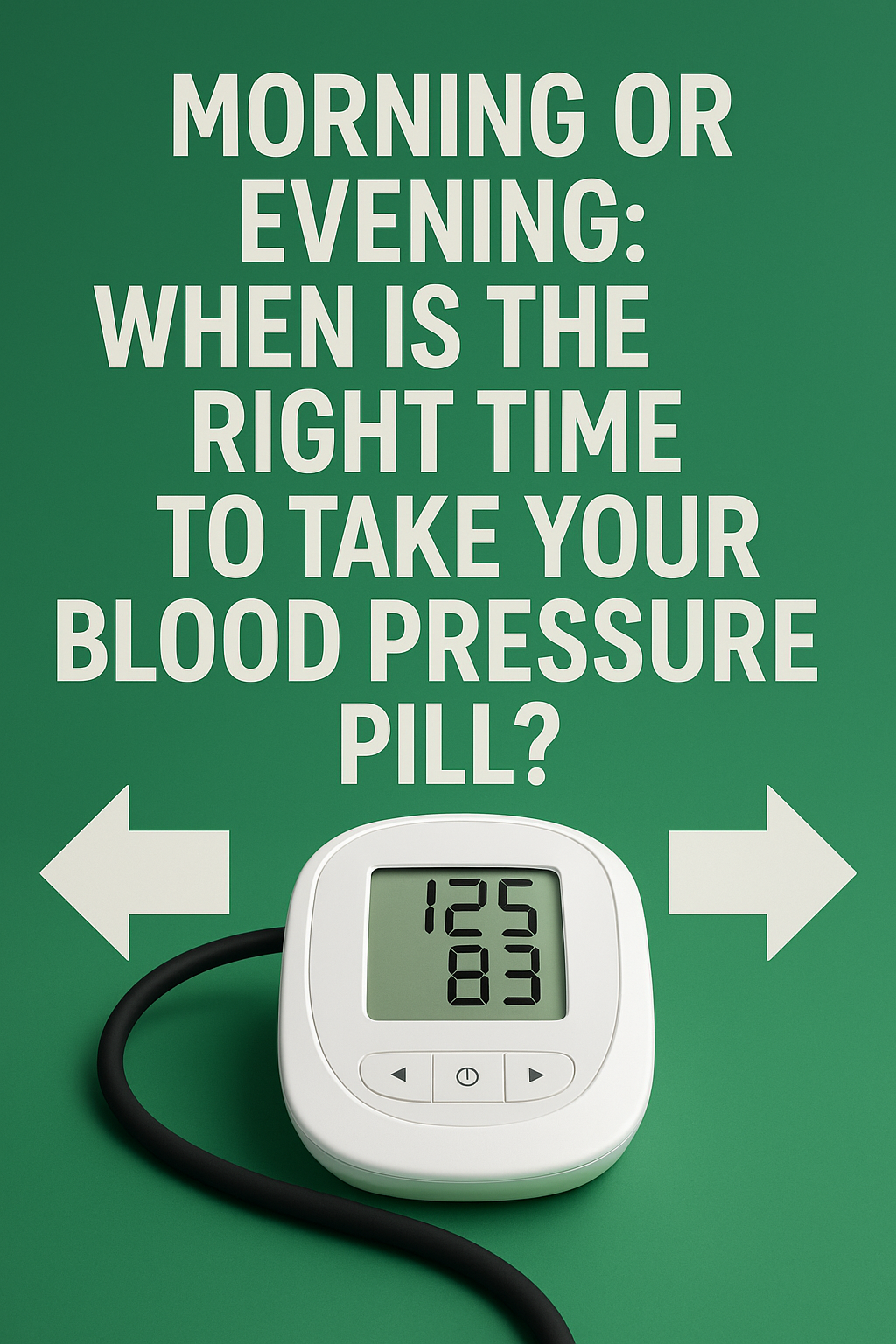


Morning or Evening: When Is the Right Time to Take Your Blood Pressure Pill?
expert, nutritionist
Imagine being told that one simple change, taking the same pill at a different time of day, could nearly halve your risk of a heart attack or stroke. No new drug, no extra cost, just moving it from your breakfast table to your bedside table. That was the headline that went around the world a few years ago. Since then, science has had a few more things to say.
A lesson from a legend: the best pill is the one you actually take
Before we get to the clock, here is a reminder of what matters even more. The late singer Tina Turner was diagnosed with high blood pressure decades before her death. She later wrote that she had come to see her high readings as her "normal." She stopped taking her prescribed medication and tried alternative remedies instead, without telling her doctors. In a post shared a few months before her passing, she said that if she had understood how high blood pressure and kidney disease are connected, she would have been spared a lot of suffering. Her story is a powerful reminder that consistency comes first. Whether you take your tablet in the morning or the evening is a secondary question.
The Spanish study that started the debate
Spanish doctors reported that in a study involving about 19,000 volunteers, blood pressure tablets taken in the evening appeared to be much more effective. The Hygia Chronotherapy Trial, led by Professor Ram{-15437}n C. Hermida of the University of Vigo and published in the European Heart Journal, followed 19,084 adults with high blood pressure for an average of more than six years. Those who took their tablets in the evening had a markedly lower risk of heart attack, stroke, heart failure and related problems. According to the European Society of Cardiology's press release, the risk of a major cardiovascular event was about 45% lower in the bedtime group, so it was nearly halved.
The researchers argued that blood pressure during sleep is an important marker of long-term heart health, and that a bedtime dose may help keep night-time pressure lower. The authors themselves noted some limitations. All participants were from one region of Spain, the results still needed confirming in other populations, and shift workers were not studied. Other experts were more critical. Some, writing in the journal Blood Pressure, questioned how reliable such an unusually large effect could be.
What newer research says: the time may not be decisive
Since then, independent research teams have tried to confirm the Spanish results, and they did not find the same dramatic effect.
- The TIME study (United Kingdom). Researchers led by the University of Dundee and funded by the British Heart Foundation randomly assigned 21,104 adults to take their usual blood pressure medication either in the morning or in the evening. After a median of about five years, the results published in The Lancet showed no meaningful difference in heart attacks, strokes or cardiovascular deaths between the two groups. The authors concluded that people can take their medication at a convenient time that keeps unwanted effects to a minimum. You can read a short summary from the American College of Cardiology.
- The BedMed trial (Canada). In this trial, published in JAMA in 2025, 3,357 primary care patients took their once-daily blood pressure medication either at bedtime or in the morning. Bedtime dosing turned out to be safe, but it did not lower cardiovascular risk. The researchers suggested that the timing should be guided by the patient's preferences.
- The BedMed-Frail trial. A sister study among frail older adults in care homes also found no clear advantage for either time of day.
As one review in American Family Physician put it, patients should take their blood pressure medication when it suits them best. The debate is not completely closed, and some specialists still consider evening dosing for people whose blood pressure stays high at night. For the average person, though, the newer evidence offers some reassurance: you probably do not need to worry too much about the exact hour.
But there are cases when the morning may suit you better
Some doctors note that for people whose blood pressure rises mainly during the working day, because of stress at work, a morning dose may fit their daily rhythm better. Speaking loosely, one might conclude that employees should take their blood pressure tablets in the morning and retirees in the evening.
However, things are not that simple.
There are also practical reasons why the time of day matters for some people. Diuretics ("water pills") taken in the evening can mean more trips to the bathroom at night. In the TIME study, night-time urination was more common with evening dosing, while dizziness and some digestive complaints were more common with morning dosing. Never change the timing of a diuretic, or of any other medicine, without first speaking to your doctor or pharmacist.
Every body works differently
Every organism works differently, so the most suitable hours differ from person to person. This is where your own observations become valuable. Doctors increasingly recommend monitoring blood pressure at home, because readings taken in everyday life often say more than an occasional measurement at the clinic.
One approach some doctors suggest goes like this. Before you take your tablet, measure your blood pressure and write down the value. The next day, take your tablet 24 hours and 30 minutes later, measuring your pressure again just before you do. Keep shifting by half an hour each day until you have gone all the way around the clock, then check your results. The hours with the best readings may be the ones that suit you. Important: because this means gradually changing when you take a prescribed medicine, do it only after talking to your doctor, who knows your medication and your health history. If your readings are unusually high or low, or you feel dizzy or unwell, contact your doctor rather than continuing the experiment.
If you would rather keep it simpler, the American Heart Association recommends a few basic rules for home measurement:
- Rest quietly for five minutes before measuring, and don't talk or use your phone.
- Avoid coffee, smoking, exercise and food for 30 minutes beforehand, and empty your bladder.
- Measure before taking your blood pressure medication.
- Measure at the same times each day, take two readings a minute apart and write them down.
Your diary also shows what raises your pressure
This method also helps you discover what raises your blood pressure the most. A stressful meeting, a salty dinner, a poor night's sleep or an extra cup of coffee can all show up in your numbers. Many readers who keep such a diary say they were surprised how clearly the patterns appeared after just a few weeks. Sleep deserves special attention. If you want to know why it matters for more than just your energy, read When you sleep too little, your belly grows.
Your plate counts too. A diet rich in vegetables, fruit, whole grains and legumes and lower in salt is widely recommended for heart health. For some ideas, see Legumes Against High Blood Sugar and Fats, Garlic Water: An Ancient Drink That Modern Science Is Taking a Closer Look At and 5 Foods That Shorten Your Lifespan. Food is a helpful partner to your treatment, but it is not a replacement for the medication your doctor has prescribed.
The bottom line
The Spanish study opened an important question, but larger and newer trials suggest that for most people, morning and evening doses work about equally well. What seems to matter most is taking your medication every day, at a time that fits your routine, and keeping an eye on your numbers. Talk to your doctor, keep a simple blood pressure diary, and find the hour that works for your body.
Give it a try!
Information on this website is for educational purposes only and is not medical advice.
expert, nutritionist
 Would you like to be informed about news on the website?













|

