





Nature's Own Arsenal: 6 Foods People Relied On Long Before Antibiotics Existed
expert, nutritionist
Penicillin is not even a hundred years old. Alexander Fleming noticed its effect only in 1928 (Britannica), and for most of human history people had nothing like it. So what did our ancestors reach for when a wound would not heal or a cough would not go away? Very often, the answer was sitting in the kitchen. Garlic, onion, ginger, turmeric, honey and green tea were the "medicine cabinet" of many generations – and some of them saw remarkable use even in the trenches of the two World Wars.
One of the world's most famous athletes still starts every morning this way. In his book Serve to Win, tennis champion Novak Djokovic describes his routine: right after a glass of water, he eats two spoonfuls of honey, every single day, preferably manuka honey from New Zealand, and he takes a teaspoon or two during matches as well. He openly admits that honey is sugar – but sees it as a natural fuel his body needs. Even honey researcher Dr. Peter Molan of the University of Waikato commented that manuka honey has exceptional antibacterial properties, while noting that eating it is not the same as applying it to a wound (NZEdge).
Many of our readers share similar habits. A grandmother from a small village told us that every winter, at the first scratch in the throat, she still prepares onion tea exactly the way her own mother did – "and the whole family has been drinking it for three generations." Another reader, an office worker, swapped his third afternoon coffee for green tea and says that the evening jitters he used to blame on stress simply disappeared.
An important note before we begin: the foods below are valuable parts of a balanced diet, but they are not a replacement for antibiotics or any other treatment prescribed by a doctor. Bacterial infections can be serious, and antibiotics remain essential medicines when they are truly needed. At the same time, the World Health Organization warns that unnecessary antibiotic use fuels antimicrobial resistance – which is one more reason why everyday habits that help us feel well are worth knowing about.
1. Garlic – the legendary "Russian penicillin"
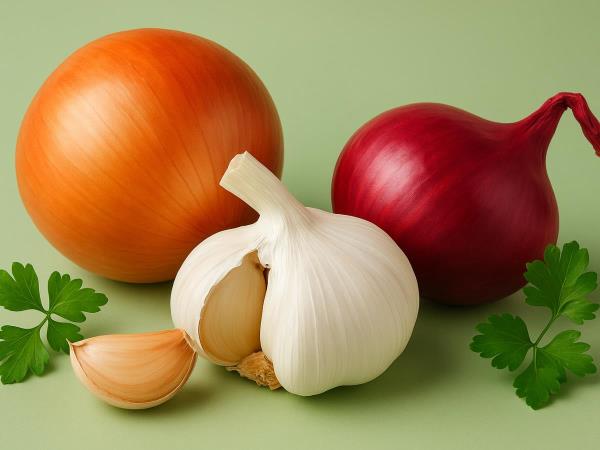
Garlic is probably the best known and most powerful of all natural "antibiotics," and it was used for centuries before modern chemical medicines were discovered. Historical records show that garlic was among the most widely used remedies in ancient China as early as 2700 BC (Avicenna Journal of Phytomedicine, via PubMed Central). In 1858, Louis Pasteur demonstrated its antibacterial properties, and during both World Wars it was used as a battlefield antiseptic – which is how it earned the nickname "Russian penicillin" (Britannica). During the First World War, garlic was used to disinfect wounds and to help prevent blood poisoning and gangrene, and it was also a traditional folk aid for chest complaints.
The key compound is allicin, which forms only when a raw clove is crushed, chopped or chewed. That is why nutritionists suggest chopping garlic and letting it rest for a few minutes before cooking. According to WebMD, laboratory research has shown that allicin is active against a broad range of bacteria, including some multidrug-resistant strains of E. coli.
What about the heart? The most comprehensive meta-analysis on the topic, which pooled 39 clinical trials and was published in Nutrition Reviews, found that garlic preparations taken for more than two months may lower total cholesterol by roughly 8% in people with slightly elevated levels, while the effect on triglycerides was not significant. Large observational studies, such as the Iowa Women's Health Study of more than 40,000 women, have associated garlic consumption with a lower risk of colon cancer (WebMD) – an interesting association, though not proof of cause and effect. As for colds, a Cochrane review concluded that the evidence is still too limited for firm conclusions.
In Russia it isn't called "Russian penicillin" for nothing. If you'd like an easy way to enjoy it, try The Incredible Healing Properties of Garlic and Yogurt – yogurt also softens garlic's strong smell. One caution: according to the U.S. National Center for Complementary and Integrative Health (NCCIH), garlic may increase the risk of bleeding and can interact with some medicines, so anyone taking blood thinners or preparing for surgery should talk to their doctor before using garlic supplements.
2. Onion – garlic's humble cousin
Onion belongs to the same family as garlic (the Allium genus), so it is no surprise that it takes second place. In many households it has traditionally been used as a natural disinfectant and to soothe insect bites. It provides vitamin C and flavonoids such as quercetin, and it is valued for its antibacterial properties. Dr. Irwin Goldman, an expert quoted by the National Onion Association, says there is fairly solid evidence of the antimicrobial properties of onion, which may make it useful in protecting people from colds and related problems.
For the most ordinary colds, many people swear by a home remedy: onion tea. Simmer onion slices in water for about ten minutes, then add a little honey or lemon. The key, according to folk wisdom, is to start drinking it as soon as you feel a scratchy throat or a runny nose. Another classic is onion syrup – layers of sliced onion covered with honey, left to stand overnight. You may not know it, but onion has also been an ingredient in many traditional preparations. More ideas can be found in Onion Juice: An Ancient Elixir for Modern Woes.
3. Ginger – spice, medicinal plant and kitchen favorite
Ginger is both a spice and a medicinal plant. Traditional healers often use it as an antibacterial and anti-inflammatory aid, and it has a long reputation for supporting circulation, digestion and general well-being. Modern science is slowly catching up: researchers at the Leibniz Institute for Food Systems Biology at the Technical University of Munich found in laboratory tests that small amounts of 6-gingerol, the compound responsible for ginger's pungency, put white blood cells on heightened alert. They noted that such concentrations could theoretically be reached by drinking about a liter of ginger tea. According to NCCIH, the best-supported use of ginger is for easing some types of nausea, while research on other uses is still ongoing.
You may not have known it, but ginger can safely go into the fridge and even the freezer – frozen ginger is actually easier to grate. It pairs wonderfully with fruit (pineapple, pears, bananas, peaches, melons...), and it is an excellent addition to fish, stir-fried vegetables and curries. Ginger ice cream has a surprisingly interesting flavor, and in Asia ginger is a common ingredient in many desserts. For a refreshing everyday idea, try Summer flu due to air conditioning? 3 ingredients that strengthen the immune system.
A small kitchen warning: the longer you cook ginger, the spicier the dish will become.
4. Turmeric – the golden spice
Turmeric has a reputation for helping the body defend itself against many kinds of bacteria, and in traditional medicine it has long been applied to minor skin problems such as small cuts and burns. Its main active compound, curcumin, is responsible for the vivid yellow color and has been widely studied for its antioxidant and anti-inflammatory properties. In folk medicine, turmeric has traditionally been recommended for the liver, gallbladder, kidneys, heart and digestive tract.
However, a nutritionist's honest advice is needed here. According to NCCIH, turmeric in the amounts used in food is considered safe, but there are reports of liver injury linked to turmeric supplements, and the evidence for many popular health claims remains limited. Claims that turmeric can "dissolve gallstones" are not supported by research – on the contrary, people with gallbladder problems, those taking blood thinners, and pregnant women should consult a doctor before taking concentrated turmeric capsules. The safest and most pleasant approach is to use turmeric generously in cooking, ideally with a pinch of black pepper and a little fat, which helps the body absorb curcumin. A warm and simple way to start the day is described in Warm Water with Turmeric Against Winter Troubles.
5. Honey – liquid gold from the hive
Cooled tea with linden honey has a very calming, soothing effect. Honey is considered one of the best-loved natural supporters of the immune system and is especially popular with children and older people. And this time, science agrees in part: a systematic review and meta-analysis of 14 studies by researchers from the University of Oxford, published in BMJ Evidence-Based Medicine, found that honey eased cough frequency and severity in upper respiratory tract infections better than usual care. The authors described it as a widely available and inexpensive alternative to antibiotics for such symptoms, though they called for more high-quality placebo-controlled trials.
With honey, however, it is important not to overdo it, since it is still a concentrated source of sugar, and it can trigger allergic reactions in some people. Very important: honey should never be given to infants under 12 months because of the risk of infant botulism (WebMD). You can read more about who should be careful in the article When should we not eat honey?. Because products of questionable quality also appear on the market, it is wise to buy from trusted local beekeepers and to read labels carefully – real honey should list only one ingredient: honey. And if you enjoy traditional recipes, don't miss Horseradish, Lemon, and Honey: The Grandmother's Trio That Refuses to Go Out of Style.
6. Green tea – a cup full of antioxidants
The greatest strength of green tea lies in its antioxidants, especially catechins such as EGCG, which it contains in abundance. Green tea is traditionally believed to support the immune system and help the body feel refreshed, calm and even youthful. According to NCCIH, green tea as a beverage is considered safe in moderate amounts, but research on its role in cancer prevention or weight loss has produced mixed results – so it is best enjoyed as part of a healthy lifestyle rather than as a "miracle" drink. Concentrated green tea extracts in supplement form have been linked to liver problems in rare cases, which is another reason to prefer a simple cup of tea.
Green tea is often recommended to those trying to manage their weight, because it is practically calorie-free when drunk without sugar. At the same time, a cup of green tea can be a good alternative to coffee: it contains less caffeine and also provides L-theanine, an amino acid associated with a calmer, more focused alertness. If you need a natural morning boost, try the recipe in A drink that will wake you up faster than coffee.
The bottom line
Garlic, onion, ginger, turmeric, honey and green tea have earned their place in kitchens around the world – partly for their flavor and partly for centuries of trust in their healing reputation. Modern research confirms some of that wisdom, refines some of it, and reminds us that even the best food is not a medicine on its own. Use them generously and creatively in your everyday meals, enjoy the rituals they bring, and if you feel unwell, especially with fever, worsening symptoms or a wound that is not healing, always seek advice from your doctor.
Information on this website is for educational purposes only and is not medical advice.
expert, nutritionist
 Would you like to be informed about news on the website?











|

