




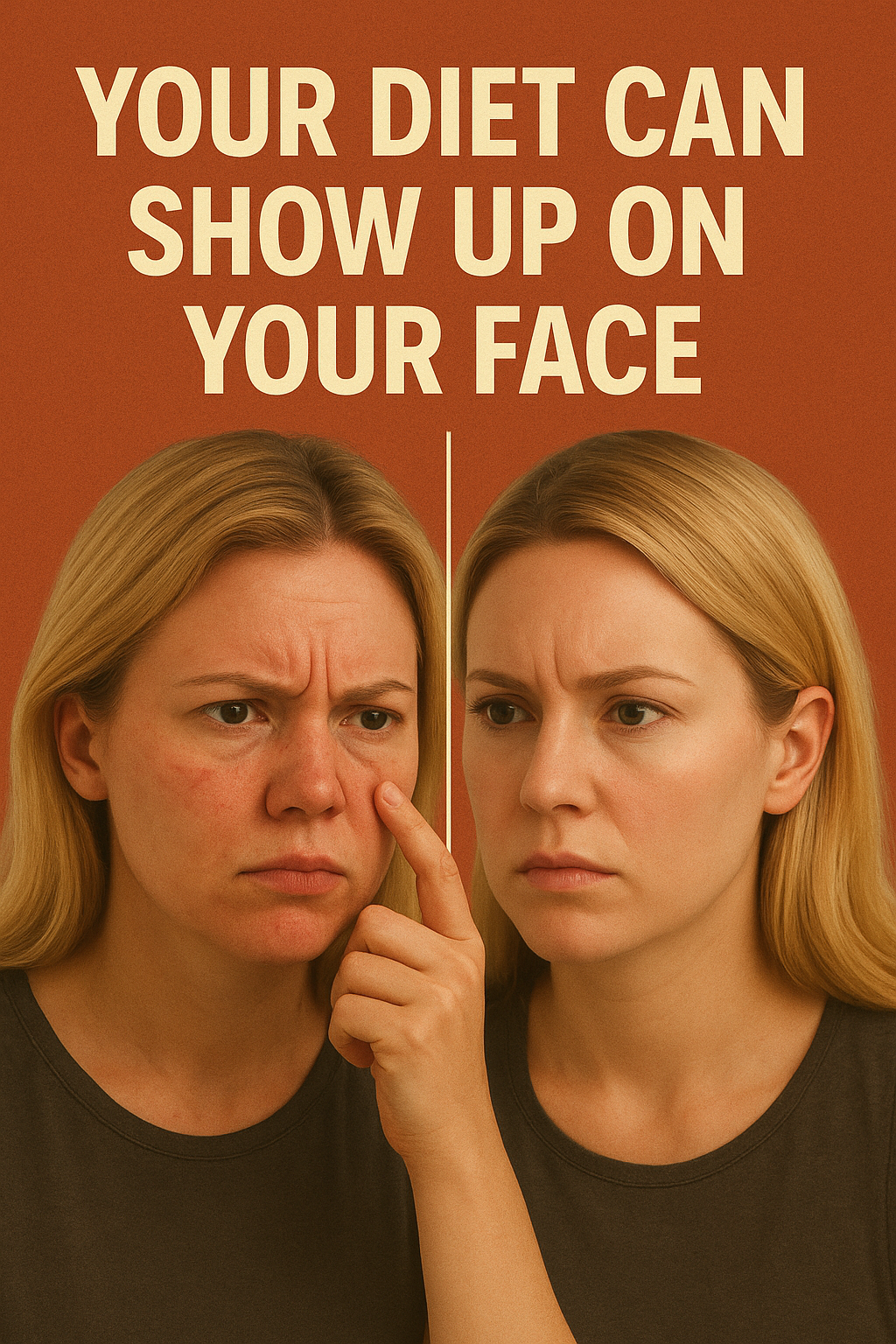

Your Face Knows What You Ate: How Sugar, Dairy, Wine and Gluten May Leave Their Mark on Your Skin
expert, nutritionist
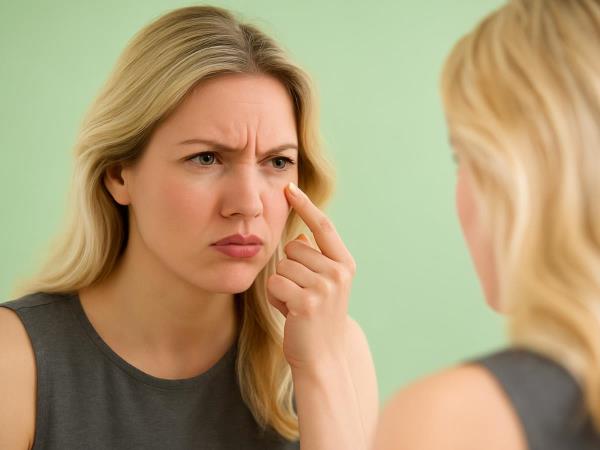
Before you buy another expensive serum, take a good look in the mirror. That puffiness under your eyes, the breakout on your chin, the redness across your cheeks that never quite fades: some of it may have started on your plate, not in your bathroom cabinet. Dermatologists and nutrition researchers increasingly agree that what we eat and drink can show up on our faces, sometimes within days.
Few people know this better than Jennifer Lopez. Now well into her fifties, the singer and actress is famous for skin that seems to defy time, and for years she has said the same thing in interviews: she doesn't drink alcohol, doesn't smoke and has avoided caffeine for years, because, as she put it, those habits "really wreck your skin as you get older". She also credits plenty of vegetables, water, sleep and daily sunscreen. Genes and good dermatologists surely play a role too, but her routine reflects exactly what researchers keep finding: everyday food and drink choices matter for your skin.
If you want to do something good for your health, stand in front of the mirror and honestly assess your face. Nobody wants wrinkles, acne, a puffy face, dark circles under the eyes, unpleasant redness, enlarged pores or age spots... So what can you do to keep these at bay? Not only for the sake of your looks, but also for your health, keep an eye on how much sugar, milk, wine and gluten you consume.
Sweet Tooth: The "Sugar Face"
Too much sugary food can make the elastic, flexible collagen fibers in your skin tighter and stiffer, insulin levels rise, and your face can start to look swollen and doughy. Scientists call the underlying process glycation: when blood sugar is high, glucose and fructose attach to collagen and elastin, the proteins that keep skin firm and springy, and form so-called advanced glycation end products (AGEs). A review in Clinics in Dermatology by dermatologist F. William Danby of Dartmouth Medical School explains that these cross-linked fibers become stiff and hard to repair, and that sunlight speeds the process up even further. We have looked at this before in our article Food That Makes You Age Faster.
Elevated sugar levels may also affect the balance of bacteria and hormones in the body, which is one reason why people with a sweet tooth often struggle with spots on the face, shoulders and chest. A randomized controlled trial published in the American Journal of Clinical Nutrition, led by researchers at RMIT University in Melbourne, found that young men with acne who followed a low-glycemic-load diet for 12 weeks saw a greater reduction in breakouts than those on a typical carb-heavy diet. The American Academy of Dermatology also notes that a low-glycemic diet may help some people with acne.
Nutritionist's tip: You don't need to give up sweetness completely. The World Health Organization recommends keeping free sugars below 10% of daily energy intake, ideally closer to 5%. Swap soft drinks for water, choose whole fruit over juice, and pair sweets with protein or fiber to soften the blood sugar spike. Surprisingly, not every "healthy" swap is what it seems, as we showed in Popcorn Beats Apples, and Sugar Beats Honey: 8 Nutrition Face-Offs That Flip Everything You Thought You Knew.
Cream Lovers: The "Dairy Face"
As we age, many of us lose some of the enzyme that digests lactose, the natural sugar in milk. According to the U.S. National Library of Medicine's MedlinePlus, around 65 percent of the world's population has a reduced ability to digest lactose after infancy. If you keep consuming large amounts of dairy, your digestive system may respond with bloating and discomfort, and some people notice that their skin reacts too, with redness, puffiness, swollen eyelids, uneven patches of color and a fuller-looking lower face. You can read more about milk-related bloating in Food that makes you fat, even if it does not fatten.
The link between dairy and breakouts is better studied than the link with puffiness. A systematic review and meta-analysis in the journal Nutrients, which pooled 14 studies with more than 78,000 children, adolescents and young adults, found that any dairy intake (milk, yogurt and cheese) was associated with somewhat higher odds of acne. The authors were careful to say the results should be interpreted with caution because of differences between the studies. Interestingly, skim milk showed an association at least as strong as whole milk, which suggests it's not simply about fat. We touched on dairy and skin in Why is it dangerous to eat these foods for breakfast.
Nutritionist's tip: Dairy is still a valuable source of calcium and protein, so there's no need to cut it out blindly. If you suspect it affects your skin, try reducing milk for a few weeks and see what happens. Fermented options like plain yogurt and kefir are often easier to digest, and lactose-free or plant-based alternatives are good substitutes. For a comparison, see What is healthier: milk or yogurt?
Wine Lovers: The "Wine Face"
Wine is often praised for heart health, but only, if at all, in moderation. If you drink too much, your skin can become dehydrated, wrinkles may look deeper, and the complexion can take on a recognizable red tone. Wine also contains sugar, may make pores look larger, can leave eyelids looking heavy and puffy, and can emphasize the lines running from the nose to the corners of the mouth.
Research supports much of this. A large multinational survey of more than 3,000 women, published in the Journal of Clinical and Aesthetic Dermatology and led by researchers from Monash University, found that heavy drinking (more than eight drinks per week) was associated with more upper-face lines, under-eye puffiness, loss of volume in the midface and visible blood vessels. Even moderate drinking was linked with some under-eye puffiness and midface volume loss.
Redness is another common sign. In a study of more than 82,000 women from the Nurses' Health Study II, published in the Journal of the American Academy of Dermatology, higher alcohol intake was associated with a greater risk of developing rosacea, with white wine and liquor showing the strongest links. The National Rosacea Society notes that the study shows an association, not proof of cause, but the pattern is hard to ignore.
And what about the famous "one glass a day" rule? Guidance has become stricter in recent years. The World Health Organization now states that no level of alcohol consumption is completely safe for health, and the UK's NHS advises not regularly drinking more than 14 units a week, spread over several days. For your skin, and for your sleep, less is generally better. Alcohol also disrupts deep sleep, which shows on your face the next morning, as we explained in Why Do You Sleep Like a Snail and Wake Up Exhausted Every Morning?, and in excess it can add to stress, as described in 7 Everyday Foods That Quietly Feed Your Stress (Number 5 Might Surprise You).
Nutritionist's tip: If you do drink, alternate each glass of wine with a glass of water, avoid drinking late in the evening, and plan several alcohol-free days each week. Many people notice brighter, less puffy skin within just a couple of weeks of cutting back. Staying well hydrated matters too, especially in summer, as we explained in Coffee in the Heat: Why Hot Weather Changes the Rules for Your Daily Cup.
The "Gluten Face"
Some people describe the effect of gluten on their face as quite noticeable: a puffy, swollen look, more visible age spots and changes in pigmentation, small skin imperfections that stand out more, and breakouts that tend to cluster around the chin. It's important to put this in context, however. For most people, gluten does not harm the skin. The clearest connection exists in people with celiac disease, an autoimmune condition in which gluten damages the small intestine. According to the U.S. National Institute of Diabetes and Digestive and Kidney Diseases (NIDDK), celiac disease can cause an itchy, blistering skin rash called dermatitis herpetiformis. A larger group of people report discomfort from gluten without having celiac disease, a pattern often called non-celiac gluten sensitivity, which we covered in detail in One Bite of Bread Could Be Crossing a Line Your Gut Won't Forgive. Tennis champion Novak Djokovic is perhaps the best-known example of someone who says removing gluten changed how he felt.
Another challenge is that changes don't happen overnight. The skin renews itself roughly once a month, so if you're testing whether a food affects your complexion, it can take around four weeks or more before you see a clear difference.
Nutritionist's tip: Don't cut out gluten on your own if you suspect celiac disease. Testing should be done while you're still eating gluten, otherwise the results may be misleading, so talk to your doctor first. If you simply want to eat less refined wheat, lean on naturally gluten-free whole foods such as buckwheat, millet, rice, potatoes, legumes and vegetables.
What Helps Your Skin From the Inside
Cutting back is only half the story. Many foods may help support healthy-looking skin:
- Colorful vegetables and fruit provide vitamin C, which the body needs to make collagen, plus antioxidants that help protect cells.
- Tomatoes are rich in lycopene, which in some studies has been linked with modest support for the skin's defenses against sun damage (never as a replacement for sunscreen). Read more in What If the Tastiest Tomato You'll Eat All Year Is Also the Cheapest?
- Oily fish, walnuts and flaxseed supply omega-3 fats, which play a role in the skin's natural barrier.
- Water throughout the day, plus regular sleep and daily sun protection, complete the picture.
A Simple Mirror Test
Choose one suspect at a time (sugar, dairy, wine or gluten) and reduce it for three to four weeks. Take a photo of your face in the same light at the start and at the end. Many readers tell us this simple experiment taught them more about their skin than any cosmetic product. If you have persistent acne, redness, rashes or digestive problems, however, see a dermatologist or doctor, because these can have many causes beyond diet.
Information on this website is for educational purposes only and is not medical advice.
expert, nutritionist
 Would you like to be informed about news on the website?














|

