





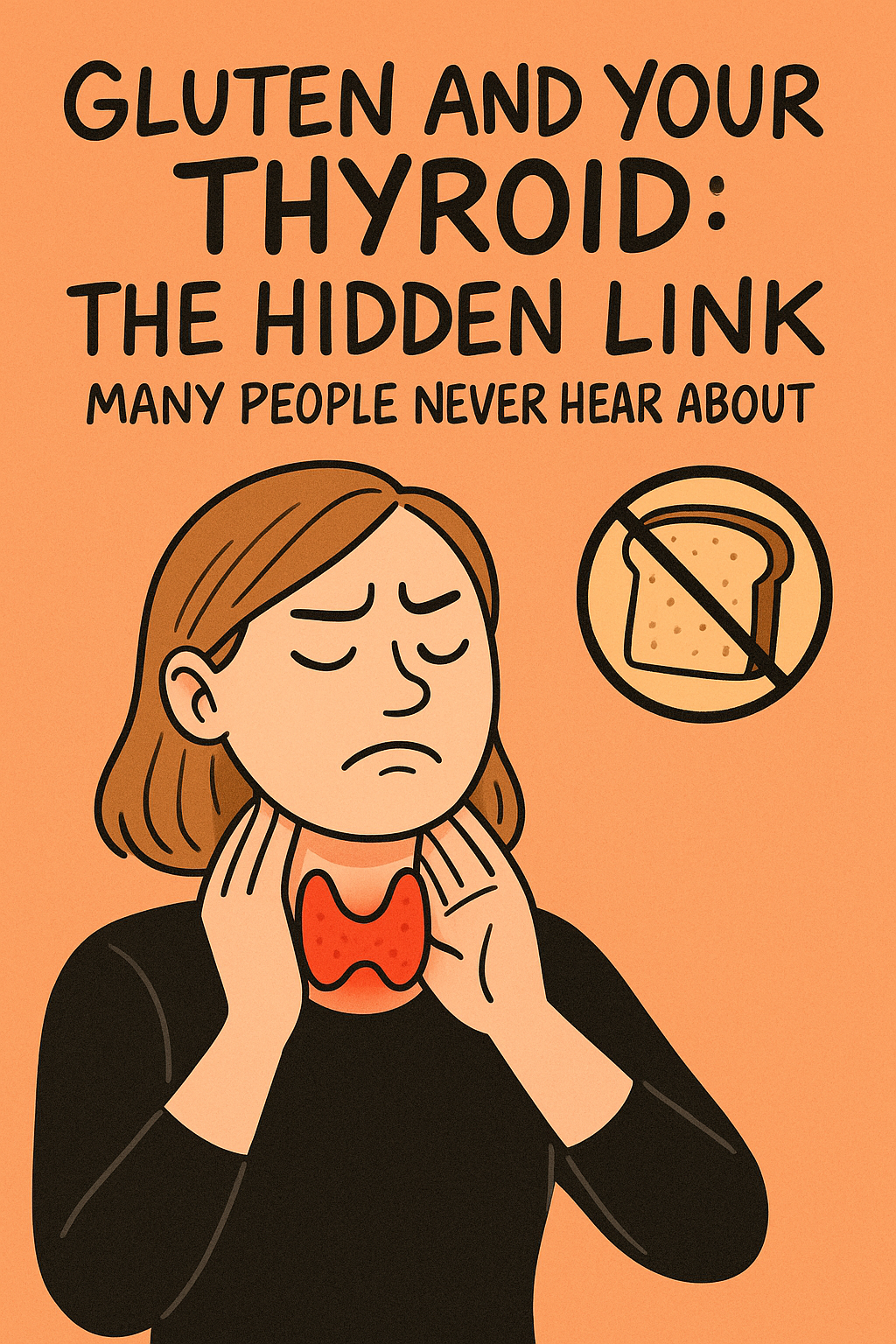
Gluten and Your Thyroid: The Hidden Link Many People Never Hear About
expert, nutritionist
One in eight women will run into a thyroid problem at some point in her life. Many of them spend years blaming the tiredness, the bloating and the brain fog on stress or age. Yet for a meaningful number of people, part of the story may be sitting in the bread basket.
That figure comes from the American Thyroid Association, which estimates that about one woman in eight will develop a thyroid disorder during her lifetime. Thyroid cancer has also been one of the fastest-rising cancer diagnoses of recent decades, although the American Cancer Society notes that much of that rise reflects better detection of small tumors through more sensitive imaging. Some people speak of a thyroid "epidemic," and theories about its causes, including viral ones, circulate widely. The science on those theories is still unsettled.
"Like Oprah, I Love Bread"
Actress Gina Rodriguez, star of Jane the Virgin, has spoken openly about living with Hashimoto's thyroiditis, the most common autoimmune thyroid condition. She was first told she had an underactive thyroid at 19, and the Hashimoto's diagnosis followed in her twenties. In a 2016 interview with Health magazine, she explained that she eats gluten-free. She joked that this was the hardest thing in the world because, like Oprah, she loves bread. Her honest description of the trade-off, giving up a food she enjoys because she feels better without it, mirrors what many readers with thyroid conditions tell us. They describe less bloating, steadier energy and fewer "foggy" days after cutting gluten. Others notice no difference at all.
A Gland That Talks to Nearly Every Cell
The thyroid is a small, butterfly-shaped gland at the base of the neck. Its hormones, T3 and T4, help set the pace of metabolism, heart rate, digestion and body temperature. Receptors for thyroid hormone are found in almost every tissue of the body, which is why a sluggish thyroid can produce such a wide range of symptoms. Receptors for vitamin D are also widespread throughout the body, as the NIH Office of Dietary Supplements explains. Both systems are closely tied to immune balance. That is one reason nutritionists pay attention to adequate vitamin D and to the nutrients the thyroid relies on, such as iodine and selenium. If you want a refresher on how the gland works, see our guide The Small Gland That Can Quietly Turn Your Life Upside Down: What Happens When Your Thyroid Loses Its Rhythm.
How Gluten Comes Into the Picture
Gluten is a protein found in wheat, barley, rye and related grains. In people with celiac disease, the immune system reacts to gluten as if it were a threat. This causes inflammation in the small intestine and the production of antibodies. Researchers believe that in genetically susceptible people this immune activation may also spill over to other tissues, including the thyroid. One proposed explanation is "molecular mimicry," in which parts of gluten resemble thyroid proteins closely enough to confuse the immune system. A recent review in Frontiers in Endocrinology calls this mechanism plausible but says direct proof is still limited.
The link between celiac disease and autoimmune thyroid disease is well documented. A review on celiac disease and glandular autoimmunity reports that 10 to 30% of people with celiac disease test positive for thyroid or type 1 diabetes antibodies. It also reports that about 5 to 7% of people with autoimmune thyroid disease carry celiac-related antibodies. Because of this overlap, many specialists recommend that people with autoimmune thyroid disease be screened for celiac disease. For a closer look at how sensitive the gut can be, read One Bite of Bread Could Be Crossing a Line Your Gut Won't Forgive.
Not Everyone Who Reacts to Gluten Has Celiac Disease
Celiac disease affects roughly 1% of the population, according to the Celiac Disease Foundation. Many more people report discomfort after eating wheat. Some of them have non-celiac gluten sensitivity. Others react to other wheat components, such as fermentable carbohydrates called fructans, rather than to gluten itself. This matters because the strongest evidence for a gluten–thyroid connection comes from people who have celiac disease. Inflammation, not a classic gluten "allergy," is the common thread in many of the other cases.
What Happens When Gluten Leaves the Plate?
Here the research becomes encouraging but still modest. In a 2019 pilot study published in Experimental and Clinical Endocrinology & Diabetes, 34 women with Hashimoto's thyroiditis were followed for six months. The women who followed a gluten-free diet had lower thyroid antibody levels and slightly higher vitamin D levels. The women who kept eating gluten showed no such change. A 2023 meta-analysis in Frontiers in Endocrinology found a similar trend. The clearest benefit appeared in people who had both Hashimoto's and a gluten-related condition.
For people with celiac disease, a gluten-free diet brings another benefit. The American Thyroid Association notes that celiac disease can interfere with the absorption of levothyroxine, the standard thyroid hormone medication. In one study, patients' thyroid levels improved after they went gluten-free, even though their medication dose stayed the same. To learn more about how the gut affects nutrient uptake, see Foods That Improve Nutrient Absorption.
The picture is not one-sided, though. A summary from the American Academy of Family Physicians concluded that there is not yet good evidence that a gluten-free diet relieves symptoms in autoimmune thyroid disease in general, although it may modestly lower TSH. The Frontiers review mentioned above likewise advises against routine, lifelong gluten removal for everyone with Hashimoto's. It favors testing for celiac disease first.
Patience also matters. In the studies that showed changes in antibodies, those changes were measured after about six months. Many people who report feeling better on a gluten-free diet describe a gradual improvement rather than an overnight one.
Signs Worth Paying Attention To
Bloating, digestive discomfort, "goosebump" skin, frequent tiredness, dizziness or a feeling of being off-balance, recurring headaches, and swelling or aching joints can all have many causes. When several of them appear together, it may be worth asking your doctor whether thyroid function and celiac disease have been checked. Both can be assessed with simple blood tests. An underactive thyroid that goes unrecognized for a long time can affect energy, weight, mood, heart health and fertility. That is a good reason to look into it rather than simply put up with the symptoms.
A Nutritionist's Practical Take
- Test before you cut. Celiac blood tests are most reliable while you are still eating gluten. Going gluten-free first can hide the result.
- If you go gluten-free, eat well, not just "free." Many processed gluten-free products are low in fiber and high in sugar. Build meals around naturally gluten-free foods instead: vegetables, legumes, fish, eggs, rice, buckwheat, millet and quinoa.
- Look at the whole pattern. In a 12-week randomized trial in women with Hashimoto's, the largest improvement came from combining a gluten-free diet with a Mediterranean diet. Read more in Why are nutritionists all over the world paying attention to the Mediterranean diet.
- Calm inflammation from several angles. Sleep, stress management and a varied, plant-forward diet all help. See Can What You Eat Really Change How Often You Get Sick? Here's What the Evidence Actually Shows.
- Mind your gut. If you have a sensitive digestive system, the type of fiber you eat matters too. See Should we avoid fiber if we suffer from intestinal inflammation?
- Never adjust thyroid medication on your own. If your diet changes how well you absorb it, your doctor may need to recheck your levels.
The Bottom Line
Gluten is not the cause of every thyroid problem, and giving it up is not a cure. For people with celiac disease, however, a gluten-free diet is essential and may also support the thyroid. For some people with Hashimoto's, early research suggests that it may help lower antibody levels over several months. The best first step is a conversation with your doctor and a simple blood test. After that, a careful, nutrient-rich trial of a gluten-free diet, ideally with professional guidance, can show you whether your body is one of those that benefits.
Information on this website is for educational purposes only and is not medical advice.
expert, nutritionist
 Would you like to be informed about news on the website?















|

