


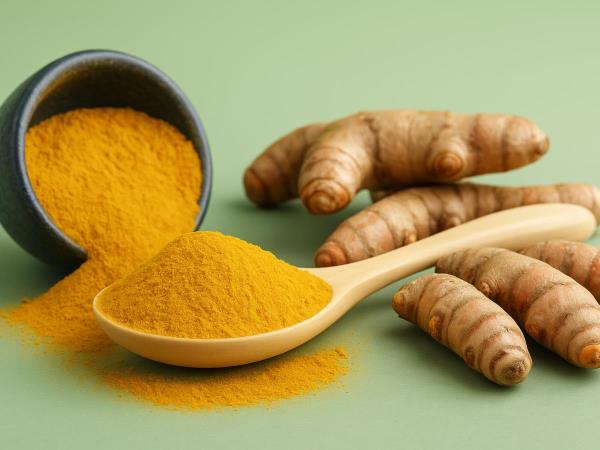



Turmeric: Miracle Spice or Hidden Health Trap? What Many People Don't Know About Its Risks
expert, nutritionist
A spoonful of golden spice in your curry is one thing. A handful of high-strength capsules every morning, on top of blood-thinning medication, is something else entirely. Turmeric is widely seen as a natural helper against inflammation, but doctors and medicine regulators point out an important detail that rarely makes it into wellness posts: in people who take anticoagulants, large amounts of concentrated turmeric products may raise the risk of bleeding, including internal bleeding.
A Real Case That Made Regulators Take Notice
In New Zealand, a patient on the blood thinner warfarin had been stable for a long time, with regular blood tests showing exactly the values doctors wanted to see. Then the patient started taking a turmeric-containing product. Within just a few weeks, the blood clotting value known as INR jumped to above 10, a level at which the risk of serious bleeding rises sharply. The case was reported to the country's medicines safety authority, Medsafe, which issued a public warning that turmeric and curcumin products can interact with warfarin. Notably, the authority stressed that the warning does not apply to turmeric used in food.
It was not a one-off. In 2022, Medsafe reported another case of a warfarin patient with spikes in INR readings, this time in someone who drank a turmeric tonic and also ate a diet rich in turmeric. Readers of the long-running American health column The People's Graedon Pharmacy have shared similar stories, including one reader on warfarin who noticed an elevated INR after two curry dinners at an Asian restaurant.
Why Turmeric Earned Its "Miracle" Reputation
Turmeric is today regarded as an almost miraculous remedy, because it is believed to help the body cope with various types of inflammation, and many people therefore associate it with heart health and protection against cardiovascular disease. Its main active compound, curcumin, is a polyphenol that has been studied extensively in laboratories and in smaller human trials.
In traditional use, turmeric has been taken for a long list of everyday complaints. It is often used to ease stomach acid problems, reduce gas, soothe discomfort linked to irritable bowel syndrome and calm diarrhea. It is said to have antimicrobial and antifungal properties, and in folk medicine it has even been applied to snake bites. Some people use it for menstrual cramps or as part of an approach to blood sugar control, while others add it to homemade face masks and skin care.
Laboratory research has also explored whether curcumin might slow the growth of certain cancer cells. It is important to keep this in perspective: according to the US National Center for Complementary and Integrative Health (NCCIH), many claims about turmeric are not yet supported by strong evidence from large studies in people. Promising results in a test tube do not automatically translate into a proven treatment.
If you enjoy turmeric as part of a balanced diet, a gentle way to include it is a warm drink, such as the one described in our article Warm Water with Turmeric Against Winter Troubles.
The Problem Begins When "Natural" Becomes "Concentrated"
The difficulty arises especially in people who take blood-thinning medication. Curcumin appears to have antiplatelet effects, which means it may make blood platelets less "sticky." When this adds to the effect of medicines such as warfarin, the result can be an uncontrolled reaction that, in the worst case, leads to internal bleeding.
The Memorial Sloan Kettering Cancer Center in New York advises against turmeric supplements for people taking warfarin or other blood thinners, as well as for those using aspirin, ibuprofen, certain chemotherapy drugs or the transplant medication tacrolimus. At the same time, it notes that turmeric used in food and tea is generally considered safe.
Warning signs that are worth discussing with a doctor straight away include:
- unusual bruising without a clear reason,
- nosebleeds or bleeding gums,
- blood in the urine or stool,
- unusually heavy menstrual bleeding,
- sudden severe headache, dizziness or weakness.
Bleeding Is Not the Only Concern
The liver. The US Drug-Induced Liver Injury Network (DILIN) described ten cases of liver injury associated with turmeric products in a paper published in The American Journal of Medicine in 2023. Several of the products also contained piperine from black pepper, which is added to boost absorption. Independent experts quoted by NutraIngredients-USA stressed that such reactions appear to be rare, which is reassuring, but they are a good reason not to treat high-dose capsules as harmless "food."
The kidneys. Turmeric contains oxalates, and Memorial Sloan Kettering points out that turmeric supplements may increase the risk of kidney stones in people who are prone to them or have a family history.
Iron. Curcumin tends to bind iron, which may reduce how much of it the body absorbs from plant foods. We explain how to time meals smartly in our article 11 foods that help or hinder iron absorption.
Other medicines. A case report summarized by Pharmacy Times described a kidney transplant patient who consumed very large amounts of turmeric for about ten days, after which levels of his anti-rejection drug tacrolimus rose to toxic levels and his kidneys stopped working properly. The problem reversed once the turmeric was stopped.
So How Much Is Too Much?
As the American news portal Insider has reported, doctors agree that the amount matters a great deal. The official reference point comes from food safety experts: the European Food Safety Authority (EFSA) and the WHO/FAO Joint Expert Committee on Food Additives set an acceptable daily intake of up to 3 milligrams of curcumin per kilogram of body weight. The UK's Committee on Toxicity (COT) has also reviewed the safety of turmeric and curcumin as supplement use keeps growing.
Here is what that means in practice. If you weigh 70 kilograms, the limit works out to roughly 210 milligrams of curcumin per day. That figure refers to curcumin, not to the spice itself. Ground turmeric contains only a few percent of curcumin, so the amounts typically used in cooking, a pinch here or half a teaspoon in a curry, stay well within this range for most people. For reference, a level teaspoon of ground turmeric weighs about 3 grams.
The picture changes completely with supplements. A single capsule often contains 500 milligrams of curcumin or more, frequently combined with black pepper extract to multiply absorption. One or two capsules a day can therefore exceed the acceptable intake several times over.
A Nutritionist's Practical Advice
- Enjoy turmeric as a spice. In normal culinary amounts it adds colour, flavour and variety to a healthy diet.
- Treat supplements like medicine. Before starting capsules, tablets, shots or concentrated tonics, ask your doctor or pharmacist, especially if you take any regular medication.
- Be extra careful if you take blood thinners, diabetes medicines, chemotherapy or transplant drugs, if you have gallbladder or liver problems, a history of kidney stones, low iron, or if you are pregnant or breastfeeding.
- Pause before surgery. Tell your surgical team about any supplements, as they may affect bleeding.
- Watch the "stacking" effect. A turmeric latte, a golden shot, a curcumin capsule and a curry on the same day add up quickly.
The Bottom Line
Turmeric is not a villain, and it is not a miracle either. In the kitchen it remains a wonderful, aromatic spice. Where many of us overdo it is with concentrated products, in the belief that if a little is good, a lot must be better. When it comes to turmeric, the wiser motto is moderation, and a quick word with your doctor before you reach for the capsules.
Information on this website is for educational purposes only and is not medical advice.
expert, nutritionist
 Would you like to be informed about news on the website?











|

