





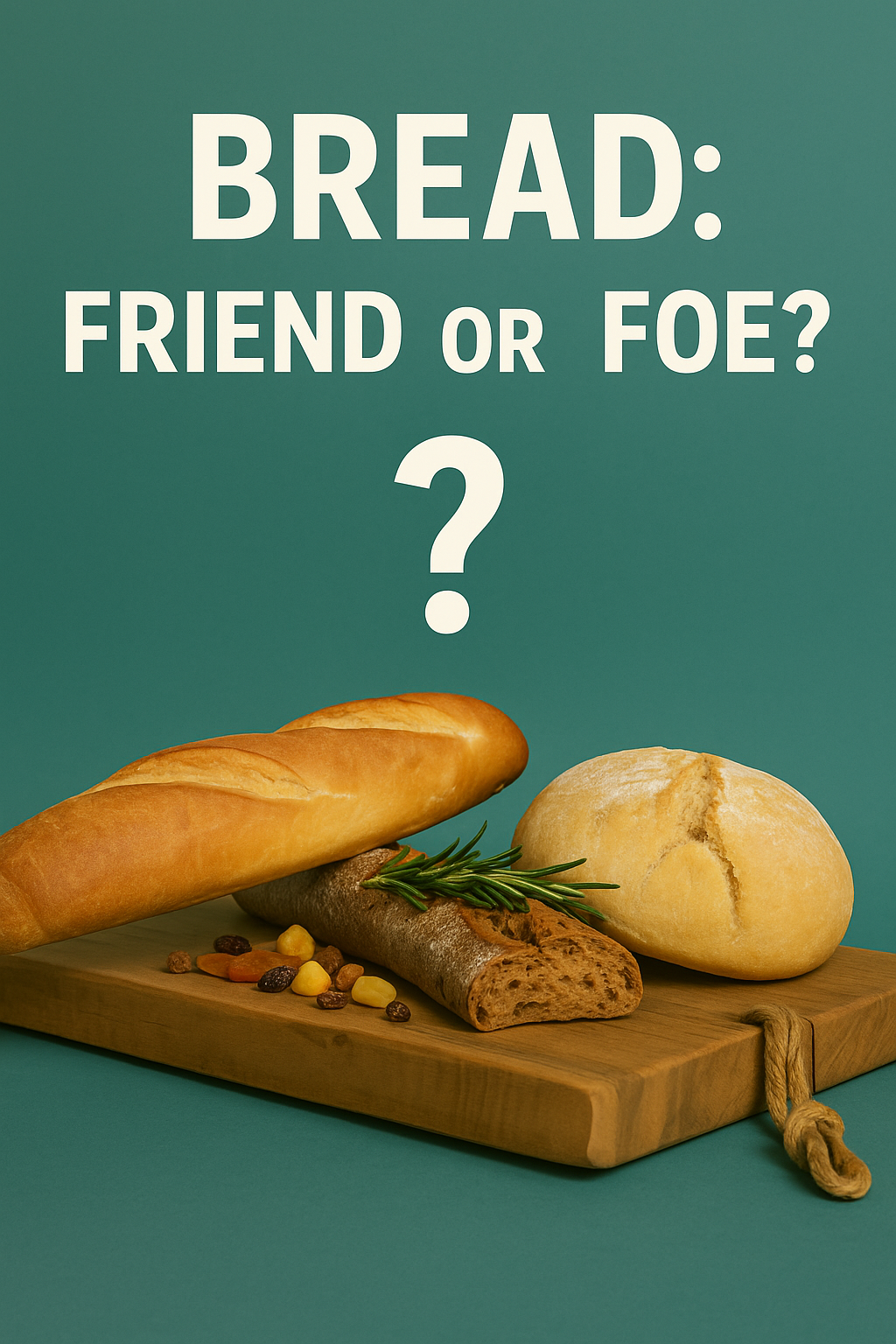

Bread: Friend or Foe? It All Depends on Which Loaf You Choose
expert, nutritionist
Picture two slices of bread side by side. One is soft, white, and almost sweet. The other is dense, speckled with seeds, and just slightly sour. They look like cousins, but nutritionally they can be worlds apart — and that difference is exactly why bread keeps sparking arguments at the dinner table, in diet books, and now, increasingly, online.
Even Oprah Weighed In
Few public moments capture the bread debate better than Oprah Winfrey's famous 2016 declaration during her partnership with Weight Watchers: "I love bread. I love bread. I just manage it. I don't deny myself. I have bread every day," she said, crediting a balanced approach — not elimination — for helping her lose weight while still enjoying it daily. The moment went viral precisely because it challenged the popular idea that bread has to be the enemy. Her experience isn't medical advice, but it's a useful reminder that moderation and food quality tend to matter more than blanket bans.
How Much Bread Do We Actually Eat?
Slovenians eat noticeably more bread than the European average — around 65 kilograms per person a year, according to research cited by RTV Slovenija, with the vast majority of respondents calling bread an important part of their everyday diet. Even so, that's still well behind some of Europe's most dedicated bread-eating nations, such as Serbia, which regularly ranks among the highest per-capita bread consumers on the continent. Clearly, bread isn't going anywhere from our tables any time soon — so the more useful question isn't whether to eat it, but which kind.
Why Nutritionists Are Cautious About Old-Style White Bread
When it comes to traditional white bread and most pastries, it's fair to say modern nutritionists remain a little reserved. Looked at through the lens of B-complex vitamins, vitamin E, dietary fiber, minerals such as iron, zinc and calcium, protein, and healthy monounsaturated compounds, refined white bread simply doesn't bring much to the table nutritionally — most of those nutrients are concentrated in the parts of the grain that get stripped away during milling.
According to the Harvard T.H. Chan School of Public Health's Nutrition Source, refined grains are essentially just the starchy endosperm — the fiber-rich bran and the vitamin- and mineral-packed germ have been removed, and even "fortified" refined flour can't fully make up the difference. As nutrition researcher Dr. Frank Hu of Harvard Chan puts it, when it comes to grains, "the whole is indeed greater than the sum of its parts."
Whole Grain Bread Tells a Very Different Story
Choose a coarser, less picture-perfect loaf, though, and the picture changes considerably. Whole grain bread can be a meaningful contributor to daily energy intake, and its potential upsides are generally considered to outweigh the downsides for most healthy adults. A large pooled analysis from Harvard T.H. Chan School of Public Health, covering close to 800,000 people, associated higher whole grain intake with lower rates of death from any cause during the study period — an interesting association, though of course it doesn't prove cause and effect, and no single food should be viewed as a cure-all.
One of our readers described switching her family's daily sandwich bread from white to a dense, seeded whole grain loaf and noticing, over a few months, that everyone in the house seemed to stay fuller for longer between meals — a small, personal observation rather than a clinical result, but one that lines up with what fiber researchers generally describe.
Beyond Wheat: Why the Flour Blend Matters
Another factor worth watching is whether a loaf is made purely from wheat flour. The more rye, barley, spelt, oats, corn, buckwheat, millet, or other grains are blended in, the more favorable the bread's overall nutrition profile tends to be. Breads made with these "alternative" flours are typically more nutrient-dense and, for many people, gentler on digestion than bread made exclusively from refined wheat flour.
Our own piece on how much bread you can eat per day without derailing your weight goals dives deeper into portion sizes and explains why fiber — not calorie count alone — is often the real difference-maker between white and whole grain loaves.
Does Fermentation Make a Difference?
There's also growing interest in how bread is fermented, not just what it's made from. A study published in the journal Foods and available via the National Library of Medicine's PMC database found that sourdough fermentation reduced the estimated glycemic index of both wheat and whole wheat breads compared with conventionally leavened versions, likely thanks to organic acids produced during the slow fermentation process. That doesn't make sourdough a health food on its own, but it's one more reason traditional, slower baking methods are worth a second look.
Bread consumption habits and body weight are also more nuanced than headlines suggest. A widely cited cohort study from the University of Navarra, published in BMC Public Health (the SUN project), followed more than 9,000 people for an average of five years and found that frequent white bread consumption — two or more portions a day — was linked with a higher likelihood of becoming overweight over time, while whole grain bread showed no such association. As the study's lead author explained, refining flour strips away the bran and germ along with key nutrients, and without that fiber, refined bread is digested much more like a quick hit of sugar.
What About Giving Up Bread Altogether?
Some readers wonder whether cutting bread out completely is the better answer. It's a personal choice, and short-term experiments are generally low-risk for healthy adults, but going in gradually rather than abruptly tends to be more comfortable. We covered this in more detail in our piece on everyday foods that can quietly sabotage a diet, which looks at how even seemingly healthy staples like whole grain bread can add up calorie-wise if portions aren't watched — and in what tends to happen in the body when bread is set aside for a week, for readers curious about that experiment specifically.
The Bottom Line
So, is bread friend or foe? Based on what nutrition experts generally advise, the honest answer is: it depends entirely on the loaf. A coarse, whole grain bread made with a generous share of alternative flours can comfortably earn its place on the table. White bread, dinner rolls, and especially sweet pastries are the ones worth enjoying a little more sparingly — not because any single food needs to be feared, but because balance, as Oprah herself put it, tends to beat deprivation every time.
Information on this website is for educational purposes only and is not medical advice.
expert, nutritionist
 Would you like to be informed about news on the website?














|

