





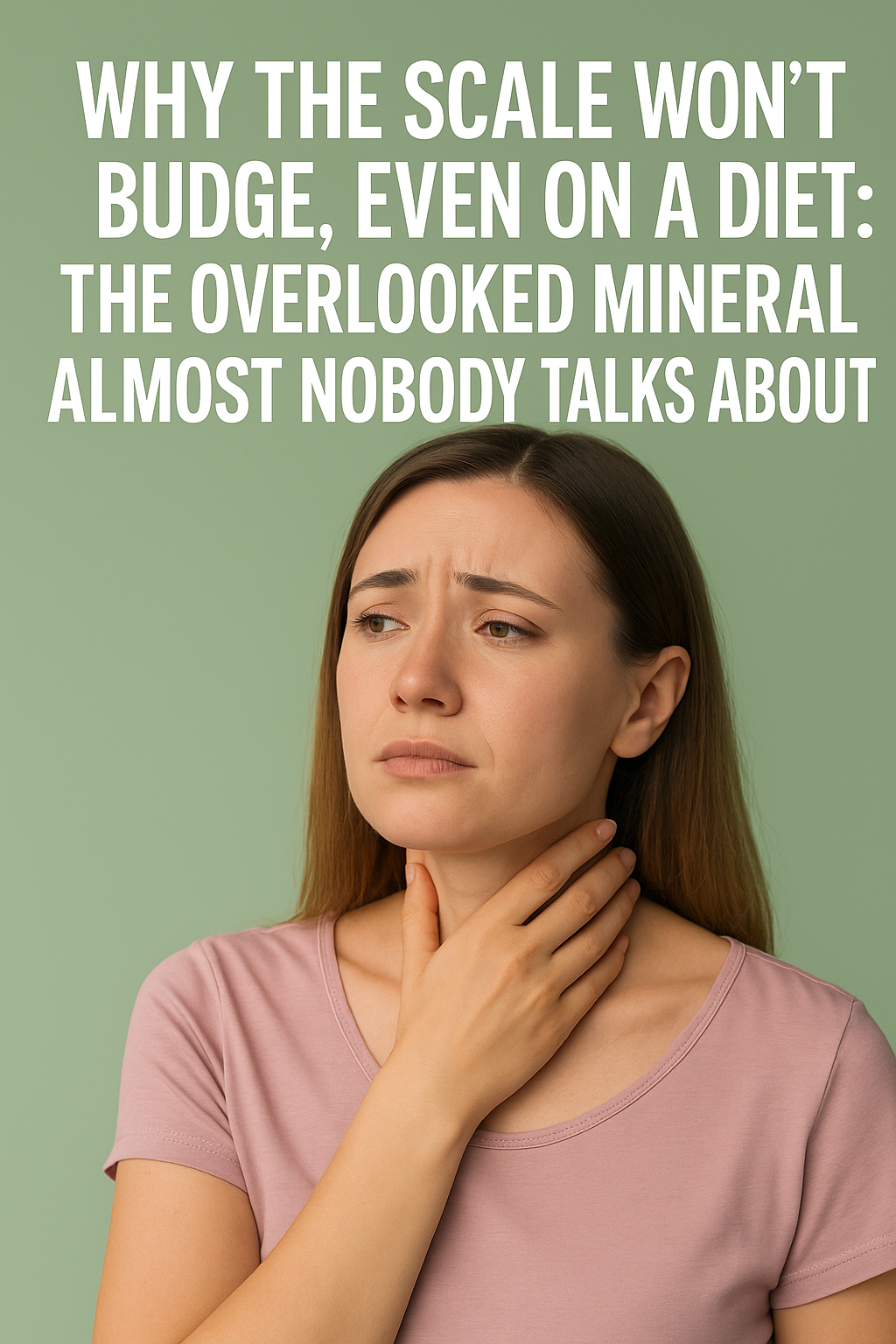


Why the Scale Won't Budge, Even On a Diet: The Overlooked Mineral Almost Nobody Talks About
expert, nutritionist
You're eating less. You're moving more. And the scale still won't move. If that sounds painfully familiar, the explanation may have nothing to do with willpower — and everything to do with a mineral so small it's measured in millionths of a gram, yet so essential that its absence can quietly slow down your entire metabolism.
In 2007, Oprah Winfrey went public with her own experience of a thyroid gone haywire. As she described in O, The Oprah Magazine, she first developed hyperthyroidism, which sped up her metabolism so much she couldn't sleep for days — and then swung the other way into hypothyroidism, which slowed her metabolism down and, in her words, made her want to sleep all the time. She gained 20 pounds during that phase, despite the fact that nothing else about her lifestyle had changed (Fox News, 2007). Her story became one of the most widely discussed examples of how a struggling thyroid gland can override even the most disciplined diet — and it's a useful reminder that unexplained weight changes are always worth mentioning to a doctor.
The Small Gland That Runs the Whole Show
The thyroid is a butterfly-shaped gland at the base of your neck, and it depends on one specific nutrient to do its job: iodine. According to the National Institutes of Health Office of Dietary Supplements, iodine is an essential building block of the thyroid hormones thyroxine (T4) and triiodothyronine (T3), which regulate metabolic rate, protein synthesis, and energy use throughout the body. When iodine intake is too low, thyroid hormone production can fall, and the body may shift into a lower-energy, lower-metabolism state.
This is not a fringe theory — it is one of the best-documented relationships in nutritional science, and it's exactly why iodized salt became one of the 20th century's quiet public-health triumphs.
Some of the more commonly reported signs associated with low thyroid function include persistent tiredness, feeling cold more easily than others, low mood, and in more pronounced cases, effects on heart rhythm. These are general patterns described in the medical literature, not a diagnostic checklist — the only way to know if iodine or your thyroid are behind how you're feeling is through a conversation with your doctor and, if needed, a blood test.
The Cholesterol Connection Few People Expect
One of the more surprising links in thyroid science involves cholesterol. Multiple population studies compiled by the American Thyroid Association have found that as thyroid hormone levels fall and TSH (thyroid-stimulating hormone) rises, cholesterol levels tend to climb too — including LDL, the type often described as "bad" cholesterol. A large German population study published in the Journal of Clinical Endocrinology & Metabolism found this same pattern even in children and adolescents, reinforcing that the thyroid-cholesterol relationship isn't just an adult phenomenon (American Thyroid Association summary). As one endocrinologist explained to HealthDay, an underactive thyroid can slow the liver's ability to clear cholesterol from the blood, which helps explain the connection (HealthDay).
None of this means iodine alone controls your cholesterol — diet, genetics, and activity levels all play major roles too — but it does help explain why an under-functioning thyroid is worth ruling out when cholesterol numbers seem out of step with everything else in someone's lifestyle.
Where Iodine Actually Comes From
Because iodine is naturally concentrated in the ocean, seafood tends to be the most reliable dietary source. Per the NIH's consumer fact sheet, good sources include:
- Seaweed and other sea vegetables
- Fish such as cod and tuna
- Shrimp and other shellfish
- Dairy products like milk, yogurt, and cheese
- Eggs
- Iodized salt
That last one comes with an important caveat, and it's one that's easy to miss: the NIH notes that iodine can be lost through volatilization when iodized salt is heated during cooking, so for maximum benefit it's better used as a finishing salt added after cooking rather than boiled or fried into a dish. It's also worth checking the label — specialty salts like sea salt, kosher salt, Himalayan salt, and fleur de sel are usually not iodized, and most processed and canned foods don't use iodized salt either.
Adults generally need around 150 micrograms of iodine a day, rising to 220–290 micrograms during pregnancy and breastfeeding, according to NIH guidance. And despite fortification programs, iodine deficiency has not disappeared: the World Health Organization has estimated that roughly two billion people worldwide have insufficient iodine intake, making it one of the most common — and most preventable — micronutrient shortfalls on the planet (Popa et al., Current Health Sciences Journal, 2017).
The Vegetables With a Complicated Reputation
Here's the twist almost nobody mentions: a handful of otherwise very healthy vegetables contain natural compounds called goitrogens, which can interfere with how efficiently the thyroid takes up iodine. According to a clinical nutrition handout from the Institute for Integrative Nutrition, goitrogenic compounds are found in cruciferous vegetables such as cabbage, kale, broccoli, cauliflower, and Brussels sprouts, as well as in soy products, millet, and cassava — and they work by competing with iodine for uptake by the thyroid gland.
The important nuance, though, is that this effect is dose-dependent and mostly a concern in the context of an already-low iodine intake. As a review from the Autoimmune Wellness nutrition blog puts it, eating these vegetables in ordinary, moderate amounts is unlikely to meaningfully affect thyroid function in someone who is otherwise getting enough iodine ("Busting the Goitrogen Myth"). Cooking also helps: heat inactivates many of the enzymes responsible for releasing goitrogenic compounds, which is one reason lightly cooked cruciferous vegetables are generally considered gentler on the thyroid than large amounts eaten raw (THIP Media).
In other words: nobody needs to fear cabbage soup. Cruciferous vegetables remain genuinely nutritious, rich in fiber, vitamin C, and folate. The practical takeaway is more about balance than avoidance — if you eat a lot of raw cruciferous vegetables or soy and also tend to run low on iodine-rich foods, it may be worth cooking those vegetables more often and making sure iodine sources like fish, dairy, eggs, or iodized salt show up regularly in your meals.
The Bottom Line
Unexplained weight changes are frustrating, and it's tempting to blame them entirely on diet or discipline. But the thyroid gland — and the humble trace mineral it depends on — is a genuinely under-discussed piece of the puzzle. If you've been doing "everything right" and still feel like your metabolism is working against you, it may be worth asking your doctor about a simple thyroid function test before assuming the problem is willpower. And in the meantime, rotating in more iodine-rich foods, cooking your cruciferous vegetables rather than eating them raw in large amounts, and choosing iodized salt as a finishing touch rather than a cooking ingredient are all small, sensible steps that support a healthy thyroid — regardless of what's on the scale.
Information on this website is for educational purposes only and is not medical advice.
expert, nutritionist
 Would you like to be informed about news on the website?














|

