




Your Feet Are Talking to You: 6 Subtle Signs They Say Doctors Say Are Worth a Second Look
expert, nutritionist
We spend a fortune on serums for our face and treatments for our hair, and almost nothing on the two body parts doing the actual heavy lifting every single day. That's a shame, because podiatrists and GPs alike describe the feet as an early-warning system: skin, nails, and circulation there can shift before symptoms show up anywhere else.
One reader who wrote in after a previous article put it simply: for years she assumed her constantly cold feet were "just her circulation" — something she'd apparently inherited from her mother. It was only when she mentioned it, almost as an afterthought, during a routine check-up that her doctor ordered a thyroid panel. Her results came back showing an underactive thyroid, a condition she'd never have connected to cold feet on her own. She's now on treatment and says the fatigue that she'd also written off as "just being busy" has lifted along with it. Stories like hers are a big part of why foot changes are worth paying attention to, even when they seem minor or easy to explain away.
Below are six of the most commonly cited foot signals, along with what they're associated with, in general and non-alarming terms — none of this is a diagnosis, and the only way to know what's actually going on is to see a doctor.
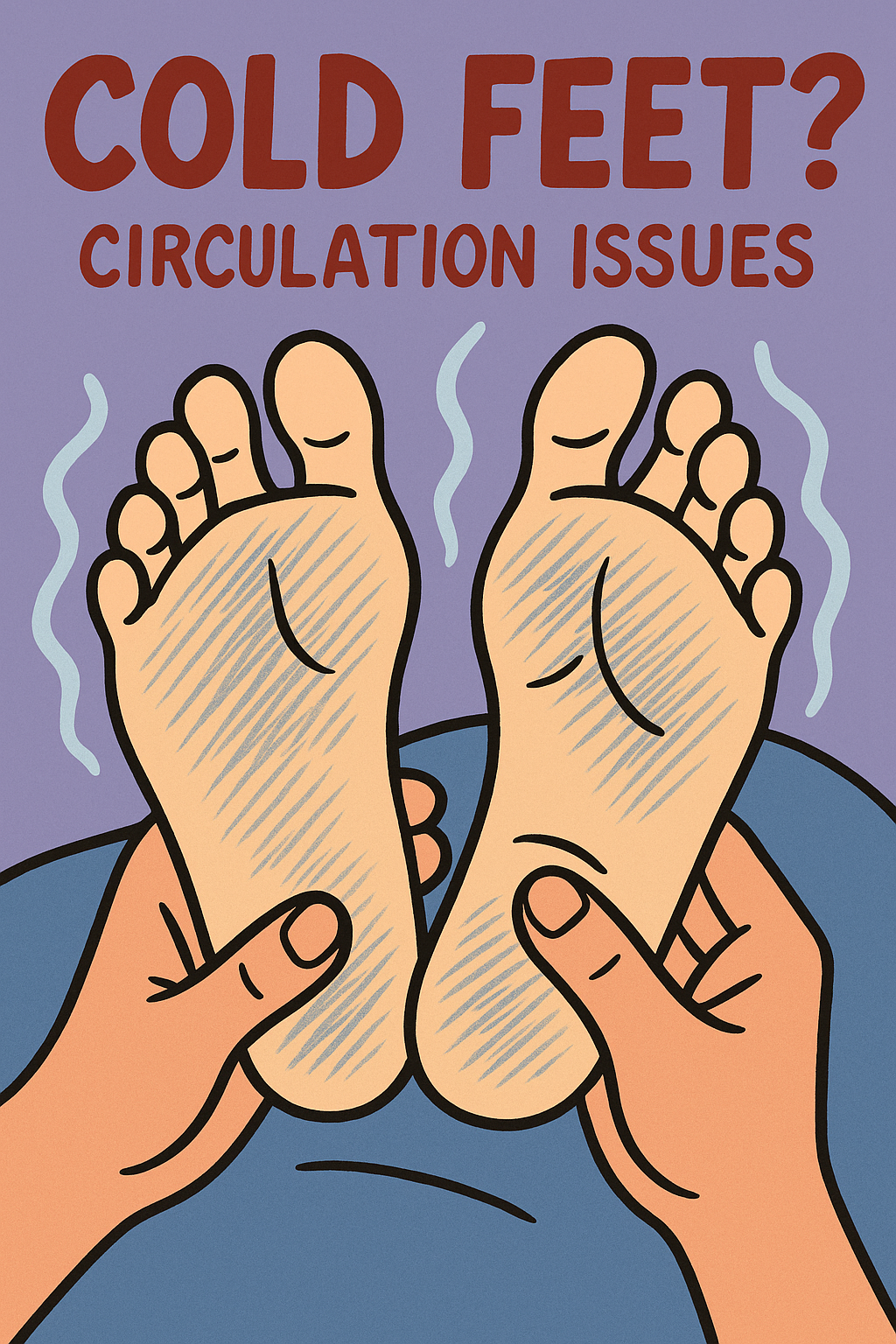
- Cold feet and thinning hair on the toes can sometimes point to circulation issues
It sounds unlikely, but if your feet are frequently cold, or the hair on your toes has thinned or disappeared, it may be a sign that blood isn't circulating as efficiently as it should. Clinicians call this peripheral arterial disease (PAD) — a narrowing of the arteries that supply the legs, similar to how a pipe gradually clogs and the flow through it weakens.
When blood flow to the feet is reduced, skin there can turn cold, pale, or unusually smooth. According to the British Heart Foundation, PAD shares many of the same underlying processes as coronary heart disease, and having it is linked with a meaningfully higher risk of cardiovascular events later on. So the takeaway isn't to panic over the odd cold evening — it's that persistently icy feet, even in warm socks, are worth mentioning at your next check-up, especially alongside other risk factors like smoking, high cholesterol, or a family history of heart disease.
- A wound that won't heal is one of the more recognized early signs of diabetes
A small sore or cut on the foot that lingers for weeks without closing is one of the more common ways type 2 diabetes first becomes visible. Persistently high blood sugar can, over time, damage nerves — which is part of why some people don't even notice the wound is there, despite it being an open sore.
According to a clinical overview from the National Center for Biotechnology Information (NCBI), roughly 5% of people with diabetes develop a foot ulcer, and around 1% go on to need an amputation if it isn't managed early — which is exactly why clinicians recommend a daily foot check for anyone living with diabetes.
If a slow-healing wound shows up alongside unusual thirst, frequent urination, persistent tiredness, or blurred vision, that combination is one worth raising with a doctor sooner rather than later.
- Feet that feel cold and heavy can be linked to a sluggish thyroid
The thyroid is a small gland in the neck that essentially conducts the body's energy use — metabolism, temperature regulation, and more. When it underperforms, the condition is called hypothyroidism, and among its more recognizable early signs are cold feet, often paired with puffy ankles and a general sense of low energy.
Research summarized by the NCBI Bookshelf found that mild, subclinical hypothyroidism affects roughly 3–5% of adults on average — rising well into double digits in some population studies, particularly among older women — and a large share of those cases go undiagnosed simply because the symptoms are so easy to attribute to something else. If cold feet show up together with constipation, unexplained weight gain, or constant sleepiness, it's a reasonable prompt to ask your doctor about a thyroid panel.
- Yellow, thickened toenails are usually a fungal infection, not a serious illness on their own
If your toenails have turned yellowish, grown thicker, or become brittle, it's most often a fungal nail infection (onychomycosis) — the toenail version of what's commonly called athlete's foot. These fungi thrive in warm, damp, enclosed spaces, which is exactly what tight shoes and sweaty socks provide.
A systematic review published via PubMed estimated the pooled global prevalence at around 23% of tested cases, with rates noticeably higher among people who regularly wear occlusive, closed-toe footwear. The reassuring part is that this is one of the more manageable items on this list: keeping feet clean and dry, washing them in lightly salted warm water, applying diluted tea tree oil (a traditional remedy some small studies suggest has mild antifungal properties), and avoiding tight shoes can noticeably improve mild cases — though a pharmacist or doctor is the right call if it doesn't clear up.
- A suddenly swollen, painful big toe is the classic sign of a gout flare
Gout is a form of inflammatory arthritis that has a habit of announcing itself in the big toe first. If the joint suddenly turns red, swells, and becomes intensely tender — sometimes to the point that even a bedsheet touching it is unbearable — that's a textbook gout attack. It happens when uric acid builds up in the blood and forms crystals inside the joint.
Gout used to be nicknamed "the disease of kings" because of its old association with rich food and wine, but its reach has broadened considerably. A global burden-of-disease analysis published on PubMed Central put current prevalence at roughly 3.9% of the population in some Western countries, with both incidence and disease burden climbing by around a fifth over the past three decades — a trend researchers link partly to diet and rising obesity rates.
Left unmanaged, gout can also contribute to kidney stones over time, so alongside any medication a doctor prescribes, cutting back on alcohol and red meat, adding more vegetables, and drinking plenty of water — which helps the body flush out excess uric acid — are commonly recommended lifestyle steps.
- Thin, spoon-shaped toenails are sometimes associated with iron-deficiency anemia
If your toenails are thin, brittle, and curve slightly upward at the edges — a shape doctors call "spoon nails" — it can be a sign of anemia, meaning the blood doesn't have enough healthy red blood cells, or enough iron within them, to carry oxygen efficiently.
Without enough iron, the body tends to feel tired, weak, and noticeably pale. The World Health Organization estimates, per a review published via PubMed Central, that anemia affects roughly 30% of women aged 15–49 worldwide, with iron deficiency behind the majority of cases; a separate PubMed review on iron deficiency in Europe highlights menstruating and pregnant women as being especially at risk, alongside anyone following a low-iron diet.
The reassuring news is that the body replenishes iron readily through food — legumes, red meat, pumpkin seeds, and beetroot are all solid sources. Some smaller studies suggest that regularly drinking beetroot juice may modestly support iron levels over a few months, though the evidence there is still preliminary, and a blood test is always the more reliable way to confirm anemia before treating it at home.
Simple ways to look after your feet at home
Feet are, quite literally, what carry us through life — the average person takes somewhere around 8,000 steps a day, which adds up to a genuinely enormous lifetime distance. It's no surprise, then, that they're often where the body's first quiet warnings show up.
A few low-effort habits go a long way: soaking feet in warm, lightly salted water relaxes tired muscles, helps disinfect minor cuts, and discourages fungal growth. Trimming nails regularly, wearing breathable cotton socks, and rotating footwear so shoes can fully dry between wears prevent a surprising share of common foot problems.
And if you notice a wound that isn't healing, intense pain in the big toe, or nail changes that persist for months, it's worth a conversation with a doctor. Catching these things early is almost always easier than dealing with them later.
Your feet, in many ways, mirror your health
Feet are easy to overlook, tucked away in shoes for most of the day, but they can tell you more than you'd expect. Cold feet may point toward circulation or thyroid issues, a slow-healing wound can be an early flag for diabetes, yellowed nails usually mean a fungal infection, a swollen big toe often signals gout, and spoon-shaped nails can hint at low iron.
None of these signs mean something is seriously wrong — most have simple, manageable explanations. But noticing them early, and mentioning them to a doctor rather than dismissing them, is one of the easiest ways to stay ahead of bigger problems down the line.
Information on this website is for educational purposes only and is not medical advice.
expert, nutritionist
 Would you like to be informed about news on the website?















|

