






Hormones in Meat: What Actually Happens in Your Body When You Eat Conventionally Raised Beef and Poultry
expert, nutritionist
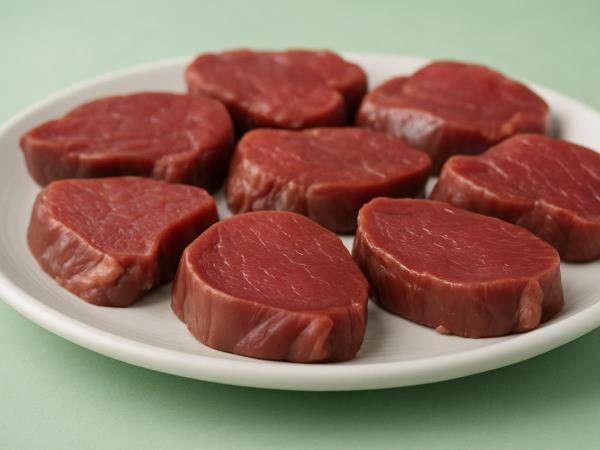
Picture two cuts of beef sitting side by side on a cutting board — one from a conventionally raised, hormone-treated animal, one from an organic, hormone-free herd. They look almost identical. But according to European regulators, a growing body of endocrinology research, and a decades-old trade war between the EU and the US, what's inside those two cuts may not be nearly as similar as they appear.
One woman we heard from, a mother of two who switched her family to organic and grass-fed meat after reading about hormone residues, described it simply: "I didn't want to gamble on my daughters' hormones over a cheaper pack of chicken thighs." Her story isn't unusual — it's part of a broader wave of consumers asking harder questions about where their protein comes from and what, exactly, it's been given along the way. [[LINK: relevant Foodwhisper article on choosing organic vs. conventional meat]]
Producers of livestock hormones point to a lack of large-scale independent research and counter with their own industry-funded studies, so as a consumer, sorting fact from fear-mongering isn't easy. What follows is a look at what regulators, toxicologists, and public health researchers actually know — and don't yet know — about hormones in meat.
Why Some Meat Is Raised With Added Hormones
In the United States, Canada, and roughly 30 other countries, cattle are routinely given hormone implants — usually a combination of natural hormones (estradiol, testosterone, progesterone) and synthetic ones (zeranol, trenbolone acetate, melengestrol acetate) — to speed growth and increase feed efficiency. The U.S. Food and Drug Administration maintains that these implants are safe, arguing that residue levels in meat are a tiny fraction of the hormones the human body produces on its own each day.
The European Union sees it differently. The EU has banned hormone-treated beef imports since 1989, citing the precautionary principle. A statement from the EU's Scientific Committee on Veterinary Measures relating to Public Health concluded that the natural hormone 17β-oestradiol should be treated as a carcinogen, and warned of possible developmental and neurobiological effects from residues, though a later 2007 review by the European Food Safety Authority (EFSA) noted that testing methods weren't yet sensitive enough to fully quantify how much of a real-world risk this poses. That gap between "theoretically concerning" and "proven harmful" is where most of the public confusion lives.
Hormones, Fat Tissue, and the Cancer Question
Because steroid hormones are fat-soluble, any that make it into the body tend to be stored in fatty tissue rather than passed through quickly — which is part of why researchers have focused so much attention on hormone-sensitive tissue like breast tissue. Women naturally carry more body fat than men, which is one reason some researchers believe they may be somewhat more exposed to any effects from hormone accumulation.
The International Agency for Research on Cancer (IARC), part of the World Health Organization, classifies certain steroidal oestrogens as carcinogenic to humans in general — a classification based mainly on data from pharmaceutical-dose exposure (like hormone replacement therapy and oral contraceptives), not from trace residues in food. Whether that classification meaningfully applies to the much smaller amounts found in meat is exactly the point of disagreement between US and EU regulators — the FDA holds that approved hormone levels in beef are well within safe limits, while EU scientists argue that "safe" thresholds for a known carcinogen are inherently difficult to define.
Evidence linking hormone residues specifically to prostate cancer is thinner still — researchers have flagged it as a hypothesis worth investigating further rather than an established link. [[LINK: relevant Foodwhisper article on diet and cancer risk]]
The Puerto Rico Puberty Mystery
One of the most-cited pieces of evidence in this debate comes from Puerto Rico in the early 1980s, when doctors noticed an unusually high number of girls developing early breast tissue (premature thelarche) — some far younger than the typical age range. A 1985 study published via the National Institutes of Health found elevated estrogen-like activity in some meat samples and floated hormone-contaminated food as a possible cause.
Researchers in Italy later reported a similar cluster after studying children's exposure to hormones in poultry and beef, observing breast development in both girls and boys, though — as in Puerto Rico — no single definitive cause was confirmed.
It's worth being honest about how the story evolved: when US researchers tried to replicate the Puerto Rico findings, they couldn't establish the same connection, and a later, more advanced 2000 study published in Environmental Health Perspectives pointed toward phthalates — chemicals found in plastics, not meat — as a more likely culprit in many of the Puerto Rican cases. In other words, the "hormones in chicken" theory kicked off decades of important research into environmental effects on child development, but it was never conclusively proven, and the scientific picture is now considerably more complicated than a single cause.
What doctors do generally agree on: the causes of earlier average puberty onset over the past several decades are almost certainly multiple — rising childhood obesity rates, environmental chemical exposure, and possibly diet all appear to play a role, rather than any one factor acting alone.
Weight Gain: The Other Side of the Ledger
The human body already produces the steroid hormones it needs for growth and reproduction — anything added on top of that is, by definition, extra for the body to process. Synthetic hormones in particular are metabolized differently than the ones the body makes naturally, and some researchers believe this may make them harder to clear efficiently, potentially contributing to fat storage patterns around the hips, abdomen, and thighs over time. This remains an area of ongoing research rather than a settled fact, and diet, activity levels, and genetics remain far larger drivers of weight gain for most people. [[LINK: relevant Foodwhisper article on hormones and metabolism]]
So Should You Worry?
Given the genuine uncertainty in the research, most nutrition and public health experts land on a fairly moderate, practical position rather than an alarmist one:
- If the science genuinely unsettles you, choosing organic, grass-fed, or "no hormones added" meat is a straightforward way to reduce exposure — though note that under US labeling rules, poultry and pork are never given hormones in the first place, so a "hormone-free" label on chicken is more of a marketing claim than a meaningful distinction.
- Diversifying protein sources — eggs, dairy, legumes, fish — naturally limits how much of any single input you're relying on.
- Moderation matters more than elimination. Occasional consumption of conventionally raised meat is unlikely to meaningfully move the needle for most healthy adults.
As with most nutrition topics that sit at the intersection of regulation, trade politics, and incomplete science, the honest answer is that researchers are still working this out — and that's a reasonable thing to sit with, rather than a reason for panic. [[LINK: relevant Foodwhisper article on building a balanced protein-rich diet]]
Information on this website is for educational purposes only and is not medical advice.
expert, nutritionist
 Would you like to be informed about news on the website?















|

