




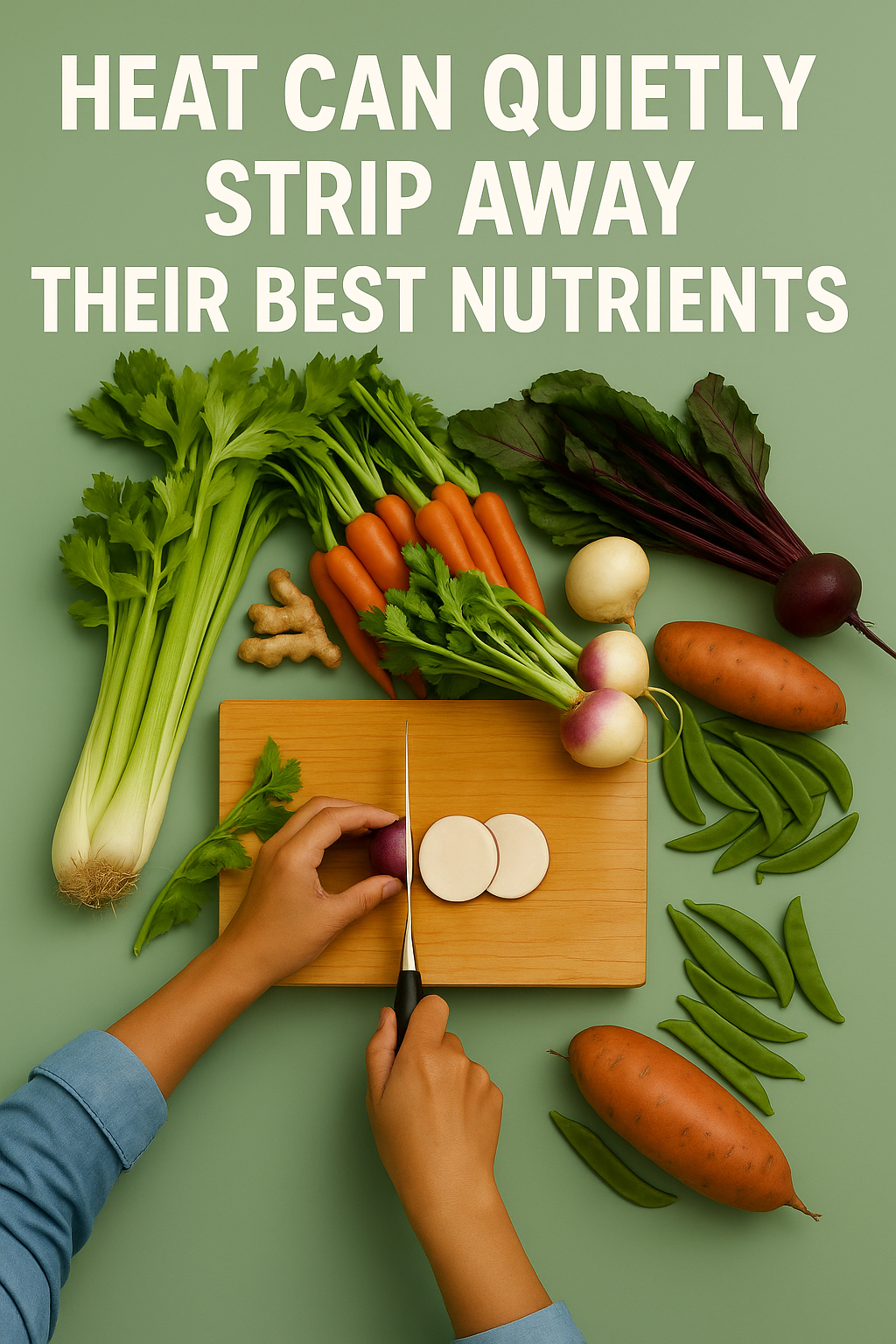


Five Vegetables You Should Think Twice About Cooking - Heat Can Quietly Strip Away Their Best Nutrients
expert, nutritionist
A single raw red bell pepper can contain roughly more vitamin C than an orange. Raw broccoli appears to deliver certain protective plant compounds far more efficiently than its cooked counterpart, according to a small clinical study. And garlic's most talked-about compound, allicin, is notoriously heat-sensitive. None of this means raw is automatically "better" — cooking has real benefits of its own, from easier digestion to higher levels of other nutrients like lycopene. But it does mean that a handful of familiar vegetables may be worth serving raw a little more often.
It's a myth that raw food is always the superior choice (for a closer look at the flip side of that coin, see our piece on Foods We Use Incorrectly, which covers vegetables that actually benefit from a bit of heat). But there is a small group of vegetables that many of us are used to cooking out of habit, where the raw version may hold on to more of what makes them worthwhile. The general guidance here is to avoid heating these past around 36{-15696}C (97{-15696}F) if you want to preserve the maximum amount of heat-sensitive nutrients. It's also worth knowing that once cooking temperatures climb past roughly 120{-15696}C (248{-15696}F) — deep-frying, for instance — some foods can start forming compounds like acrylamide, which researchers have studied for possible long-term health effects (we go deeper into this in Does French Fries Really Increase the Risk of Anxiety and Depression?).
1. Beetroot
Beetroot is a genuinely impressive source of fiber, vitamin C, several B vitamins, potassium, and folate — nutrients that are broadly associated with immune support and healthy inflammation levels. Because a meaningful share of these are water-soluble and heat-sensitive, cooking can noticeably reduce their concentration. If you're not used to the earthy taste of raw beet, it's worth easing in gradually — a simple grated salad of carrot, apple, beetroot, and a little fresh ginger is a good starting point and tends to be far more palatable than a plain slice.
2. Broccoli
Broccoli is one of those vegetables nutritionists rarely stop recommending, and for good reason: alongside vitamin C, calcium, potassium, and protein, it contains sulforaphane, a plant compound that has drawn considerable scientific interest for its antioxidant and anti-inflammatory properties. A small human trial published in the Journal of Agricultural and Food Chemistry found that sulforaphane was absorbed far more efficiently from raw broccoli than from cooked broccoli — bioavailability of 37% versus 3.4% in the study's participants. Some cohort research has also linked higher raw-cruciferous-vegetable intake with a lower incidence of certain cancers, though this kind of population-level association can't establish cause and effect on its own. If raw broccoli isn't your thing, a quick blitz into a smoothie is an easy way in — see our recipe for a broccoli smoothie packed with vitamin C.
3. Garlic and Onion
Most of us eat the bulk of our garlic and onion cooked, which is a shame nutritionally, because that's exactly when they lose the compound they're best known for. Allicin — the substance responsible for garlic's sharp aroma — is also credited with notable antibacterial, antifungal, antiviral, and antiprotozoal activity, but it is genuinely fragile: laboratory research on the thermal degradation of allicin shows its concentration falls off steadily as temperature rises. Research from the 1990s and 2000s exploring garlic and onion's cardiovascular effects has repeatedly pointed to allicin, alongside other compounds, as part of the mechanism behind their traditional reputation for supporting healthy blood flow (Agents and Actions, 1990). None of this means you need to give up roasted garlic or caramelized onions — just consider finishing a dish with a little raw, finely chopped garlic or onion stirred in at the end, which preserves more of the compound while still letting you cook the rest of the meal as usual.
4. Red Pepper
Gram for gram, raw red bell pepper is genuinely one of the richest common vitamin C sources around — USDA nutrient data puts it well ahead of oranges, alongside a solid dose of vitamin B6, vitamin E, and magnesium. Some nutritionists suggest making a red pepper part of your regular routine for exactly this reason. Two things are worth remembering: prolonged cooking above roughly 190{-15696}C can significantly diminish its vitamin content, and red peppers — being fully ripened — are consistently more nutrient-dense than their green or yellow relatives.
5. Nuts
Ask yourself honestly: when did you last eat nuts raw? By some estimates, the vast majority of the nuts people eat are roasted, salted, or baked into pastries, cakes, and bread — all of which changes their nutritional profile. Nuts are a well-established source of heart-healthy unsaturated fats and are widely associated with lower LDL cholesterol and a reduced risk of blood clot formation. Raw nuts tend to retain a somewhat higher iron and magnesium content and avoid the added oils used in many roasting processes. If you're eating nuts for their health benefits specifically, raw and unsalted is generally the better bet — heavily salted, oil-roasted varieties can work against the very benefits you're going for.
Information on this website is for educational purposes only and is not medical advice.
expert, nutritionist
 Would you like to be informed about news on the website?














|

