




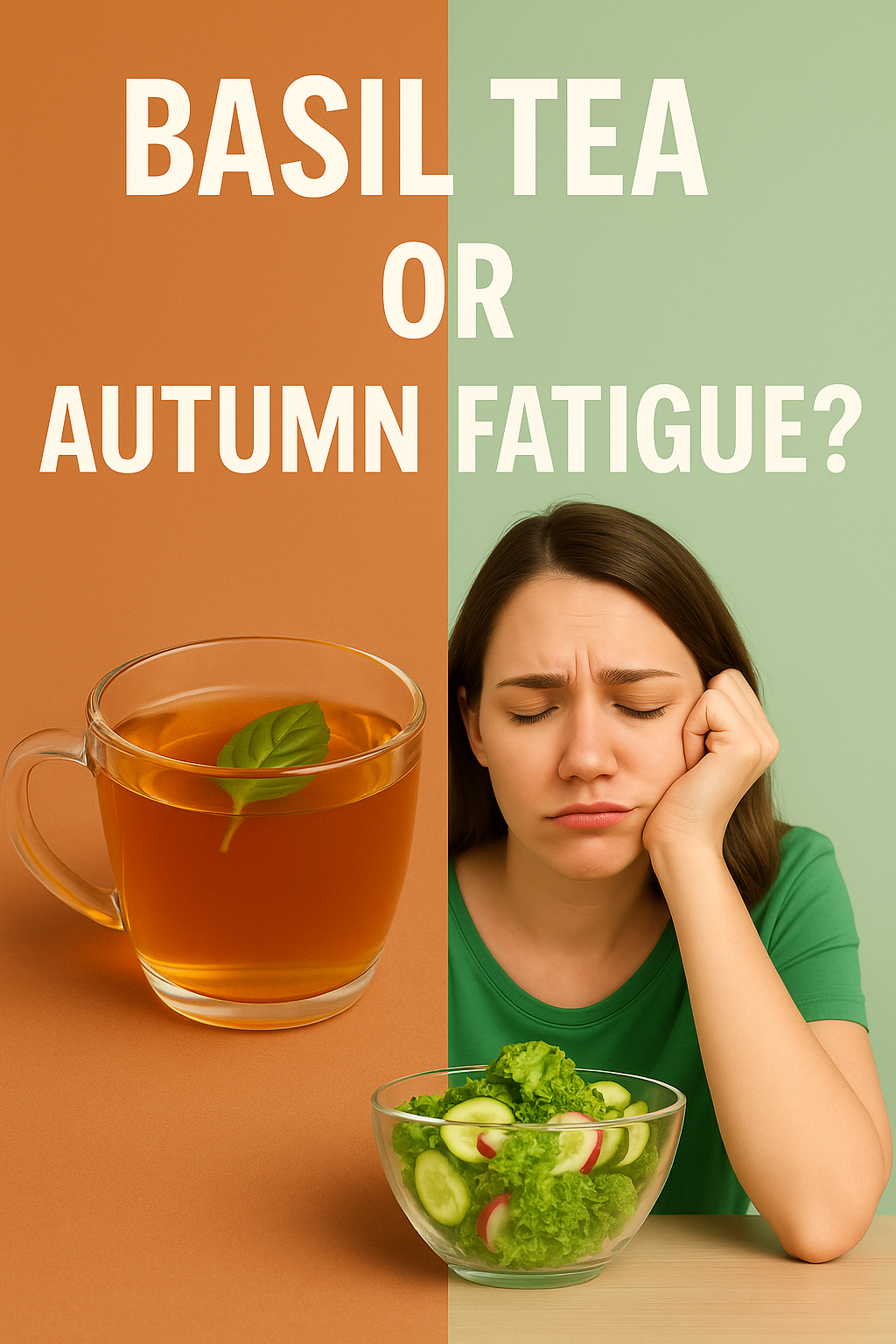


Basil Tea: The Quiet Autumn Ritual That Might Help You Bounce Back From the Season's Slump
expert, nutritionist
You wake up, the alarm goes off, and your body simply refuses to cooperate. The coffee doesn't hit the same way it did in July, the motivation to get dressed feels heavier than it should, and by 3 p.m. you're staring at your screen wondering where the day went. If that sounds familiar, you're not imagining it — and you're definitely not alone.
One reader who wrote in to our editorial team described exactly this: a busy project manager who noticed that every October, without fail, her energy would quietly collapse. "I'd blame it on work stress," she said, "until I realized it happened on the same weeks every single year — clockwork." She wasn't sick. She wasn't imagining it. She was simply living through what nutrition writers often call "autumn fatigue," and after a nutritionist friend suggested she try something her grandmother used to make — a simple basil-leaf tea, twice a day — she says the fog lifted within a couple of weeks. Her experience isn't a clinical trial, of course, but it's a familiar one, echoed in the seasonal habits of cultures across the world.
Is Autumn Fatigue Actually a Thing?
Seasonal tiredness isn't a formal medical diagnosis, but it's a widely recognized phenomenon. As the days shorten, our internal body clock — the circadian rhythm that governs sleep, hormones, and energy — has to recalibrate, and that adjustment period can leave people feeling foggy, unmotivated, or simply "off." Health publications describe this seasonal dip, sometimes overlapping with Seasonal Affective Disorder, as affecting a meaningful share of the population each year (Healthline).
Diet plays a role too. Nutritionists generally agree that low energy tends to creep in after roughly a month and a half of eating a narrow, repetitive diet — which is exactly what happens to a lot of people who spend the whole summer living on salads, iced drinks, and quick, light meals. It feels virtuous, but it can leave the body short on the protein, fiber, healthy fats, and complex carbohydrates it actually needs to keep energy steady. We covered a related pattern in Sweets on an Empty Stomach: Why the Body Doesn't Like It, where sugar spikes — not just food quantity — were shown to be a major driver of morning sluggishness.
If you're looking for food-first ways to fight this seasonal slump, our related guides Foods to Beat Spring Fatigue and 5 Drinks That Are Stronger Than Dietary Supplements are worth a look — many of the same nutrient gaps (iron, iodine, B vitamins) show up in both spring and autumn tiredness. It's also worth ruling out simple deficiencies: low iron is a classic, under-diagnosed cause of persistent fatigue, as we discussed in Too Much Iron in the Blood Can Also Be a Problem, and iodine shortfalls can quietly sap energy as well, covered in Iodine Is the Most Important Mineral in the Summer. If tiredness is severe, persistent, or comes with other symptoms, it's always worth checking in with a doctor rather than assuming it's "just the season."
Why Basil, of All Things?
In Hindu tradition, basil — specifically holy basil, or tulsi — isn't just a kitchen herb; it's considered sacred, planted in courtyards and used in daily rituals, brewed as tea both morning and evening (see the herb's cultural background on Wikipedia's tulsi entry). That daily-ritual habit is thousands of years old, and modern researchers have since taken an interest in why.
To be clear about what the science actually supports: tulsi has not been proven to cure fatigue, prevent malaria, or treat illness, and it isn't a substitute for medical care. What a growing body of research does suggest is more modest — that tulsi may act as an adaptogen, a category of plant compounds studied for their potential to help the body manage everyday stress. A systematic review of human clinical trials found generally favorable, low-risk results for tulsi across markers of metabolic and psychological stress, though the authors were careful to note more high-quality research is still needed (Jamshidi & Cohen, systematic review, published in Evidence-Based Complementary and Alternative Medicine). A separate randomized, placebo-controlled trial of a holy basil extract reported improvements in self-reported stress and sleep quality over several weeks of daily use (peer-reviewed trial via PubMed). Traditional and pharmacological reviews also describe tulsi's long folk history — including its traditional (not clinically proven) use for coughs, minor colds, and general malaise (Khosla, Ancient Science of Life). Chewing the leaves is likewise a long-standing folk remedy for minor mouth irritation, though this too is traditional use rather than a clinically established treatment.
None of this makes basil tea a medicine. Think of it the way you'd think of a calming chamomile tea before bed: a gentle, low-risk habit some people find comforting during a rough patch — not a treatment for any condition. If you're pregnant, nursing, on blood thinners, or managing a health condition, check with your doctor before adding tulsi to your routine, since some traditional sources advise caution in those cases.
How to Make Basil Tea
Take 12 fresh basil leaves and simmer them in half a liter (about 2 cups) of water for 5 minutes. Let the tea cool, then drink it slightly chilled or at room temperature — traditionally, one cup on an empty stomach in the morning and another before bed.
A Bonus Garden Trick: Basil and Bug Bites
Here's a tip worth remembering while your basil plant is still going strong: if a mosquito gets you, pressing a fresh basil leaf against the bite is a well-known folk remedy that many people find soothing, and basil's strong scent is also a traditional, low-effort way to help keep mosquitoes at a distance — some people rub a leaf on exposed skin, or simply keep a potted basil plant near a window (Malay Mail). It's not a replacement for proven repellents in high-risk areas, but as a gentle, natural extra layer, it's a habit worth having in your back pocket — and we've covered other natural approaches to insect season in Global Warming and Infectious Diseases.
Information on this website is for educational purposes only and is not medical advice.
expert, nutritionist
 Would you like to be informed about news on the website?












|

