






The Three Moments Each Day When Your Willpower Is Weakest — and Your Cravings Are Strongest
expert, nutritionist
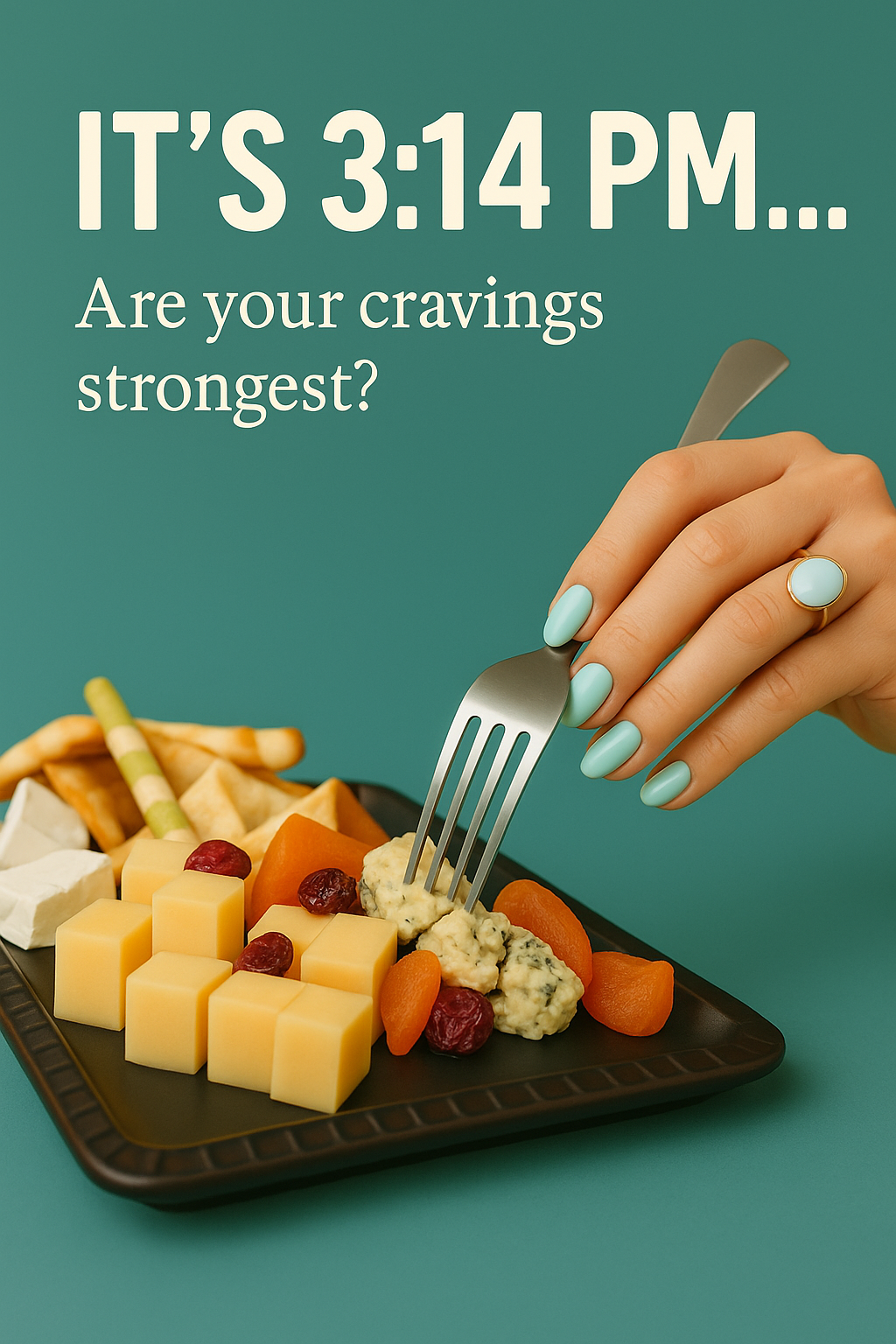
It's 3:14 in the afternoon. You told yourself you wouldn't touch the office candy bowl today, and yet here you are, unwrapping a chocolate bar you don't even really want. If that sounds familiar, you're not alone — a nutrition coach we spoke with described working with a client who called this her "3 o'clock ambush": every single afternoon, without fail, the willpower she'd had all morning simply evaporated. It wasn't a lack of discipline. It was biology showing up right on schedule.
Hunger Isn't Random — It Runs on a Clock
If you're watching your weight, or just trying to eat a bit more mindfully, it helps to know that appetite doesn't rise and fall evenly throughout the day. It tends to cluster around a few predictable peaks. Appetite and digestion are closely linked: when your digestive system is in a resting phase, willpower alone often isn't enough to override the signals your body is sending.
This isn't just anecdotal. A study published in the journal Nutrition tracked people's hunger and food cravings in real time throughout the day and found clear time-of-day patterns in both hunger and cravings, with cravings tending to build through the afternoon. Separately, research on the hormone ghrelin — often nicknamed the "hunger hormone" — has shown that it doesn't just respond to an empty stomach; it can also rise in anticipation of your usual mealtimes, essentially "learning" your routine and priming your appetite before you've even consciously felt hungry. A broader review in a chrononutrition journal similarly notes that consistent meal schedules appear to entrain ghrelin secretion, with anticipatory rises before habitual mealtimes.
Three Windows Worth Watching
Based on typical waking-and-eating patterns, three windows tend to stand out as the riskiest for many people:
- Roughly 3 hours after waking. If you skipped breakfast, this is often where it catches up with you. By this point your body may be running on empty, and appetite can spike sharply. For someone who wakes at 8 a.m., this often lands around 11:00. Rather than reaching for something quick and sugary, it may help to have eaten a fuller breakfast in the first place — something with protein and fibre rather than just carbohydrates — and to reach for a glass of water in the meantime. Our earlier piece on why it's worth not skipping breakfast, even after a heavy dinner, goes into this in more detail — including why so many people who feel "not hungry" in the morning end up overeating by afternoon.
- Roughly 7 hours after waking. This is frequently a stress-driven dip rather than a purely physical one. Afternoon fatigue, a demanding workday, and the classic mid-afternoon energy slump can make sugary, energy-dense snacks especially tempting — even though the "boost" they offer tends to be short-lived. For an 8 a.m. riser, this often falls around 15:14. A short walk, a glass of water, or a planned protein-rich snack can take the edge off before the vending machine does.
- Roughly 13.5 hours after waking. By the evening, willpower reserves are often lowest, and this is typically when people reach for salty, fatty snacks — chips, crackers, and similar foods (nuts and seeds can fall into this category too, in large enough quantities). For our 8 a.m. example, that's around 21:31. Having a small, planned snack beforehand — a banana and a glass of water about an hour ahead of time — may take some pressure off this window.
Exact timing varies from person to person depending on when you wake, your usual meal schedule, sleep quality, and stress levels — think of these as general tendencies rather than a fixed rule for everyone.
Why the "Wrong Time" Snacks Cost You Twice
Snacks reached for in these windows tend to be sugary drinks, pastries, or packaged treats — and eating them at a moment when your body is already primed for cravings rather than genuine hunger can be a bit of a double hit: you're less likely to feel satisfied by them, and more likely to keep snacking afterward, on top of taking in calories that don't offer much nutritionally. This is echoed by nutrition researchers at Harvard, who note that repeatedly reaching for highly palatable foods may interfere with the brain's normal fullness signals, making cravings more persistent over time rather than less.
Sleep plays a role here too. Poor or short sleep is associated with elevated ghrelin and a stronger drive to eat, which is part of why cravings can feel especially hard to resist after a rough night — a pattern we've covered in more depth in why too little sleep can quietly expand your waistline.
A Few Practical Ways to Get Ahead of It
- Eat a fuller, more balanced breakfast rather than skipping it — it may blunt the late-morning spike. See: a breakfast built for a demanding day.
- Keep a planned, protein-rich snack on hand for the afternoon slump instead of relying on the vending machine. Cashews are a reasonable option in moderation — more in why cashews are worth a spot in your snack drawer.
- Watch your evening routine and screen time around meals — small environmental habits add up, as outlined in 10 reasons weight-loss efforts often stall.
- Don't go to bed hungry, but keep the pre-bed snack light and low in sugar.
Information on this website is for educational purposes only and is not medical advice.
expert, nutritionist
 Would you like to be informed about news on the website?















|

