




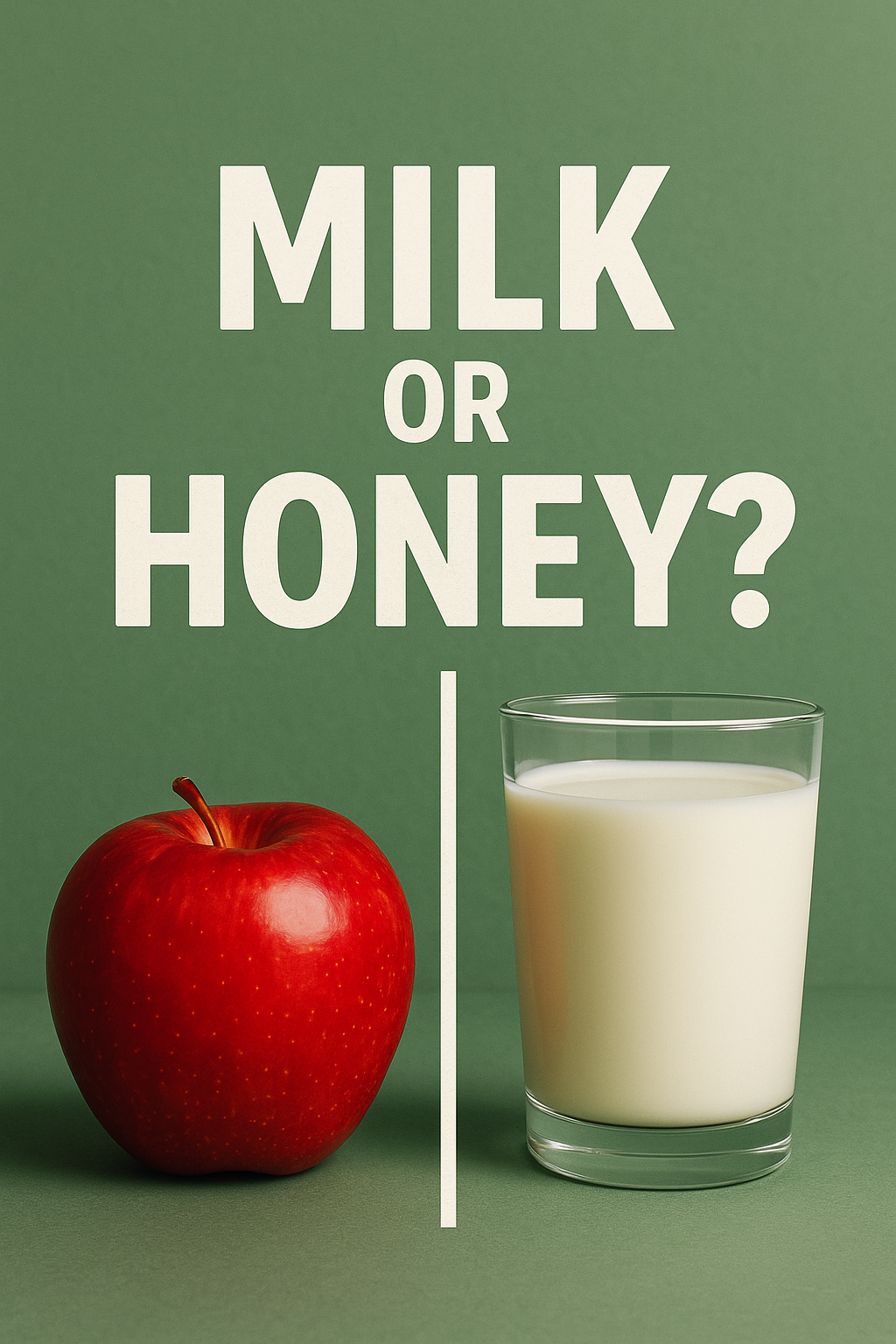


Novak Djokovic Starts His Morning With It — And So Does Almost Every Kitchen in Europe
expert, nutritionist
Before his matches, tennis champion Novak Djokovic has described a simple ritual: two spoonfuls of honey stirred into a glass of warm water. It's a small habit, but it points to something bigger — some of the most talked-about foods in sports nutrition and everyday cooking are not exotic superfoods. They're the four sitting quietly in most refrigerators and fruit bowls right now.
Nature offers these foods every day, without complicated recipes, expensive equipment, or special knowledge. Milk, honey, spinach, and apples have each been linked in scientific literature to supporting heart health, immune function, and steady energy — modest, well-documented effects rather than dramatic ones, but effects worth knowing about.
Diet plays a measurable role in long-term health. According to the World Health Organization, noncommunicable diseases such as heart disease, stroke, and diabetes are responsible for the large majority of deaths worldwide, and unhealthy diet is one of the leading modifiable risk factors behind them. That's not a reason for alarm — it's a reminder that ordinary food choices, repeated daily, tend to add up.
Milk and Dairy: An Old Habit, Revisited by Modern Research
Since childhood, most of us have heard that milk is good for bones — and that much is well established. It's a reliable source of calcium, essential for bone and dental strength, alongside protein that supports muscle maintenance and repair. It's no coincidence that many athletes reach for milk-based recovery drinks after training.
The link between dairy and heart health has been studied extensively, and the picture is more nuanced than a single number. A large 2021 study published in PLOS Medicine, following more than 4,000 adults over 16 years, found that people with higher blood levels of certain dairy-derived fatty acids had a lower risk of cardiovascular disease — suggesting full-fat dairy may be less harmful to the heart than once assumed. Separately, a large international study published in The Lancet in 2018, following more than 136,000 people across 21 countries, found that adults eating two or more servings of dairy a day had a meaningfully lower risk of heart disease, stroke, and cardiovascular death compared with those who avoided dairy. Harvard Health notes this is an observational association, not proof of cause and effect, but the nutrients involved — potassium, vitamin D, calcium — are well understood to support cardiovascular function.
Not all milk is equal, though. Less processed versions — and where possible, kefir — are generally the better choice. Kefir is a fermented milk drink with a history stretching back centuries: fermentation uses beneficial bacteria to make the milk easier to digest and richer in probiotic compounds.
Milk and dairy aren't essential for everyone — plenty of people thrive without them — but for those who tolerate dairy well, working it into a regular diet is a simple way to support bone strength and general wellbeing.
Honey: A Folk Remedy That Modern Science Takes Seriously
Honey has long had a reputation as a natural remedy. Grandmothers stirred it into tea to soothe a cold, dabbed it on scrapes, and used it as a gentler sweetener. Today, researchers understand more clearly why: honey is rich in antioxidants — compounds that help protect cells from damage caused by free radicals, the unstable molecules generated by stress, pollution, and processed diets.
A 2025 review in the journal Antioxidants summarizes a substantial body of clinical and experimental evidence linking honey's antioxidant compounds — phenolic acids, flavonoids, enzymes — to protective effects on cardiovascular health, blood sugar regulation, and wound healing, while also noting that large-scale human clinical trials are still limited. An earlier review in the International Journal of Basic Medical Sciences similarly found that honey's antioxidant properties help counter oxidative stress in the body.
Honey's antibacterial properties are well enough established that medical-grade honey is used in wound care in hospitals in several countries, where it can support skin healing in certain wound types.
Choosing raw, minimally processed honey matters: heavy heat processing (pasteurization) can destroy many of the beneficial plant compounds that give honey its properties. Store-bought honey that has been heavily filtered and heated tends to offer less of this benefit.
One important caution: honey should never be given to infants under one year old, as it can occasionally contain spores of Clostridium botulinum, which pose a serious risk to very young children's underdeveloped digestive systems.
Spinach: Quiet Power in a Green Leaf
Plenty of people skip spinach because of its taste or texture — but that dark green color is a signal of how nutrient-dense it is. Spinach is rich in chlorophyll and carotenoids, natural plant pigments that include lutein and zeaxanthin, compounds specifically linked to eye health.
The landmark AREDS2 clinical trial, published in JAMA, found that participants with early signs of age-related macular degeneration who consumed more lutein and zeaxanthin — the same carotenoids concentrated in spinach and other leafy greens — had a meaningfully reduced risk of the condition progressing. Spinach and kale are among the richest natural food sources of these two compounds.
Spinach is also a useful source of iron, needed to produce the red blood cells that carry oxygen through the body — which may explain why a plate of spinach often leaves people feeling more energized. And with roughly 23 calories per 100 grams, it's a food that's easy to eat generously without much impact on calorie intake, which is part of why it's a staple in weight-conscious diets.
An Apple a Day: An Old Saying With Real Backing
"An apple a day keeps the doctor away" isn't just a folk saying — it holds up reasonably well under scientific scrutiny. Apples are portable, inexpensive, and rich in fiber, which helps lower LDL ("bad") cholesterol.
A long-running Finnish cohort study published in the BMJ tracking over 10,000 people found that higher intake of flavonoids — plant compounds particularly concentrated in apples — was associated with lower coronary mortality. More recently, a 2021 systematic review and meta-analysis of randomized controlled trials found that apple or apple-polyphenol intake was linked to improved cholesterol profiles and lower inflammation markers — concluding, in the researchers' own words, that the old saying holds up.
Apples' natural fiber and acids also slow the digestion of sugars, leading to a gentler rise in blood glucose after eating — a property of particular interest to people managing or hoping to prevent blood sugar issues.
Despite being cheap and available year-round, apple consumption in Europe has fallen over recent decades. According to FAOSTAT data analyzed by agricultural researchers, European per-capita apple consumption peaked at around 24 kg per year in the 1980s and had dropped to roughly 13–15 kg by the late 2010s — a sign that many people have drifted away from one of the simplest, most accessible everyday health habits.
Finding Room for Simple Food in a Fast-Paced World
Fast food is genuinely convenient, and it's not realistic to pretend otherwise — surveys of European consumers show a meaningful share eat it on a weekly basis, and frequent fast-food consumption has been linked with higher risk of weight gain, type 2 diabetes, and heart disease over time.
The reassuring part is that the alternative doesn't have to be complicated. An apple in your bag, a handful of nuts, a glass of homemade kefir, or a spoonful of honey in your tea can go a long way — no elaborate meal prep required. Recipes like a spinach, banana, and honey smoothie show how easily these four foods combine into something both quick and genuinely nourishing.
Health Often Comes Down to Simple, Accessible Foods
Taken together, these four foods cover a lot of ground: milk for bone strength, honey for its antioxidant and antibacterial properties, spinach for iron and eye health, apples for heart health and digestion. None require special recipes or expensive equipment — they're already sitting in most kitchens.
Working even one of these into your day — an apple in your bag, a spoonful of honey in your tea, a bowl of spinach at lunch — is a small, realistic step. These aren't dramatic changes, but small, consistent choices tend to be the ones that actually stick.
Information on this website is for educational purposes only and is not medical advice.
expert, nutritionist
 Would you like to be informed about news on the website?













|

