




Date: 07/30/2026 - GOOD TO KNOW
Soy and Cancer: Why Doctors Wrongly Forbade It to Breast Cancer Patients for Decades
AUTHOR:
Zvone Stor
expert, nutritionist
expert, nutritionist
A study with more than 6,000 women showed a 21% lower mortality rate in those who consumed soy isoflavones – but with an important caveat.
When a person hears the word cancer, many things change. Especially the perception of food! On forums, in books, and during conversations with others, questions quickly arise: Can I eat soy? Is it safe? Maybe it even helps or harms breast cancer treatment? It seems like everyone has their own story and advice, but what does science say and what does common sense say?
In recent years, soy, this humble legume from Asia, has become the subject of numerous debates. Some praise it as a remedy, others warn against it, especially for women with a breast cancer diagnosis. Let's look at what scientific assessment says about this and whether soy really deserves so much distrust.
First: What is actually the problem with soy?
Soy contains isoflavones, natural compounds that are structurally similar to the female hormone estrogen. Because of this, they are often referred to as phytoestrogens or plant estrogens. Phytoestrogen means that the substance has a similar form to estrogen, but acts much more weakly. In the body, it can bind to estrogen receptors; however, it does not trigger the same effects as real estrogen.
Precisely due to this similarity, isoflavones in the past raised concern that they might mimic the effect of the hormone often linked to the growth of certain types of breast cancer. But things are not that simple. More and more research shows that dietary isoflavones do not act as estrogen, but often even the opposite. They block the action of real estrogens and can therefore slow the growth of certain types of cancer cells.
Large study: More soy, less death
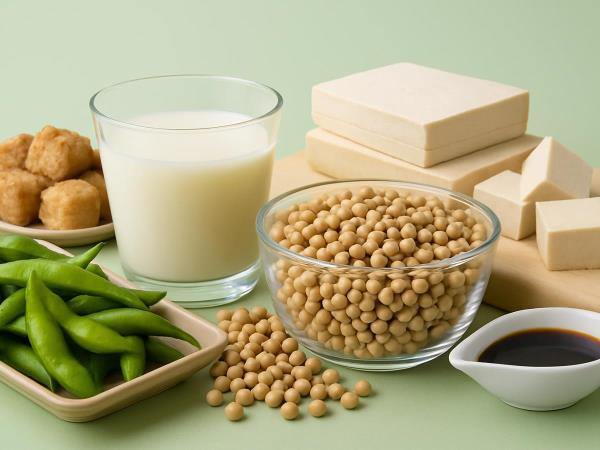
One of the most important studies on this topic was published after a nine-year study, which included 6,235 women from the USA and Canada, who already had a breast cancer diagnosis. Scientists monitored their diet and, in particular, the amount of isoflavones they consumed through soy products such as tofu, soy milk, tempeh (fermented soy), and miso soup.
The results were surprising: women who consumed more soy isoflavones had as much as 21% lower risk of death compared to those who consumed the least. That's a big number. And it wasn’t just one study! Similar findings have also been observed in Asian countries, where soy consumption is part of daily life.
Interestingly, the biggest benefits were seen in people who:
In simple terms: in these women, soy acted as a protective factor. And even more importantly, even among those who were undergoing hormone therapy, soy consumption did not increase the risk, which scientists once feared.
What do other sources say?
A very similar effect was also observed in an analysis of 14 studies, published in the journal PLOS ONE (2014), where it was found that a higher intake of soy is associated with a lower rate of cancer recurrence and higher survival rate. On average, the risk of cancer recurrence decreased by 26% if women regularly consumed soy after diagnosis.
In Asian countries, where women on average consume up to 50 mg of isoflavones per day (compared to around 1 to 5 mg in Western countries), the rate of breast cancer is one third lower than in the Western world.
Of course, this does not mean that soy cures cancer. But it does mean it is not harmful, as some once claimed, and in certain cases may even be beneficial.
So why so much confusion?
The confusion arose because some older studies, often done on animals or in test tubes, found that isoflavones could promote the growth of certain cancer cells. But later, scientists discovered that the doses in those experiments were unreasonably high and that animal organisms are not a good approximation of the human body when it comes to soy metabolism.
Additionally, dietary supplements with isolated isoflavones (for example, in capsules) were much stronger than those obtained from food. And here is the key difference. Isoflavones from food work differently than those in tablets.
Therefore, the current advice is: if you do consume soy, prefer its natural forms over concentrated supplements.
What does this mean for us?
If you or someone close to you has been diagnosed with breast cancer, there is no reason to remove soy products from your diet. Of course, this doesn’t mean one should eat only soy. As with everything in nutrition, the key to success is balance.
Fermented products like tempeh, miso, and natto, in addition to isoflavones, also contain beneficial bacteria which support digestion and the immune system. This is also the reason why traditional Chinese and Japanese medicine has recommended them for thousands of years as foods that strengthen the body after illness.
What about other types of cancer?
Soy has not only been studied in breast cancer. There is also data for prostate, colon, and lung cancer, where effects may also be positive. In a 2020 study (American Journal of Clinical Nutrition), it was found that men who regularly eat tofu and drink soy milk have a 19% lower risk of prostate cancer. This is especially important for those who have this disease in the family.
Again, it should be emphasized: soy itself is not a medicine, but it is also not an enemy, as some tried to portray it.
Folk wisdom and science hand in hand
In folk medicine, soy is known as a food that “cools” the body, meaning it soothes inflammation and has a calming effect, especially in menopausal women. This fits well with scientific findings, as inflammation plays an important role in the development of many diseases, including cancer. If we can use food as a helper in treatment, why wouldn’t we?
As the old folk wisdom says: what is natural should be a support, not a substitute for good judgment.
Let soy empower you, not worry you
If until today you thought soy was dangerous in cancer, you’re wrong. Soy products are not just safe, but in certain cases can even help with recovery, reduce the risk of recurrence, and contribute to better quality of life.
It is important to choose unprocessed, fermented or minimally processed products, and to see food as part of a holistic approach to treatment. Soy should be a part of a balanced diet rich in vegetables, legumes, nuts, and healthy fats... That’s how you’ll do the most for your body.
So don’t be afraid of tofu or soy milk! As long as it comes from reliable sources and is part of a varied menu, it can support you on your path to health.
Information on this website is for educational purposes only and is not medical advice.
In recent years, soy, this humble legume from Asia, has become the subject of numerous debates. Some praise it as a remedy, others warn against it, especially for women with a breast cancer diagnosis. Let's look at what scientific assessment says about this and whether soy really deserves so much distrust.
First: What is actually the problem with soy?
Soy contains isoflavones, natural compounds that are structurally similar to the female hormone estrogen. Because of this, they are often referred to as phytoestrogens or plant estrogens. Phytoestrogen means that the substance has a similar form to estrogen, but acts much more weakly. In the body, it can bind to estrogen receptors; however, it does not trigger the same effects as real estrogen.
Precisely due to this similarity, isoflavones in the past raised concern that they might mimic the effect of the hormone often linked to the growth of certain types of breast cancer. But things are not that simple. More and more research shows that dietary isoflavones do not act as estrogen, but often even the opposite. They block the action of real estrogens and can therefore slow the growth of certain types of cancer cells.
Large study: More soy, less death
One of the most important studies on this topic was published after a nine-year study, which included 6,235 women from the USA and Canada, who already had a breast cancer diagnosis. Scientists monitored their diet and, in particular, the amount of isoflavones they consumed through soy products such as tofu, soy milk, tempeh (fermented soy), and miso soup.
The results were surprising: women who consumed more soy isoflavones had as much as 21% lower risk of death compared to those who consumed the least. That's a big number. And it wasn’t just one study! Similar findings have also been observed in Asian countries, where soy consumption is part of daily life.
Interestingly, the biggest benefits were seen in people who:
- did not take so-called anti-estrogen therapy (this means therapy that inhibits estrogen function),
- had tumors that were not hormone-sensitive (so-called negative hormone receptors).
In simple terms: in these women, soy acted as a protective factor. And even more importantly, even among those who were undergoing hormone therapy, soy consumption did not increase the risk, which scientists once feared.
What do other sources say?
A very similar effect was also observed in an analysis of 14 studies, published in the journal PLOS ONE (2014), where it was found that a higher intake of soy is associated with a lower rate of cancer recurrence and higher survival rate. On average, the risk of cancer recurrence decreased by 26% if women regularly consumed soy after diagnosis.
In Asian countries, where women on average consume up to 50 mg of isoflavones per day (compared to around 1 to 5 mg in Western countries), the rate of breast cancer is one third lower than in the Western world.
Of course, this does not mean that soy cures cancer. But it does mean it is not harmful, as some once claimed, and in certain cases may even be beneficial.
So why so much confusion?
The confusion arose because some older studies, often done on animals or in test tubes, found that isoflavones could promote the growth of certain cancer cells. But later, scientists discovered that the doses in those experiments were unreasonably high and that animal organisms are not a good approximation of the human body when it comes to soy metabolism.
Additionally, dietary supplements with isolated isoflavones (for example, in capsules) were much stronger than those obtained from food. And here is the key difference. Isoflavones from food work differently than those in tablets.
Therefore, the current advice is: if you do consume soy, prefer its natural forms over concentrated supplements.
What does this mean for us?
If you or someone close to you has been diagnosed with breast cancer, there is no reason to remove soy products from your diet. Of course, this doesn’t mean one should eat only soy. As with everything in nutrition, the key to success is balance.
Fermented products like tempeh, miso, and natto, in addition to isoflavones, also contain beneficial bacteria which support digestion and the immune system. This is also the reason why traditional Chinese and Japanese medicine has recommended them for thousands of years as foods that strengthen the body after illness.
What about other types of cancer?
Soy has not only been studied in breast cancer. There is also data for prostate, colon, and lung cancer, where effects may also be positive. In a 2020 study (American Journal of Clinical Nutrition), it was found that men who regularly eat tofu and drink soy milk have a 19% lower risk of prostate cancer. This is especially important for those who have this disease in the family.
Again, it should be emphasized: soy itself is not a medicine, but it is also not an enemy, as some tried to portray it.
Folk wisdom and science hand in hand
In folk medicine, soy is known as a food that “cools” the body, meaning it soothes inflammation and has a calming effect, especially in menopausal women. This fits well with scientific findings, as inflammation plays an important role in the development of many diseases, including cancer. If we can use food as a helper in treatment, why wouldn’t we?
As the old folk wisdom says: what is natural should be a support, not a substitute for good judgment.
Let soy empower you, not worry you
If until today you thought soy was dangerous in cancer, you’re wrong. Soy products are not just safe, but in certain cases can even help with recovery, reduce the risk of recurrence, and contribute to better quality of life.
It is important to choose unprocessed, fermented or minimally processed products, and to see food as part of a holistic approach to treatment. Soy should be a part of a balanced diet rich in vegetables, legumes, nuts, and healthy fats... That’s how you’ll do the most for your body.
So don’t be afraid of tofu or soy milk! As long as it comes from reliable sources and is part of a varied menu, it can support you on your path to health.
Information on this website is for educational purposes only and is not medical advice.
Author:
Zvone Stor
expert, nutritionist
expert, nutritionist
 Would you like to be informed about news on the website?
Just enter your e-mail
Soy and Cancer
Soy isoflavones and breast cancer
Benefits of soy consumption
Soy and cancer treatment
Soy myths and facts
Latest news

Why Do You Always Wake Up at the Same Time? Your Body Might Be Trying to Tell You Something
Read more >>

French Fries and Your Brain: What an 11-Year Study of 140,000 People Found About Fried Food and Mood
Read more >>
Selenium: The Tiny Mineral Your Body Can't Live Without — And Can Absolutely Have Too Much Of
Read more >>
A Spoonful of Coconut Oil on an Empty Stomach: The Quiet Morning Habit So Many People Swear By
Read more >>

Anemia on Your Plate: The Everyday Foods Quietly Helping — Or Sabotaging — Your Iron Levels
Read more >>

Why the Humble Egg Might Just Be Your Diet's Secret Weapon: 5 Reasons Nutritionists Keep Coming Back To
Read more >>

Yogurt, Banana or Citrus for Breakfast? Why Some "Healthy" Foods Can Backfire on an Empty Stomach
Read more >>

Why the Scale Won't Budge, Even On a Diet: The Overlooked Mineral Almost Nobody Talks About
Read more >>


Interaktive Widgets:
|

