




Three Cups a Day for a Happier Liver: Big Study Suggests Caffeine Isn't the Real Hero
expert, nutritionist
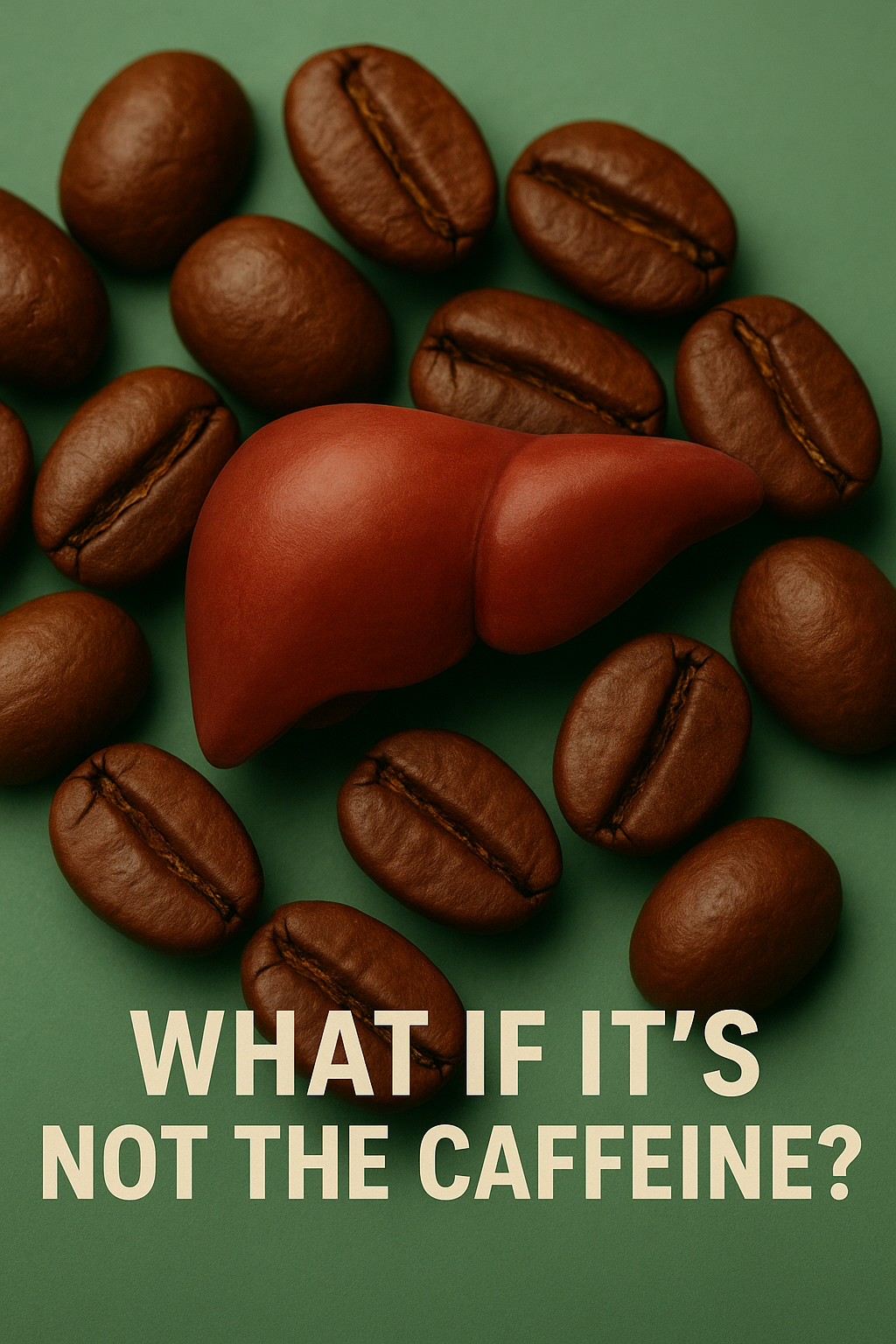
What if the most liver-friendly part of your morning coffee isn't the caffeine at all? That is exactly what researchers at the U.S. National Cancer Institute found when they looked at the coffee habits and blood tests of 27,793 adults. People who drank three or more cups a day had lower levels of liver enzymes than those who skipped coffee completely. Decaf drinkers showed a similar result, which suggests that something in the coffee bean itself, rather than caffeine, may be doing the good work.
History's most famous coffee lover would probably have raised a cup to that. The French philosopher Voltaire is said to have drunk dozens of cups of coffee a day, often mixed with chocolate, and he still lived to 83. When his doctor reportedly warned him that coffee was a slow poison, he is said to have replied that it must be very slow indeed. The story has surely grown in the retelling, and nobody should copy his habit, but it shows how long people have suspected that coffee is kinder to the body than its reputation suggests.
Many of our readers have their own version of this story. One reader told us that, at a routine check-up, her doctor mentioned that her liver values had improved. She had made several changes that year: less alcohol, more walking, and a switch to decaf after lunch so she could sleep better. "I was sure the decaf was a pointless compromise," she said. "Then I read that decaf may have the same effect on liver enzymes as regular coffee, and I felt a lot better about my afternoon cup."
What did the study actually look at?
The research team, led by Dr. Qian Xiao, used data from the U.S. National Health and Nutrition Examination Survey (NHANES) collected between 1999 and 2010. The study included 27,793 adults aged 20 and older. Each participant reported exactly how much coffee they had drunk over a 24-hour period, and each gave a blood sample in which researchers measured four key markers of liver health:
- ALT (alanine aminotransferase)
- AST (aspartate aminotransferase)
- ALP (alkaline phosphatase)
- GGT (gamma-glutamyl transferase)
The results were published in Hepatology, the journal of the American Association for the Study of Liver Diseases, under the title "Inverse associations of total and decaffeinated coffee with liver enzyme levels in National Health and Nutrition Examination Survey 1999-2010".
Three or more cups: the biggest difference
When the researchers compared the groups, the clearest differences appeared in liver enzyme levels. Participants who drank three or more cups of coffee a day had lower levels of all four enzymes than people who drank no coffee at all. Higher coffee intake was also linked to a lower likelihood of having abnormally elevated enzyme values. The findings were widely reported by Medical News Today and other health media.
The surprise: decaf works too
Because the study also included people who drank only decaffeinated coffee, the researchers could check their liver enzyme levels separately. Decaf drinkers showed a similar pattern of lower enzyme levels. According to Dr. Xiao, the data suggest that ingredients in coffee other than caffeine may support liver health. So the key substance behind the difference may be hiding in the coffee itself, not in the caffeine.
This is good news for anyone who loves the taste of coffee but finds that caffeine disturbs their sleep, makes them jittery, or doesn't suit them for other reasons.
A much bigger study points the same way
A later and even larger study supports these findings. Researchers from the universities of Southampton and Edinburgh followed 494,585 participants of the UK Biobank for a median of 10.7 years. Compared with non-coffee drinkers, coffee drinkers had a 21% lower risk of developing chronic liver disease and a 49% lower risk of dying from it. The benefit appeared to peak at three to four cups a day, and decaffeinated, instant and ground coffee all showed similar associations (University of Southampton; study published in BMC Public Health).
Why do liver enzymes matter?
Liver enzymes are naturally present in the liver. When liver cells are stressed or damaged, larger amounts of these enzymes can leak into the bloodstream. That is why doctors use ALT, AST, ALP and GGT as early warning signs. Persistently high levels can point to inflammation, fatty liver, or other liver conditions that, if left unaddressed over many years, may raise the risk of more serious problems, including liver scarring and liver cancer. The enzymes themselves do not cause disease. They are more like a smoke alarm than the fire.
A 2016 review in the Journal of Clinical and Experimental Hepatology found that coffee consumption is associated with improved liver enzyme values, especially in people already at risk of liver disease.
So which substance is the "secret ingredient"?
This is the question researchers still have to answer. Coffee contains more than a thousand compounds, and scientists have several candidates:
- Chlorogenic acids: antioxidants that may help reduce inflammation and fat build-up in the liver.
- Cafestol and kahweol: natural compounds from coffee oils that have shown liver-protective effects in laboratory studies.
- Other polyphenols, which may work together with the substances above.
A 2024 review in the journal Foods concludes that the evidence for moderate coffee drinking (around three to four cups a day) is encouraging, but more long-term studies are needed before coffee can be recommended as a preventive or therapeutic tool.
A nutritionist's view: how to enjoy coffee in a liver-friendly way
- Keep it moderate. For most healthy adults, the European Food Safety Authority (EFSA) considers up to 400 mg of caffeine a day (roughly four cups of filter coffee) safe. Pregnant women should stay at or below 200 mg.
- Mind what you add. Sugar, syrups and whipped cream can cancel out many of the benefits, especially if you are watching your liver fat.
- Afternoon decaf is a smart swap. If caffeine keeps you awake, decaf may give you some of the same benefits without hurting your sleep.
- Coffee doesn't erase other habits. Alcohol, excess weight, and a diet high in refined carbohydrates remain among the biggest burdens on the liver. Read how just How do 2 weeks without bread and pasta bring your liver to its senses?
- Coffee has other talents too. Find out more in Five Unexpected Allies Against Migraine — From Coffee to Ginger.
The takeaway
Elevated liver enzymes are an important signal that the liver may be under strain. Large population studies suggest that regular coffee drinkers, including those who choose decaf, tend to have healthier liver values. These studies show associations, not proof that coffee alone protects the liver, and researchers still don't know exactly which substance is responsible. Still, for most people, enjoying around three cups of coffee a day as part of a balanced lifestyle looks like a pleasant habit that may also be good for the liver.
Information on this website is for educational purposes only and is not medical advice.
expert, nutritionist
 Would you like to be informed about news on the website?















|

