




Chestnuts: One of Humanity's Oldest Foods, and a Snack That Keeps You Full for Hours
expert, nutritionist
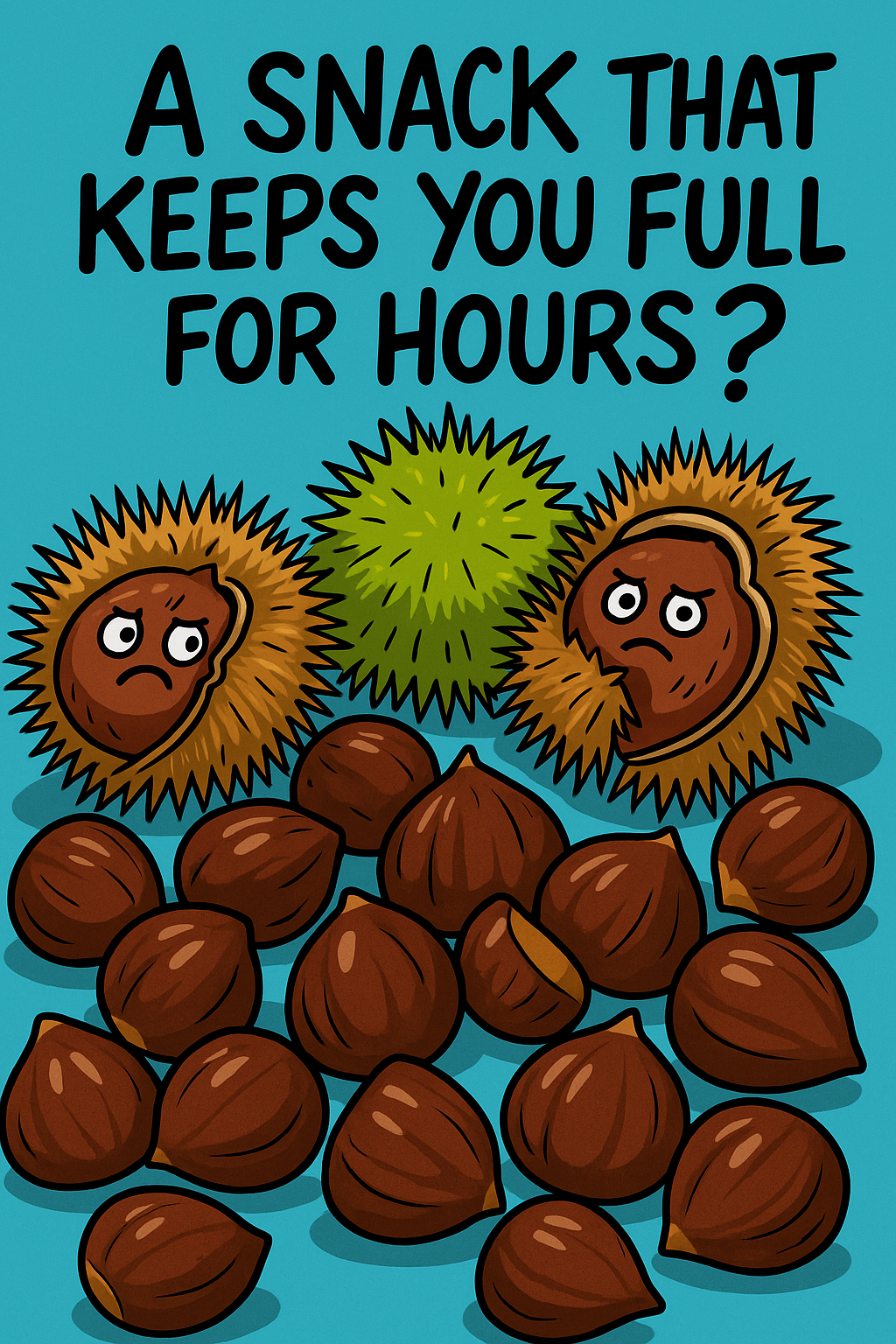
Most nuts are small calorie bombs. A handful of walnuts has more than twice the energy of the same weight of roasted chestnuts, and almonds and hazelnuts are not far behind. Chestnuts are different. They are soft, sweet, almost fat-free, and so filling that a paper cone of them from a street vendor can easily replace an afternoon snack. That is why nutritionists like to call them "the nut that behaves like a grain."
The smell of chestnuts roasting on a cold evening is so powerful that it gave the world one of its best-loved holiday songs. In July 1945, during a sweltering Los Angeles heat wave, lyricist Bob Wells was scribbling wintry images into a notebook simply to feel cooler. When singer and composer Mel Torm{-15447} arrived at his house and saw the notes, the two of them turned the idea into a song in well under an hour. The result was "The Christmas Song (Chestnuts Roasting on an Open Fire)", made famous by Nat King Cole a year later. Torm{-15447} often joked that he wrote one of the coziest winter songs of all time while sweating through a California summer, which says a lot about how strongly chestnuts are tied to our idea of comfort food.
Readers tell similar stories. One reader who avoids gluten told us that chestnut flour pancakes became her family's Sunday breakfast after she discovered them at a mountain inn: "Nobody at the table even noticed they were gluten-free. They just asked for more." Another reader said that a small bag of roasted chestnuts on the walk home from work stopped his habit of raiding the fridge before dinner.
A Food as Old as Human History
Chestnuts are often described as one of the oldest foods in the world, going back to the time of early humans. Some of the earliest written records about eating are associated with chestnuts, and today we still prepare them almost exactly as people did thousands of years ago: roasted over fire, boiled, or dried and ground into flour. The sweet chestnut has grown in southern Europe and Asia Minor for millennia, and the Romans planted it widely across their empire because the trees provided reliable food in hilly regions where wheat struggled to grow.
For centuries, chestnuts were considered food for the poor, because they were free for anyone willing to collect them, easy to prepare and incredibly versatile. In some mountain villages they were called "the bread tree," because dried chestnut flour replaced wheat for much of the year. People used them for everything from soups, porridges and bread to desserts, and even used parts of the tree and husks for household purposes.
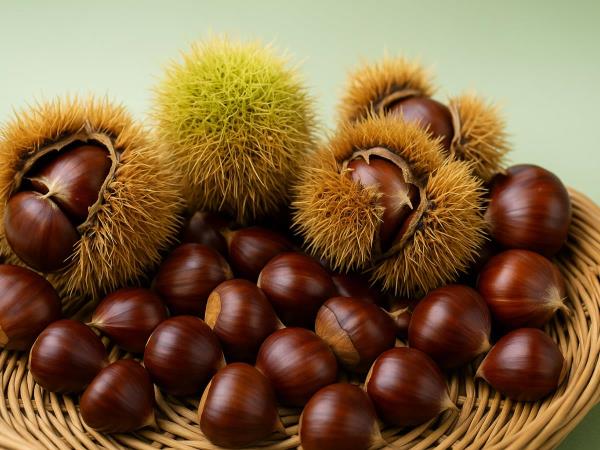
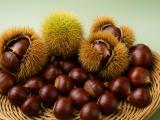
An important safety note: only sweet (edible) chestnuts are food. The shiny, round horse chestnuts that fall from park trees are not edible and can cause serious stomach upset if eaten raw. Edible chestnuts usually have a small pointed tip or "tassel" and grow in a husk covered with fine, dense spines.
So, what makes chestnuts worth eating more often? Here are five reasons nutritionists like them.
1. A Satisfying Snack That Helps Keep Hunger in Check
According to the USDA FoodData Central database, 100 grams of roasted European chestnuts contain around 245 calories. That places them among moderately energy-dense foods: they provide more energy than a baked sweet potato or sweet corn, but far less than other nuts, which typically range from 550 to 700 calories per 100 g. The reason is simple: chestnuts contain only about 2 g of fat per 100 g, while their energy comes mostly from complex carbohydrates.
Interestingly, the calorie count rises when chestnuts are roasted. Raw peeled chestnuts have roughly 200 calories per 100 g, and roasting drives off water, so the same weight contains more concentrated carbohydrates and protein. Boiled chestnuts, which absorb water, end up lower in calories than roasted ones.
The good news is that just a few chestnuts can leave you feeling full and content. Thanks to their starch and fiber, many people find that a portion of chestnuts keeps them satisfied for several hours, which makes them a smarter choice than many sweet snacks. Feelings of fullness differ from person to person, though, so listen to your own body. If you plan to snack on chestnuts throughout the day, a good rule of thumb is not to eat more than a handful at a time. If you're trying to manage your weight, it also helps to know which everyday foods quietly work against you, as explained in Hello, and Fattening: Foods that Sabotage Your Diet.
2. Naturally Gluten-Free
More than 40 percent of a chestnut is starch. That is exactly why so many cooks use them for soups, pur{-15447}es, stuffings, and sweet and savory dishes alike. Chestnut flour is naturally gluten-free, so it can be a welcome ingredient for people with celiac disease or gluten sensitivity, adding a gentle, sweet, nutty flavor to pancakes, cakes and bread.
One caution: flour can be contaminated with gluten during milling or packaging. Organizations such as the Celiac Disease Foundation and Coeliac UK advise people with celiac disease to choose products clearly labeled as certified gluten-free.
3. Supports Healthy Digestion
Chestnuts are a good source of dietary fiber. Roasted chestnuts provide about 5 g of fiber per 100 g, roughly a fifth of the recommended daily intake, depending on which reference value you use. Fiber feeds beneficial gut bacteria and supports regular digestion.
Diets rich in fiber are also associated with healthier cholesterol levels. A well-known meta-analysis in the American Journal of Clinical Nutrition found that soluble fiber can modestly lower LDL ("bad") cholesterol. A large review commissioned by the World Health Organization and published in The Lancet linked higher fiber intake with a lower risk of several chronic diseases. Chestnuts alone won't transform your blood test results, but as part of a fiber-rich diet with vegetables, legumes and whole grains, they can make a useful contribution.
4. Friendly to the Heart and Gentle on the Stomach
Chestnuts contain a lot of potassium (around 590 mg per 100 g of roasted chestnuts) as well as phosphorus and magnesium. According to the NIH Office of Dietary Supplements, getting enough potassium from food is associated with healthier blood pressure. Their small amount of fat is mostly unsaturated, and they contain no cholesterol. That's why chestnuts fit nicely into heart-friendly eating patterns.
Chestnuts are also unusual among nuts because they contain vitamin C. Roasted chestnuts provide roughly 26 mg per 100 g, about a quarter to a third of the daily value used on U.S. nutrition labels. Raw chestnuts contain even more, since some vitamin C is lost with heat. They also supply B vitamins (especially B6 and folate), manganese, magnesium and some calcium. Because they are soft and low in fat when cooked, many people find well-roasted or boiled chestnuts easier to digest than other nuts. A detailed review of chestnut composition and possible health effects was published in the Journal of the Science of Food and Agriculture.
If you want to boost the protein in a chestnut-based meal, combine them with lentils, beans or seeds. Chestnuts are relatively low in protein, and pairing them works well, as described in Plant Proteins for a Longer Life.
5. A Source of Copper for Bones, Blood and Immunity
Copper is a mineral that helps maintain healthy bones and connective tissue, supports the formation of red blood cells, contributes to normal nervous system function and plays a role in the immune system, according to the NIH Office of Dietary Supplements. Roasted chestnuts are a surprisingly good source: an 80-gram portion provides a substantial share of an adult's daily copper needs. Together with vitamin C, it's one more reason chestnuts make a wholesome autumn snack, especially during the season when colds tend to spread.
How to Choose, Store and Enjoy Chestnuts
Finally, a tip on choosing good chestnuts: the shinier and smoother the shell, the better they usually are. Fresh chestnuts should feel firm and heavy for their size, with no holes or mold. A simple trick is to put them in a bowl of water. Those that float are often dried out or wormy and are best discarded.
Raw chestnuts are perishable because they contain a lot of moisture. Store them in a cool, dark place, or better still in a paper bag in the vegetable drawer of the fridge, and use them within a week or two. Want to enjoy them beyond the season? Cooked and peeled chestnuts freeze very well, just like many other fruits and vegetables. Read more in The Best Frozen Fruits and Vegetables.
Before roasting, always cut a cross or slit into the shell so the steam can escape. Otherwise, chestnuts can burst in the oven or pan. Roast them at about 200 {-15696}C (around 400 {-15696}F) for 20 to 30 minutes, then wrap them in a clean kitchen towel for a few minutes. This makes them much easier to peel.
Finally, how you eat chestnuts matters too. Many people find it best to enjoy them on their own, as a snack between meals, with a glass of water or a cup of herbal tea, rather than piled on top of a heavy meal. Eating too many at once, especially undercooked ones, can cause gas and bloating in sensitive people. Chewing slowly and sticking to moderate portions usually helps. If bloating is a recurring problem for you, take a look at Get Rid of Bloating and Excess Water, and for more everyday mistakes at the table, read Foods We Use Incorrectly.
Information on this website is for educational purposes only and is not medical advice.
expert, nutritionist
 Would you like to be informed about news on the website?









|

