




Money, Keyboard, Phone: 7 Things You Hold Every Day That Are Teeming With Bacteria
expert, nutritionist
Money, Keyboard, Phone: 7 Things You Hold Every Day That Are Teeming With Bacteria
Kitchen sponges, door handles, taps and the phone in your pocket can carry far more microbes than most of us imagine. The reassuring part is that a few simple, inexpensive hand-hygiene habits may help lower the chances of passing unwanted germs from everyday objects to your mouth, nose and eyes.
Here is a fact that tends to stop people mid-sip: the humble kitchen sponge sitting next to your sink may be home to more bacteria than your toilet. When German researchers analysed the DNA of 14 used household sponges, they identified 362 different kinds of bacteria, packed at densities of billions of cells per cubic centimetre (Cardinale et al., Scientific Reports, 2017). And according to microbiologist Charles Gerba of the University of Arizona, an average office desk can carry around 400 times more bacteria than an average toilet seat, largely because nobody thinks of cleaning it.
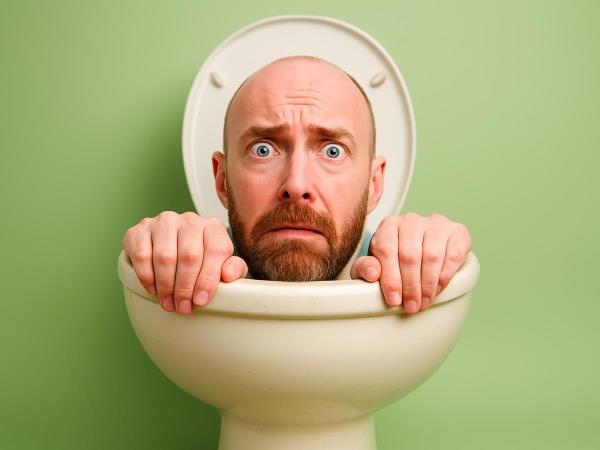
Kitchen sponges, door handles, toilet bowls – some bacteria can survive on surfaces for many hours. Hand hygiene is half of good health.
A Hollywood Star Who Opens Doors With Her Elbows
Few celebrities have been as open about their wariness of everyday germs as actress Cameron Diaz. She has spoken publicly about nudging doors open with her elbows rather than touching doorknobs, and has described her germ-consciousness as linked to obsessive-compulsive tendencies she has learned to live with. Even in 2026, she joked on The Drew Barrymore Show that guests visiting her New York apartment are expected to change out of their street clothes. She is not alone: comedian Howie Mandel famously prefers a fist bump to a handshake, a story we explored in Your Toilet Isn't the Dirtiest Thing in Your House — Your Phone and Remote Probably Are.
You certainly don't need to go that far. But their instincts point to something science supports: our hands are the main bridge between the objects around us and our bodies.
Before We Start: The Golden Rule
Every time you touch one of the things listed below, keep in mind to wash your hands thoroughly. Interestingly, the water does not have to be hot: a Rutgers University study published in the Journal of Food Protection found that cool water removed bacteria just as well as hot water. What matters most is soap, friction and time. The U.S. Centers for Disease Control and Prevention (CDC) recommends scrubbing for at least 20 seconds, including the backs of your hands, between your fingers and under your nails.
Even more important: after contact with a potentially contaminated surface, avoid touching your mouth, eyes and nose. Even when something itches, try to be patient until it passes. All of these are open doors through which microbes can enter the body.
It's worth remembering how recent this wisdom is. In the 1840s, Hungarian physician Ignaz Semmelweis noticed that far fewer new mothers fell ill when doctors washed their hands between patients. He was ridiculed at the time. Today, the World Health Organization dedicates an entire day each year to hand hygiene.
1. Money
Every time you receive banknotes or coins, think about how many hands they have passed through before reaching you. Money carries a whole community of microorganisms. In one international study, researchers collected 1,280 banknotes from food outlets in ten countries (Vriesekoop et al., Foodborne Pathogens and Disease, 2010) and found that the material the notes are made of makes a real difference: bacteria cling to and survive longer on traditional cotton-based notes than on smooth polymer ones. A later study by the same team, published in Microorganisms (2016), found that most coins are actually rather hostile to bacteria, thanks to the metals they contain. A 2022 study in the International Journal of Environmental Research and Public Health similarly reported lower bacterial survival on polymer notes than on cotton-based euro and dollar bills.
The researchers found relatively few disease-causing bacteria on the notes, so there is no reason to panic. Still, it's worth noting that in Gerba's workplace surveys, bankers were among the professions with the most microbe-laden offices. The practical lesson is simple: don't handle money while eating, and wash your hands after a trip to the market or the cash machine, especially before preparing food.
2. Computer Keyboard
Computer keyboards rank among the dirtiest objects we touch. They can be a real breeding ground for bacteria, viruses and fungi. When the British consumer magazine Which? Computing asked a microbiologist to test office equipment, one keyboard was found to be five times dirtier than a toilet seat. The main culprits? Eating lunch at the desk and skipping handwashing after the bathroom. Gerba's lab has jokingly called keyboards a lunch counter for germs.
Fungal skin infections can, in some cases, spread through shared equipment, and skin that is already irritated or affected by eczema may be more vulnerable to microbes (eczema itself is not contagious). Always keep a simple rule in mind: a keyboard is a bit like a toothbrush. Avoid sharing other people's keyboards when you can, and if you must, wash your hands afterwards. Once a week, turn the keyboard upside down to shake out crumbs and wipe the keys with a disinfecting wipe.
3. Mobile Phone
When did you last thoroughly clean and disinfect your mobile phone? Most people never do. Researchers at the University of Arizona have found that phones can carry roughly ten times more bacteria than a typical toilet seat, which makes sense when you consider that we take them everywhere, including the bathroom and the dinner table.
For hygiene reasons, it's best to avoid borrowing someone else's phone, and even more so holding it against your face during a call. A phone pressed to your cheek and chin brings whatever is on the screen right next to your skin and mouth. If you can't avoid it, use the speakerphone. As for your own phone, once a month is not enough: aim to wipe it down at least once a week. Many manufacturers, including Apple, say that a 70 percent isopropyl alcohol wipe can be used gently on the outer surfaces, as long as moisture doesn't get into the openings.
4. Toilet Bowl
Although the quality of public toilets has improved considerably over the past decade, they still deserve respect, especially during cold and flu season. One unpleasant surprise came from engineers at the University of Colorado Boulder, who used green lasers to make the invisible spray from a lidless public toilet visible. Their study in Scientific Reports (2022) showed that tiny droplets shoot up to around 1.5 metres within about eight seconds of flushing, roughly the height of an adult's face. The lead researcher said the plume came out like a rocket.
Can we protect ourselves properly in a public toilet? Not completely, but we can reduce our exposure. Close the lid before flushing if there is one, step away from the bowl as you flush, and wash your hands well before you touch your phone again.
A common worry deserves an honest answer here: sexually transmitted infections such as genital herpes are spread through close skin-to-skin contact, and health services such as the UK's National Health Service explain how the virus is actually passed on. Catching such an infection from a toilet seat is considered extremely unlikely, so there is no need for fear, just sensible hygiene.
5. Water Tap
Even if you wash your hands in the restroom, remember that you turned the tap on with dirty hands, and turning it off with clean ones can undo much of your effort. Taps and sink areas rank high among surfaces linked to intestinal bacteria such as E. coli. Gerba has noted that in homes, his team usually finds more E. coli in the sink than in the toilet, because sinks are wet and offer everything bacteria like. We cannot ignore the fact that conditions around a tap are almost always damp.
The fix is simple: in public restrooms, turn the tap off with a paper towel, and use the same towel to open the door on your way out. At home, include tap handles in your regular cleaning routine.
6. Kitchen Sponges
Imagine a combination of a toilet bowl and a water tap. Kitchen sponges are constantly moist, and food scraps give bacteria plenty to feed on, while countless tiny pores offer them endless places to hide. A recent study by the German Federal Institute for Risk Assessment (BfR) showed that disease-causing bacteria can multiply in sponges and spread to other kitchen surfaces, and that neither appearance nor smell reliably tells you whether a sponge is contaminated.
That is why replacing your sponge every three months is too infrequent. Researchers behind the 2017 sponge study suggested replacing kitchen sponges roughly once a week. In between, a study by the U.S. Department of Agriculture (Sharma et al., Food Control, 2008) found that microwaving a thoroughly wet sponge for about a minute, or running it through a hot dishwasher cycle, sharply reduced bacterial counts. Soaking in hot water with baking soda can freshen a sponge, but it is not a reliable disinfection method. Never microwave a dry sponge or one with metal fibres, and keep separate sponges or cloths for dishes and for wiping surfaces where raw meat has been.
7. Door Handles and Grab Rails
Every time you touch a door handle, bacteria are exchanged. You may not know that some bacteria can survive on handles and grips for many hours. A systematic review in BMC Infectious Diseases (Kramer et al., 2006) found that certain bacteria can persist on dry surfaces even longer under laboratory conditions. Some of the most exposed surfaces are shopping cart handles, bus grab rails and escalator handrails. When University of Arizona researchers swabbed 85 shopping carts in several U.S. states, they detected coliform bacteria on 72 percent of them and E. coli on about half of those tested further (Food Protection Trends, 2012).
Does this mean we shouldn't open any doors during epidemics? Of course we can. Interestingly, Gerba's own surveys found ordinary doorknobs tend to be on the cleaner side because they stay dry. Just avoid touching your mouth with your fingers afterwards, use the wipes many supermarkets now provide for cart handles, and carry a small bottle of hand sanitiser for moments when soap and water aren't available.
A Situation Most of Us Will Recognise
You come home from the shops, put the bags on the kitchen counter, check a message on your phone, rinse a few cherry tomatoes and pop one in your mouth. In that short chain, the cart handle, the phone, the tap and your fingers all play a part. Breaking the chain doesn't require fear or special products. It takes one habit: wash your hands as soon as you get home, before you touch food or your phone.
A Nutritionist's Note: Hygiene Belongs on Your Plate, Too
Clean hands are only part of the picture in the kitchen. Freshness matters just as much, and we've explained how to judge it with your eyes, nose and fingers in How to Recognize Fresh Foods. Cross-contamination is another everyday challenge: the same sponge, knife or cutting board can carry traces from one food to the next, a topic we covered from a different angle in One Bite of Bread Could Be Crossing a Line Your Gut Won't Forgive.
Finally, hygiene works best alongside a healthy lifestyle. A varied diet rich in vegetables, fruit, whole grains, legumes and fibre is one of several factors that may support the body's natural defences over time, as we explored in Can What You Eat Really Change How Often You Get Sick? Here's What the Evidence Actually Shows. No single food or habit is a shield, but together, small daily choices add up.
Quick Checklist
- Wash your hands with soap for at least 20 seconds; warm or cool water both work.
- Keep your fingers away from your mouth, eyes and nose when you're out and about.
- Wipe your phone and keyboard at least once a week.
- Replace kitchen sponges about weekly and disinfect them in between.
- Close the toilet lid before flushing and turn off public taps with a paper towel.
- Wipe shopping cart handles and wash your hands as soon as you get home.
Hand hygiene is surely half of good health.
Information on this website is for educational purposes only and is not medical advice.
expert, nutritionist
 Would you like to be informed about news on the website?













|

