






Blueberries, Cranberries and Yogurt for Urinary Tract Health: A Layered Recipe Inspired by Science
expert, nutritionist
For decades, the standard advice was simple: keep your urine acidic and bacteria will struggle. Then researchers at Washington University School of Medicine in St. Louis put that idea to the test and found something unexpected. In their experiments, urine that was less acidic, closer to neutral, was actually better at holding back the bacteria behind most urinary tract infections (UTIs). And diet appeared to play a role. (Washington University: A person's diet, acidity of urine may affect susceptibility to UTIs)
"Debilitating" – and far more common than people admit
A well-known American reality TV star recently described on a popular podcast how she deals with recurring UTIs roughly every four months, calling them "debilitating", and shared the routine she now uses to try to have fewer of them each year. Her co-host admitted she struggles with the same problem. (Parade via AOL: Bravo Star Shares Candid Details on Recurring Health Issue)
Many families have a similar story. When Australian researcher Gabrielle Williams of Flinders University led a major review of cranberry research, she shared that her own mother had been advised back in 1973 to try cranberry juice for her frequent infections, and that it had made a real difference for her. (WebMD: Turns Out Cranberries Really Can Prevent Some UTIs, Research Shows)
Such experiences are not rare. About one in three women will have a UTI at some point in life, and for some, the infections keep coming back. (The Conversation via Medicine Today: Cranberry juice can prevent recurrent UTIs, but only for some people)
What the Washington University scientists discovered
Scientists from Washington University School of Medicine spent several years studying urinary tract infections and the influence of food. The team, led by Dr. Jeffrey P. Henderson, grew E. coli bacteria in urine samples from healthy volunteers and noticed major differences between people. Some samples held back bacterial growth, while others allowed bacteria to multiply easily.
The key turned out to be iron. Bacteria need iron to grow, and early in an infection the body releases a protective protein called siderocalin, which works by keeping iron away from bacteria. How well this protein worked depended on two things: the pH of the urine and the presence of small aromatic molecules that come from food and are processed by gut microbes. The study was published in The Journal of Biological Chemistry (Shields-Cutler et al., 2015, "Human Urinary Composition Controls Antibacterial Activity of Siderocalin").
The most important of these food-related compounds are polyphenols, plant substances known as antioxidants. According to Dr. Henderson, the helpful metabolites have been linked to dietary sources such as coffee, tea and berries. (MedicalResearch.com: Acidification May Be Counterproductive For Some Patients With Urinary Tract Infections) He also noted that cranberries are known to produce these urinary aromatic compounds, which may help explain why cranberry products are so popular as a traditional remedy. (TIME: Your Diet May Be Causing Your Urinary Tract Infections)
If iron balance interests you, read our article Too much iron in the blood can also be a problem, which explains how flavonoid-rich foods such as blueberries fit into the picture.
What about cranberries?
Cranberries have the best-studied track record of any food in this area. A 2023 Cochrane review of 50 trials with almost 9,000 participants found that cranberry juice or supplements lowered the risk of repeat symptomatic UTIs in women with recurrent infections by more than a quarter, and in children by more than half. (WebMD: Turns Out Cranberries Really Can Prevent Some UTIs)
The U.S. Food and Drug Administration (FDA) also allows certain qualified health claims for cranberry beverages containing at least 27% cranberry juice, limited to reducing the risk of recurrent UTIs in healthy women. (MDedge: FDA allows qualified claims for UTI risk reduction with cranberry products)
Two important caveats apply. First, cranberries are a possible way to reduce risk, not a treatment for an infection you already have. Second, many commercial cranberry juices are loaded with sugar, so choose unsweetened versions. (Medical News Today: Is cranberry juice really effective against urinary tract infections?)
The layered dessert: a nutritionist's take on the research
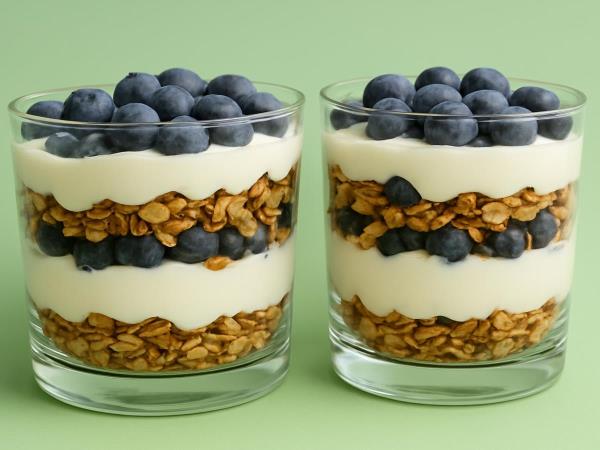
Based on these findings, here is an appealing layered dessert that brings several polyphenol-rich foods together in one glass. It is a real treat for your digestion and an easy way to add more berries, tea and fiber to your day.
Ingredients:
- fresh blueberries and blueberry juice (unsweetened)
- unsweetened cranberry juice
- plain yogurt (natural, without added sugar)
- green or black tea (loose leaves or the contents of a tea bag)
- dark chocolate (at least 70% cocoa)
- oat flakes, chopped nuts and flaxseeds
Preparation:
Put a layer of oat flakes, nuts and flaxseeds in a glass, then a layer of yogurt, then a layer of blueberries. Sprinkle a small pinch of finely ground tea over it and pour a little cranberry and blueberry juice on top. Repeat the process until you reach the top of the glass, and finish with some grated dark chocolate.
If you think you could simply blend all the ingredients into a smoothie, you can, but many nutritionists prefer the layered version. Whole berries, coarse flakes and seeds keep their fiber structure, and you eat the dessert more slowly with a spoon instead of drinking it in a few gulps. The coarse fiber feeds the gut microbes that help turn plant polyphenols into the aromatic compounds described in the study. Plant-rich meals like this one also tend to make urine somewhat less acidic, which, according to the Washington University findings, may support the body's own defense protein.
Blueberries do not have to be fresh. Frozen ones keep much of their nutritional value, as we describe in The Best Frozen Fruits and Vegetables. For a quick morning variation using the same berries, see The 2-Minute Breakfast Swap Nutritionists Keep Coming Back To: Chia, Coconut & Blueberry Blend, and find out why blueberries and dark chocolate both made our list of 10 Foods Nutritionists Swear By.
Tip for tea lovers: do not pour milk into tea you drink for its antioxidants. Why this matters is explained in Foods We Use Incorrectly.
Watch the portions: dark chocolate, nuts and yogurt are nutritious, but they are also rich in calories. A tablespoon of grated chocolate is enough. More about seemingly healthy foods that can quietly add calories is in Hello, and Fattening: Foods that Sabotage Your Diet. If you prefer drinks to desserts, try the blueberry combination from 5 drinks that are stronger than dietary supplements.
A final word on acidity
Finally, a note of caution: diets high in carbonated soft drinks, meat, animal protein and sugar tend to make urine more acidic. The Washington University research suggests that this may not be ideal for the body's natural defenses in the urinary tract, although the researchers stress that urine is a complex mixture influenced by diet, genetics and many other factors. UTIs have many causes, and diet is only one piece of the puzzle.
Plenty of water, regular trips to the bathroom and a varied diet rich in fruit, vegetables and fiber are sensible everyday habits. Foods like the dessert above can be a tasty part of such a lifestyle, but they do not replace medical care. If you notice burning while urinating, frequent urges, fever or back pain, or if infections keep coming back, please see your doctor. People taking blood-thinning medication should check with their doctor or pharmacist before drinking cranberry juice regularly.
Information on this website is for educational purposes only and is not medical advice.
expert, nutritionist
 Would you like to be informed about news on the website?














|

