





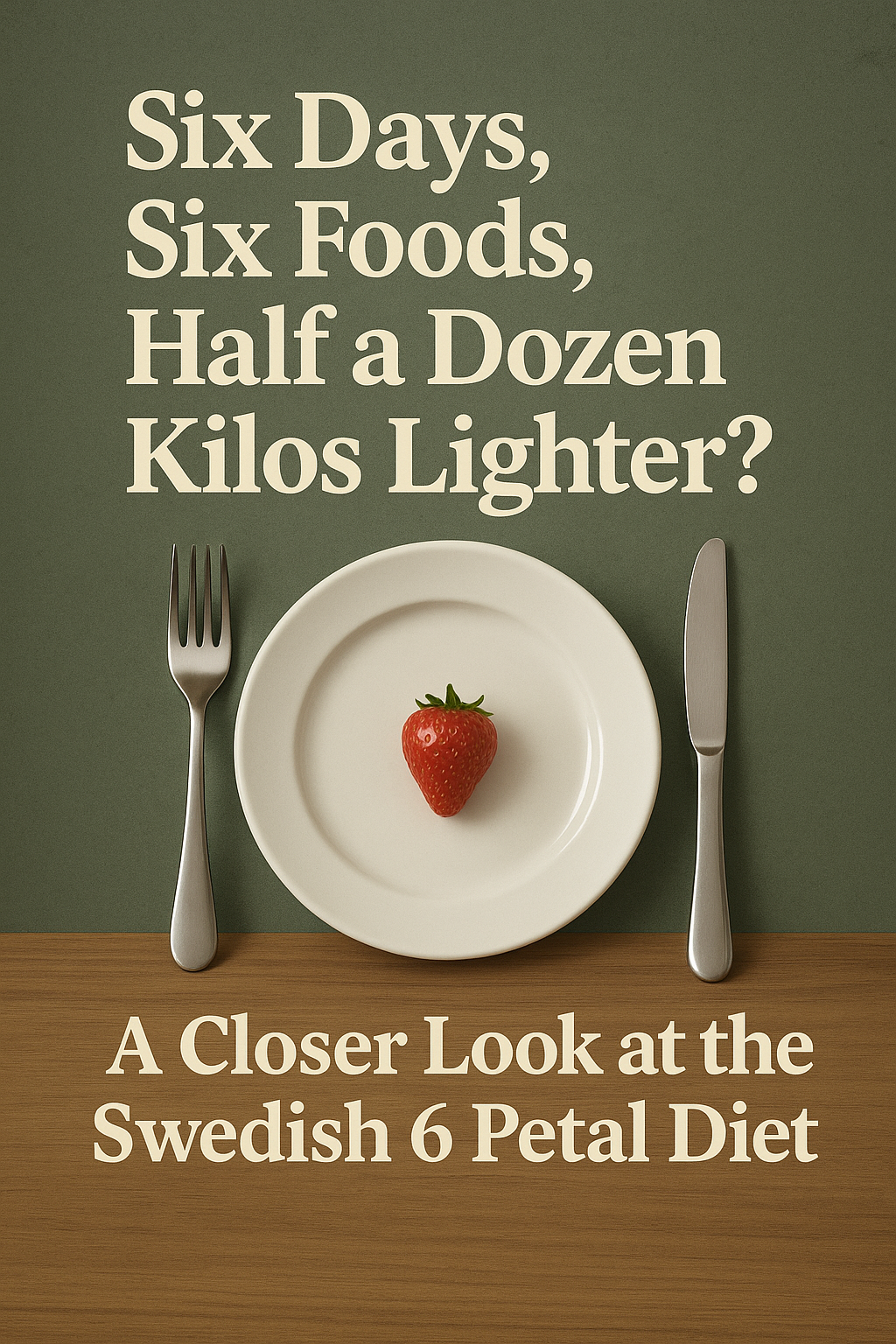

Six Days, Six Foods, Half a Dozen Kilos Lighter? A Closer Look at the Swedish 6 Petal Diet
expert, nutritionist
Five kilos in a week. That is the kind of number that makes people stop scrolling, and it is exactly what a friend of mine saw on her bathroom scale after six days on this diet. She had been struggling with extra weight for years. She recently told me that, for the first time in a long while, her jeans fit noticeably better. "I didn't believe the difference would show up so quickly," she said. She did not lose ten kilos, but those five were enough to motivate her to move on to more balanced eating. In my view, that is the real value of short-term plans like this one. They are not a miracle. They are a nudge.
She is not the only one who has tried eating just one food at a time. Magician and entertainer Penn Jillette, of the duo Penn & Teller, has described how he began his widely publicized weight loss with a two-week mono diet of nothing but potatoes, followed by a long-term shift to a mostly plant-based way of eating. He has also been clear that readers should not take his story as medical advice. Nutritionists interviewed by TODAY made the same point. At about five potatoes a day, his calorie intake was very low and his protein intake was too, so rapid early weight loss was expected. Experts generally do not recommend such an extreme approach. His experience shows both sides of mono diets: a quick start, and the need for a sensible plan afterwards.
Why Do So Many Diet Trends Come From Sweden?
If you have followed the nutrition scene over the past decade, you have probably noticed that many headline-grabbing diet trends have come from Northern Europe. Sweden gave the world the popularity of the LCHF diet (Low Carb, High Fat), which cuts most carbohydrates from the menu and replaces them with fats. Sweden is also home to some of the world's best-known official eating advice: the Swedish National Food Agency's dietary guidelines recommend more vegetables, a varied diet and at least 30 minutes of physical activity a day. It was in this lively food culture that the 6 Petal Diet emerged, reportedly designed by a Swedish nutritionist.
Online you will find it under the name 6 Petal Diet, but the name is a little misleading. It is a six-day sequence of single-food days, where each day you eat only one type of food. This places it among the so-called monotrophic diets, which are built on eating the same food throughout a given day. According to Healthline, diets of this kind usually lead to short-term weight loss, mainly because limiting your choices naturally means you eat fewer calories.
Why Can a Mono Diet Work in the Short Term?
The basic idea behind any mono diet is simple. When you eat less energy than you use, your body draws on its stored reserves. As the health portal Netmeds explains, eating the same food all day tends to lower calorie intake because the food quickly becomes boring and we simply eat less. Another factor is less decision fatigue. When you don't have to think about what to eat next, there are fewer chances to give in to unhealthy snacks.
It is worth staying realistic, though. Diet without dieting and 2 kg less per week is a goal that depends on gradual, sustainable change, not on a single week of restriction. A mono diet works best as a short kick-start, not as a long-term solution. After one week, it should be stopped, with a break of at least three weeks before trying it again.
[s2]
Six Rules to Know Before You Start
- Have at least 5 meals a day, and never skip breakfast.
- Leave at least 2 hours between meals.
- Eat dinner no later than 3 hours before bedtime.
- Never add salt to your food, and do not season it.
- Move for at least 30 minutes every day.
- Drink plenty of unsweetened green tea and water. Green tea contains catechins, and a meta-analysis published in the International Journal of Obesity found that they may have a small but measurable effect on body weight. The average difference was a little over one kilogram. That makes green tea a helpful companion, not a fat burner on its own.
The 6-Day Menu: What to Eat and When
Day 1: Fish and Seafood
Only fish or seafood is allowed, either baked with a teaspoon of oil or boiled, with no side dishes. The maximum recommended amount is 500 grams. Poached or boiled fish is a better choice than fried or baked. Drink unsweetened green tea and water.
Day 2: Vegetables
On this day you can eat up to 1.5 kg of vegetables, fresh or steamed. Good choices include carrots, broccoli, cucumbers and potatoes boiled in water. It is better to avoid smoothies. Vegetables in solid form keep you full for longer and help prevent overeating. If you want to learn which everyday foods quietly work against you, read Hello, and Fattening: Foods that Sabotage Your Diet.
[s3]
Day 3: Chicken
Eat skinless chicken, up to 500 grams. It can be boiled, baked or grilled, and clear chicken broth is also allowed. Do not combine it with anything else, not even vegetables.
Day 4: Grains
For breakfast, have toasted wheat grains cooked in water. For lunch, buckwheat. For an afternoon snack, plain boiled brown rice. In the evening, have natural bran, seeds and other fiber-rich grain foods. In total, eat no more than 500 grams of grains. Between meals, drink unsweetened herbal tea and enjoy natural kvass.
Day 5: Cottage Cheese and Dairy
You can eat up to 500 grams of low-fat cottage cheese and drink a glass of skimmed milk. Instead of cottage cheese, you may also choose unsweetened yogurt or other unsweetened dairy products.
Day 6: Fruit
You can eat up to 1.5 kg of fruit. A suggested plan: 2 apples in the morning, a banana as a snack, oranges, grapes, kiwi and pineapple for lunch, and another 2 apples in the evening. On this day, you may swap tea for coffee.
[s4]
What to Expect, and What Not to Expect
Supporters often say the diet provides 1,500 to 1,800 calories a day. In reality, on several of the six days the intake is likely to be much lower. Half a kilo of fish or one and a half kilos of vegetables simply does not contain that much energy. For comparison, the Dietary Guidelines for Americans estimate the daily needs of most adult women at roughly 1,600 to 2,400 calories, and higher for men. This is exactly why the diet should not be followed for longer than one week, with at least three weeks of normal, balanced eating before any repeat.
Some people report a noticeable drop in weight, but it helps to know what is behind it. A good part of it is water, especially in the first few days. Each gram of glycogen, the carbohydrate your body stores in muscles and the liver, is held together with several grams of water. Researchers described this effect in the American Journal of Clinical Nutrition as an "illusion" of easy weight loss. If you would like to understand the difference between water weight and fat, see Get Rid of Bloating and Excess Water.
Diets like this one are not nutritionally balanced on their own, which is why nutrition sources such as Healthline describe them as short-term and restrictive. Without lasting changes to eating habits, the kilos often come back. This is the well-known yo-yo effect, also called weight cycling, in which strict diets give way to hunger and old habits, and the lost weight returns.
A mono diet is not suitable for pregnant or breastfeeding women, people with diabetes, kidney or liver conditions, or anyone taking medication that affects metabolism. It is also not a good fit for anyone with a history of disordered eating. If you are unsure, always talk to your doctor or a registered dietitian first.
What Comes After the Diet?
The diet is only a beginning. People who achieve long-term success usually follow it with a more sustainable approach to food, much as Penn Jillette did when he moved from his potato weeks to a varied, plant-rich menu. Rebuild your days around vegetables, whole grains, quality protein and regular movement. Don't forget the habits that happen away from the plate either: When you sleep too little, your belly grows explains why rest matters as much as what you eat.
Thinking about cutting carbs completely after the diet? First read Carbohydrates Are Not the Enemy: Why Your Brain Truly Needs Them. If your biggest challenge is portion size, try a simple trick from Eat It in Your Mind First: A Simple Mental Technique for Managing Your Appetite. Curious about other single-food approaches? The historic rice diet is built on similar principles, and it is also very restrictive and best discussed with a professional.
Information on this website is for educational purposes only and is not medical advice.
expert, nutritionist
 Would you like to be informed about news on the website?












|

