




What to Do With the Leftovers After Cracking Walnuts? Don't Throw Them Away – There's Something Surprising Hiding Inside
expert, nutritionist
Every autumn, millions of kitchen tables end up covered with the same "rubbish": cracked shells and the thin, papery-woody walls that separate the walnut kernel into halves. Almost everyone throws them away. Yet our grandmothers carefully collected exactly these partitions in a jar, because in folk tradition they were valued as one of the most precious parts of the walnut. They were believed to be rich in iodine and were brewed into a tea that was said to support the thyroid gland and overall wellbeing. Science hasn't confirmed every one of these old beliefs, but researchers have recently discovered that these "leftovers" are far from worthless.
When Even Oprah's Body "Turned on Her"
How sneaky thyroid trouble can be is something even Oprah Winfrey found out. In 2007 she publicly revealed that for months she had been battling exhaustion, sleepless nights and weight gain, without knowing why. Her thyroid first sped up her metabolism (hyperthyroidism) and then slowed it down (hypothyroidism). In her own magazine she later wrote openly that the diagnosis felt "like some kind of prison sentence," and she encouraged women to pay attention to their own symptoms. Her story is a good reminder that this small gland deserves our attention, and that it pays to look after it both at the doctor's office and on our plates.
The Walnut Partitions Folk Tradition Treasures
In folk medicine, especially across Central and Eastern Europe, tea made from walnut partitions has traditionally been used for digestive discomfort, diarrhea, joint aches and general wellbeing. Its most famous use, however, has always been supporting thyroid function. The "rubbish" left over after cracking walnuts is believed in folk tradition to contain a lot of iodine, so it seems a shame to throw such potentially useful material away.
What does science say? Researchers call these partitions the walnut septum or Diaphragma Juglandis Fructus. A review published in the journal Foods notes that they make up about 4–5% of a walnut's total mass and are usually discarded as a by-product. A systematic review in the journal Antioxidants found that the partitions are rich in polyphenols and other plant compounds with antioxidant and anti-inflammatory potential. The authors stress, however, that most of the findings come from laboratory and animal studies and still need to be confirmed in human clinical trials. A review in the Journal of Ethnopharmacology also describes their long use in traditional Chinese and Uyghur medicine, for example as a sleep aid. The iodine content of the partitions, on the other hand, is much less well documented in scientific literature than folk tradition suggests, so it's best to see the tea as a pleasant traditional ritual rather than a reliable source of iodine.
If you enjoy walnuts themselves, you might also like our article Eat 4–6 Walnut Halves Before a Meal and You May Naturally Eat Less – No Strict Diets, No Deprivation.
A Small Gland With a Big Job
Thyroid problems are very common. According to the American Thyroid Association, about one in eight women will develop a thyroid condition during her lifetime, and many people don't even know they have one. Among other things, the thyroid produces thyroid hormones, which help regulate body temperature, metabolism and heart rate. If the thyroid works too slowly, it isn't good for the body. If it works too hard, that isn't good either. Thyroid hormones affect both the brain and the gut, so it would be hard to find a more important little gland.
The thyroid needs iodine to make its hormones. The recommended daily intake for adults is about 150 micrograms, according to the NIH Office of Dietary Supplements. Iodized salt plays a key role here. The World Health Organization recommends salt iodization as the main way to prevent iodine deficiency, and it has dramatically reduced iodine deficiency disorders worldwide. It's equally important to know that too much iodine can also upset the thyroid, so more is not always better. Seafood, fish, eggs and dairy products are reliable everyday sources.
For a broader look at the signs of thyroid imbalance and how to check your thyroid, read The Small Gland That Can Quietly Turn Your Life Upside Down: What Happens When Your Thyroid Loses Its Rhythm. For tasty ways to add thyroid-friendly foods to your week, see The energy of seven juices for a better thyroid.
How to Prepare Tea From Walnut Partitions
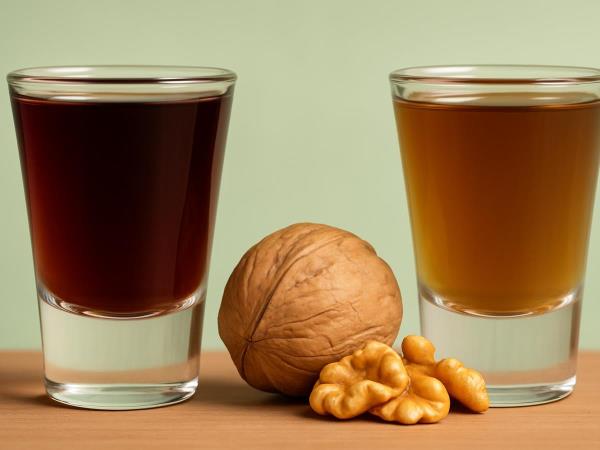
Walnut partitions are the hard, woody walls inside the shell that hold the kernel in place. When you've collected about half a cup of them, you can make roughly 2 liters of tea.
- Bring 2 liters of water to a boil.
- Add half a cup of clean walnut partitions and let everything simmer gently for about 10 minutes.
- Remove from heat and let the tea stand for half an hour to cool.
- Strain it and store it in a cool, dark place, ideally in the refrigerator, and use it within a day or two.
Traditional recipes suggest up to 3 cups a day, but it's sensible to start with one cup and see how you feel. The tea is naturally slightly bitter and astringent because of its tannins. It's best plain, but if you don't like the taste, you can add a spoonful of honey or homemade jam (without added sugar, of course).
In folk practice, the tea is usually drunk for about a week at a time, often as a seasonal habit in autumn and winter, when people traditionally pay more attention to their immunity and wellbeing.
A Reader's Experience
One of our readers, a retired teacher, told us that her grandmother kept a glass jar of walnut partitions on the kitchen shelf every winter. "In our house, nothing from the walnut went to waste," she wrote. "Today I make the tea mostly out of nostalgia. It reminds me of her kitchen. But I still go for my regular thyroid blood test, because I learned that a cup of tea can't tell me what my hormone levels are."
Before You Start: A Few Words of Caution
- If you take thyroid medication, talk to your doctor first. The maker of the thyroid drug Synthroid notes that walnuts may reduce how much of the medication your body absorbs, as The People's Pharmacy explains. Never stop or change prescribed treatment on your own.
- If you are allergic to walnuts or other tree nuts, avoid this tea completely.
- If you are pregnant, breastfeeding, or have a known thyroid condition, consult a healthcare professional before trying herbal preparations that may affect iodine intake.
- Tannins can reduce the absorption of iron from food, so it's better not to drink the tea with iron-rich meals.
- Persistent tiredness, unexplained weight changes, a racing heart or feeling cold all the time are reasons to see a doctor. A simple blood test (TSH, T3, T4) gives clear answers.
Curious how walnuts compare with other everyday nuts? Take a look at why cashews aren't actually from India – and why that matters.
The Bottom Line
Walnut partitions are a lovely example of how folk wisdom found a use for everything. Modern research confirms that they contain interesting antioxidant compounds, although their effects on human health, including the thyroid, have not yet been proven in clinical studies. A cup of this traditional tea can be a pleasant, inexpensive autumn ritual and a small step toward a less wasteful kitchen. For your thyroid, the most reliable support remains a balanced diet with enough iodine, regular checkups and a good relationship with your doctor.
Information on this website is for educational purposes only and is not medical advice.
expert, nutritionist
 Would you like to be informed about news on the website?










|

