





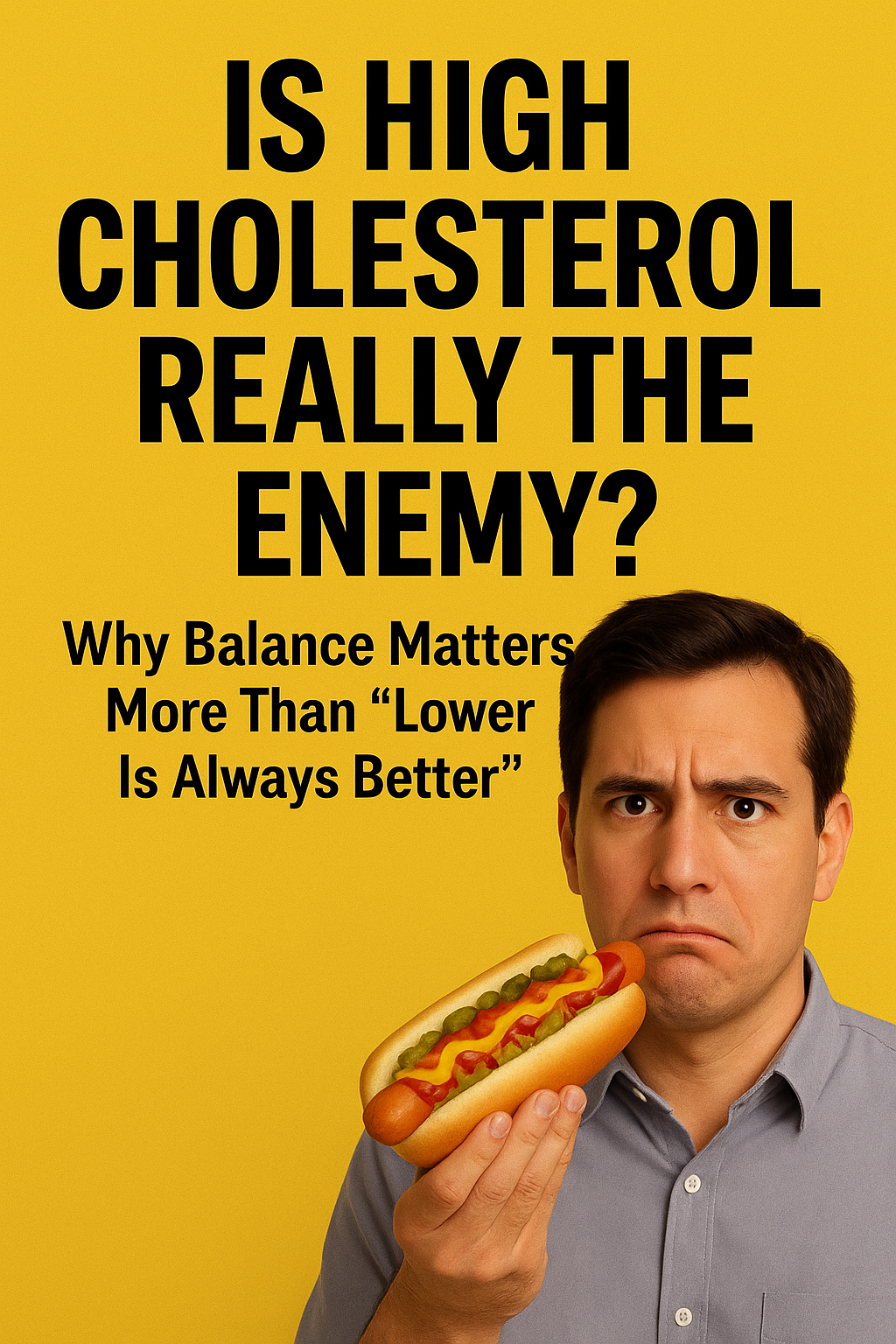

Is High Cholesterol Really the Enemy? Why Balance Matters More Than "Lower Is Always Better"
expert, nutritionist
You have probably heard the stories about "good" and "bad" cholesterol. Few people know, though, that cholesterol which drops too low may also be linked to certain health problems. That is why the fear of cholesterol deserves a closer, calmer look.
A President's Wake-Up Call
Few people know the cholesterol story better than former US President Bill Clinton. After years of burgers and doughnuts, he underwent a quadruple heart bypass in 2004 and later needed two stents. As Medical News Today reported, he gradually moved to a mostly plant-based diet and said it gave him more energy. His doctors still combined diet with medical care. His story shows that cholesterol is neither something to ignore nor something to fear blindly. It is something to manage wisely.
One of our readers, a retired teacher in her late sixties, shared a similar lesson: "For years I was terrified of every egg. When my doctor finally explained my full results, including my HDL and my overall risk, I realized I had been worrying about the wrong things. Now I eat more vegetables, walk every day, and my checkups are calm instead of stressful."
Cholesterol Works Like Oil in an Engine
Cholesterol in the blood behaves a bit like oil in a car. It is a lubricant and a carrier. With too much of it, though, deposits can form in the walls of blood vessels, as with an engine that is overfilled and never serviced.
Your body truly needs cholesterol. It is essential for building and repairing cells, for producing bile, which helps digest fats, and for making hormones and vitamin D, as explained by the US National Library of Medicine (MedlinePlus). Your liver makes most of the cholesterol you need. Roughly 80% of blood cholesterol is produced by the body itself, which is why, for most healthy people, dietary cholesterol plays a smaller role than once believed. We explain this in more detail in 10 Foods Nutritionists Swear By.
A Very Profitable Fear
To understand how much attention cholesterol gets, look at the economics. Over the years, analysts have estimated the global market for cholesterol-lowering medicines in the tens of billions of dollars a year, and some statins have ranked among the best-selling drugs in history. That alone does not make the medicines wrong. It does explain why cholesterol is discussed so often, and why it is worth understanding your own numbers instead of reacting to headlines.
When Cholesterol Drops Too Low
This is where the story gets interesting. A study published in the journal Neurology followed nearly 28,000 women for about 19 years. Researchers from Brigham and Women's Hospital found that women with very low LDL ("bad") cholesterol, below 70 mg/dL, were more than twice as likely to have a hemorrhagic stroke (bleeding in the brain) as women with moderate levels (HCPLive summary of the study). The authors stressed that this was an association, not proof of cause, and that blood pressure and smoking remain key factors to manage.
A 2016 systematic review in BMJ Open, covering 19 studies and more than 68,000 people over 60, found that older adults with higher LDL cholesterol lived as long as, or longer than, those with low LDL. The review sparked debate, and independent experts pointed out important limitations. Still, it suggests that in older age, "the lower the better" may not apply to everyone in the same way.
Does this mean cholesterol medicine is dangerous?
Not in general. A major review in The Lancet, led by researchers at the University of Oxford, concluded that for people at increased risk, the number of heart attacks and strokes prevented by statins is far larger than the number of people who experience side effects. The real lesson is personalization: the right target depends on your age, your history, and your overall risk. Never stop or change prescribed medication on your own. Talk to your doctor first.
What About Cancer?
Because cells need cholesterol to renew themselves, some people have wondered whether low cholesterol could encourage disease. Observational studies have sometimes linked low cholesterol to cancer, but many researchers believe the illness itself often lowers cholesterol, rather than the other way around. Large randomized trials of cholesterol-lowering therapy, summarized in the same Lancet review, have not shown a clear increase in cancer risk. This is one more reason to look at the whole picture rather than a single number.
How to Keep Cholesterol in Healthy Balance
- Eat more fiber. Oats, legumes, and whole grains help the body manage LDL cholesterol. See The Secret Weapon Against Stubborn Weight: Is Fiber the One Thing Missing From Your Diet?
- Choose healthy fats. Avocado, olive oil, and fatty fish support a healthier lipid profile. Try Forget the French Salad: This Avocado and Salmon Bowl Might Just Steal Your Heart (and Your Taste Buds).
- Eat fish regularly. Omega-3 fatty acids from salmon and similar fish may support heart health. More in Foods That Improve Nutrient Absorption.
- Move every day. Regular walking or cycling can help raise HDL ("good") cholesterol.
- Know your full numbers. Ask your doctor about LDL, HDL, triglycerides, and your overall cardiovascular risk, not just total cholesterol.
The Bottom Line
Cholesterol is neither a poison nor a miracle. It is a vital substance your body produces and uses every day. Both very high and very low levels may carry risks, which is why balance, a varied diet, regular movement, and an honest conversation with your doctor matter far more than fear.
Information on this website is for educational purposes only and is not medical advice.
expert, nutritionist
 Would you like to be informed about news on the website?














|

