





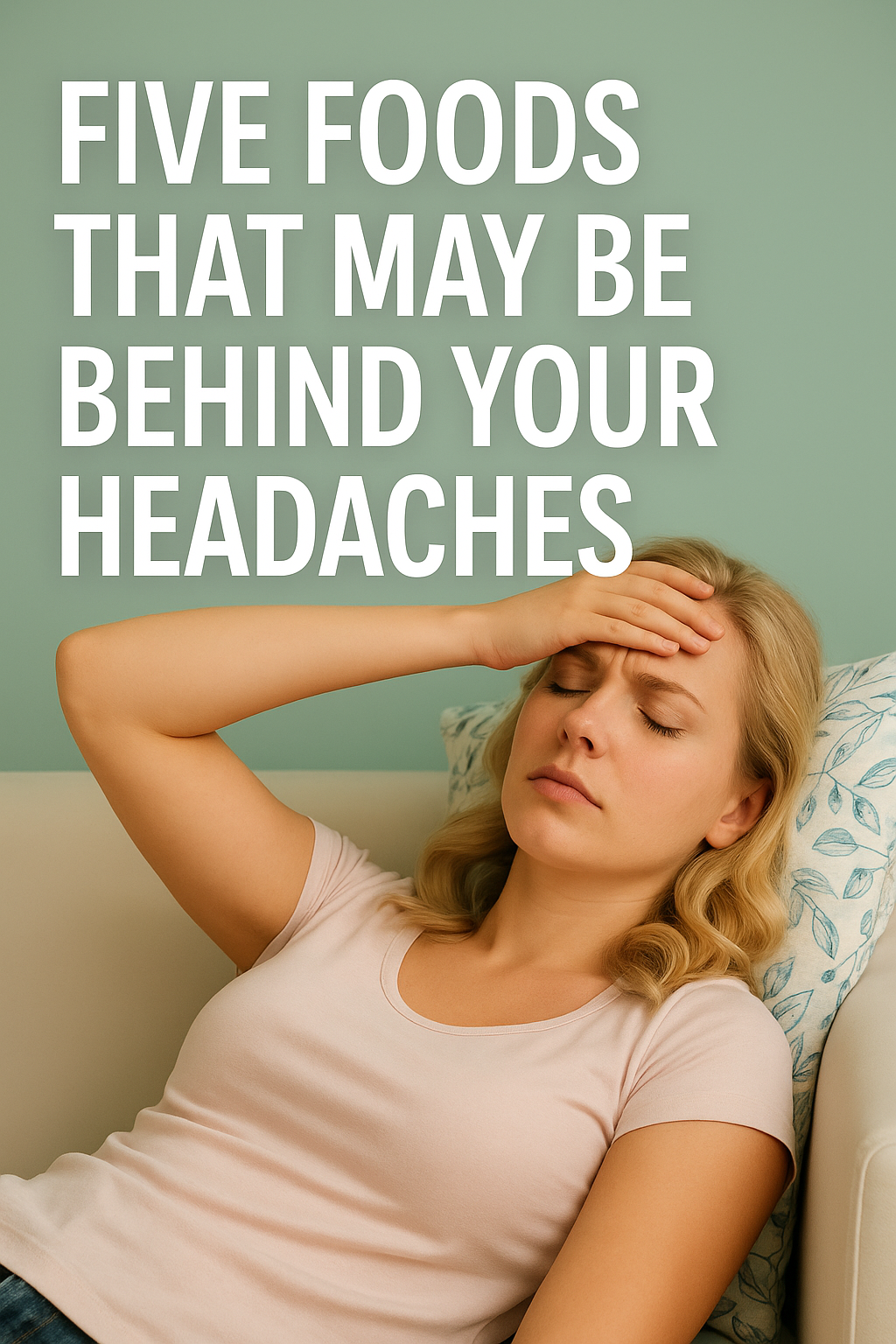


Five Foods That May Be Behind Your Headaches: and Bananas Are Probably the One You Didn't Expect
expert, nutritionist
You ate a perfectly ordinary lunch, and an hour later your head is pounding. You blame stress, the weather or a bad night's sleep, but the real culprit may be sitting on your plate. Cheese, chocolate, dried fruit and even ice can be common yet often overlooked headache triggers. The reason is mostly tyramine, a natural compound that builds up as foods age, or sulfites, preservatives widely used in the food industry. And one of the foods on our list is something almost everyone eats without a second thought: the humble banana.
Anyone who lives with recurring headaches knows how personal these triggers can be. One Los Angeles woman, who has shared her migraine journey on WebMD, sums up her own list as "the three Cs": cheese, chocolate and cocktails. She also noticed that stress, too little sleep and skipped meals make an attack more likely, so whenever her body feels out of balance, she pays extra attention to what she eats. Her experience is a good reminder that food is rarely the only factor, but for many people it is an important piece of the puzzle.
Experts at the Michigan Headache & Neurological Institute point out that internal biological factors largely determine when a headache appears, while foods act as "inconsistent triggers" that may or may not tip the balance on a given day. That is exactly why it pays to know the most common suspects.
Cheese
Tyramine in cheese has long been linked to migraines and, in milder form, to quite unpleasant headaches. The longer a cheese ages, the more tyramine it contains, so aged varieties such as Parmesan, cheddar and Gouda top the list. According to HealthyWomen, tyramine may cause blood vessels to narrow and then widen again, which some people feel as a throbbing pain in the head. If your head is already aching, it's wise not to add fuel to the fire with a cheese platter.
The good news is that not all cheeses behave the same way. Fresh cheeses such as cottage cheese and cream cheese contain little tyramine, so they are usually a gentler choice for sensitive people. In a Brazilian study of 524 people with migraine published in Headache Medicine, cheese was the third most frequently reported food trigger, after alcohol and chocolate.
One important note: tyramine is a serious concern for people taking certain antidepressants known as MAO inhibitors. As Healthline explains, these medications can allow tyramine to build up in the body, so anyone on such treatment should follow their doctor's dietary advice carefully.
Chocolate
Chocolate has a reputation as a mood booster and a little everyday pleasure, and in moderation it can certainly be part of a balanced diet. But when it comes to headaches, some people do better keeping their distance. A review titled "Chocolate and migraine: the history of an ambiguous association", published in Acta Biomedica, found that studies attribute anywhere from 0 to about 22% of migraine episodes to chocolate, which shows just how individual the reaction is.
Interestingly, chocolate may sometimes be wrongly accused. Neurologist Shivang Joshi explained in an interview with Drug Topics that a craving for something sweet can itself be an early warning sign of an approaching migraine. People reach for chocolate, the headache follows, and the chocolate gets the blame. Similarly, Dr. Vincent Martin of the University of Cincinnati told New York Magazine that solid evidence for chocolate as a trigger is scarce and that, if it happens, it is probably fairly rare.
So what should you do? Experts recommend paying attention to how much chocolate you eat and whether headaches follow. Everyone seems to have their own threshold up to which chocolate causes no trouble. If you learn where yours lies and stay within it, you can enjoy it with far fewer worries. For more on popular beliefs that don't hold up to scrutiny, read You Believed Them Your Whole Life, but They're Lies: 5 Health Myths It's Time to Bury.
Ice
It's a good thing summer is over, because ice-related headaches will now take a break for a while. Ice and very cold foods can cause a sudden, sharp headache, often called "brain freeze", which appears as the body reacts to the sudden cold. Researchers led by Jorge Serrador of Harvard Medical School and the University of Galway studied this phenomenon in 13 volunteers who sipped ice water. As ScienceDaily reported, the pain coincided with a rapid increase in blood flow through a major artery in the brain and faded when that artery narrowed again.
That's why it makes sense to eat cold and frozen foods slowly, and if you are prone to this type of headache, it may be best to avoid them altogether. Holding a spoonful of ice cream in the front of your mouth for a moment, instead of pressing it against the palate, can also help. And many people swear that a warm cup of tea refreshes them on a hot day more pleasantly than a whole glass full of ice cubes. If summer heat leaves you with a headache, dizziness and fatigue, don't ignore it; learn more in When the body says no: how to recognize heat stroke before it surprises you.
Bananas
This is the one most people don't expect. Bananas also contain tyramine, and the amount rises as the fruit ripens. According to food scientists quoted by Inverse, very overripe bananas, the kind most people save for banana bread, contain the most. Most tyramine, however, is found in the peel, which is reported to contain up to ten times more than the fruit itself. That's why some sensitive people make a point of removing the stringy threads that remain on the banana after peeling.
For most people, though, bananas are a nutritious everyday food and there is no reason to give them up. Experts emphasize that tyramine is unlikely to cause a headache on its own, but it may make things worse for someone who is already prone to migraines. If you love bananas, you might enjoy Three Ingredients, One Smoothie: Why Passion Fruit, Banana, and Turmeric Are Such a Powerhouse Combination, and if you eat them mainly for minerals, read Bananas and Potassium: A Myth That Needs to Be Broken Down.
Dried Fruit
In the winter months, dried fruit is a rich source of fiber and nutrients, but with some types it pays to be careful. Many dried fruits are treated with sulfur compounds, and sulfites are a widespread type of preservative that can affect how sensitive people feel. In sensitive individuals, too much may show up as headaches and, in rare cases, even nausea or vomiting. People with asthma should be especially careful: the U.S. Food and Drug Administration (FDA) notes that as little as 10 milligrams of sulfites per serving has been reported to cause severe reactions in some asthmatics and other sensitive people.
And which dried fruit most often contains added sulfites? Above all, light-colored dried apricots and golden raisins, where sulfur dioxide helps preserve their bright color. Dried plums, figs and dark raisins can also be treated, depending on the producer. The simplest solution is to read the label, look for "sulfur dioxide" or the code E220, or choose unsulfured, organic dried fruit, which is usually darker in color but just as tasty.
How to Find Your Own Triggers
Food triggers are highly individual, and what gives one person a headache may be completely harmless for another. Organizations such as the American Migraine Foundation, the National Headache Foundation and The Migraine Trust recommend keeping a simple diary: write down what you ate, when, how much, and whether a headache followed. After a few weeks, patterns often become clear.
Don't forget that regular routines matter too. Skipped meals, too little sleep, dehydration and even a delayed morning coffee can set off a headache, as explained in The Weekend Headache Nobody Warns You About. Sometimes a headache is also one of the signs of other conditions, such as low iron levels; read more in Natural remedies for anemia.
Information on this website is for educational purposes only and is not medical advice.
expert, nutritionist
 Would you like to be informed about news on the website?













|

