





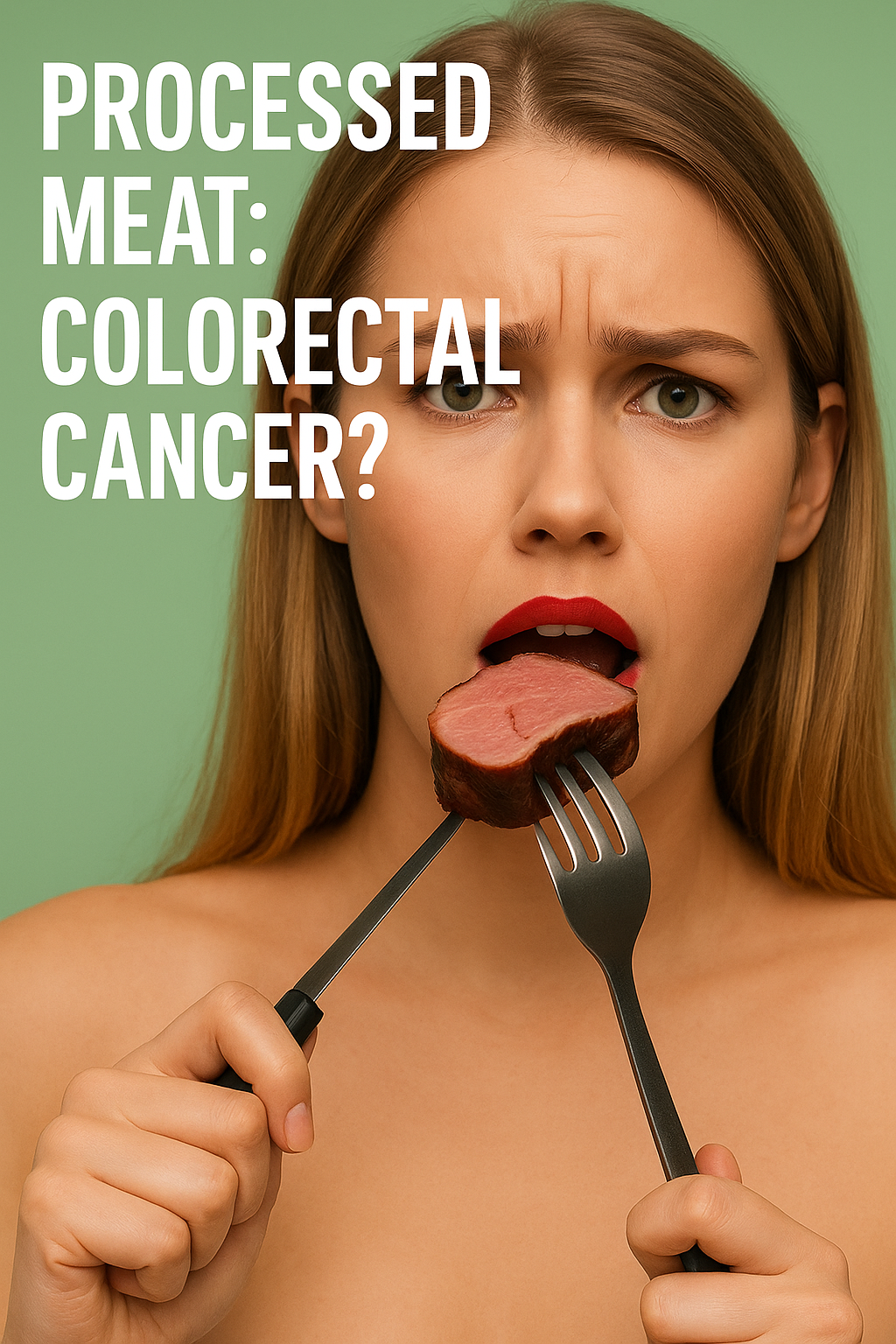


When Sausage Becomes the Enemy: What Really Happens in Your Body When You Eat Processed Meat
expert, nutritionist
Just 50 grams of processed meat a day, which is less than a single sausage, was linked to an 18% higher risk of colorectal cancer in the evidence reviewed by the World Health Organization's International Agency for Research on Cancer (IARC). And processed meat is only one of five foods you probably have at home right now that may be quietly working against you.
Former US President Bill Clinton knows this story well. During his years in politics he was famous for his love of burgers, fries and fast food. After a quadruple bypass in 2004 and another heart procedure in 2010, he decided to change course. As he explained in a widely reported interview with CNN's Dr. Sanjay Gupta, he gave up meat, dairy and eggs, lost more than 20 pounds and said he felt better than he had in years. You don't need to go as far as he did, but his story shows that what lands on our plate every day really does add up.
In recent years we have witnessed incredible confusion about what is healthy and what is not. One week we hear that butter is good again, the next week that it's dangerous. One day boxed breakfast cereals are promoted as a healthy start, and a while later we learn that many of them are full of sugar and additives. Much of this confusion comes from marketing, not from science.
In Japan, people have a very different relationship with food. Food is not just something we eat to survive; it is a way of showing respect for the body. That is why many Japanese nutritionists say the secret to good health lies not in expensive supplements, but in simplicity and moderation, and above all in limiting the kinds of foods that almost all of us keep at home, yet which may quietly harm us over time.
Processed meat: the hidden enemy in your sandwich
In our fast-paced lives, we often reach for sausages, hot dogs, salami or ready-made burgers because they are "at hand". But in 2015, the World Health Organization's cancer agency IARC classified processed meat as carcinogenic to humans, after reviewing more than 800 studies. Its experts concluded that every 50 grams of processed meat eaten daily was associated with an 18% higher risk of colorectal cancer. The full evaluation was published in The Lancet Oncology.
Processed meat often contains nitrites and nitrates, compounds used to preserve color and extend shelf life. In the body, and especially during high-heat cooking, these can react with protein breakdown products to form N-nitroso compounds (such as nitrosamines), which researchers consider one of the possible reasons for the link with cancer.
In addition, many of these products are high in salt and saturated fat, which, when eaten in excess, may put extra strain on blood vessels and the heart. In the past, processed foods were also a significant source of industrial trans fats, artificially altered fats that the body handles poorly. Today their use is strictly limited in the European Union, and the World Health Organization is working to eliminate them worldwide, but salt and saturated fat remain good reasons to read labels carefully.
Instead of sausages, try tofu, legumes, or homemade plant-based patties made from beans, lentils and oats. If you do eat meat, choose unprocessed options, such as roasted chicken thighs, cooked turkey or fish. For more ideas, see our article 5 Foods That Shorten Your Lifespan.
Interesting fact: the traditional diet of Okinawa, the Japanese island famous for its many centenarians, was based on sweet potatoes, vegetables, legumes and soy, with comparatively modest amounts of meat. Older generations there historically had lower rates of heart disease than most Western populations, as researchers describe in a study published on PubMed and in this National Geographic report. Interestingly, as fast food has spread on the island, some of this advantage among younger generations appears to have faded.
The "healthy" breakfast in a box: sugar in disguise
The packaging says "fit", "light" or "added fiber", but a look at the ingredient list often tells a different story: many breakfast cereals and granolas contain between 20 and 30 grams of sugar per 100 grams of product. A generous bowl with sweetened toppings can easily cover half or more of the daily amount the World Health Organization suggests as an ideal limit for free sugars.
According to the European Food Safety Authority (EFSA), intake of added and free sugars should be as low as possible within a nutritionally adequate diet, yet in many European countries average consumption remains well above recommendations. Sugar can act as a quiet saboteur: it gives a quick burst of energy at first, then a sudden dip. The body may then crave another dose, which can lead to a cycle of tiredness and overeating. You can read more in our article Why is it dangerous to eat these foods for breakfast.
Instead of industrial cereals, try natto. These are fermented soybeans with a strong smell, but they are rich in beneficial bacteria (probiotics) that support digestion. Although natto's taste is not for everyone, it is one of the richest food sources of vitamin K2. In the Dutch Rotterdam Study, published in The Journal of Nutrition, a higher intake of vitamin K2 was associated with less calcification of the arteries, although more research is still needed.
If you can't find natto in the shop, simply swap your morning meal for oatmeal with cinnamon, flaxseed and grated apple. This way you get natural sugars and fiber that may keep you feeling full for longer.
Soft drinks: a sugar punch for the body
A soft drink looks like refreshment, but the body treats it as a sugar rush. One 330 ml can of cola contains around 35 grams of sugar, which is about seven teaspoons! If you drink two cans a day, you will consume more than 25 kilograms of sugar in a year from drinks alone.
Research summarized by the Harvard T.H. Chan School of Public Health found that people who drank one to two sugary drinks a day had about a 26% higher risk of developing type 2 diabetes than those who rarely drank them, according to a meta-analysis published in Diabetes Care. A long-term study of men published in Circulation found that one sugary drink a day was associated with a roughly 20% higher risk of heart disease.
Many people think diet versions are the better choice, but the picture is not so simple. Some research suggests that artificial sweeteners may affect gut bacteria; a 2022 study published in the journal Cell found that sucralose and saccharin altered the gut microbiome and blood sugar response in some healthy volunteers. In 2023, the World Health Organization advised against using non-sugar sweeteners for weight control, as long-term studies did not show lasting benefits.
The best alternative? Plain water with a slice of lemon, a few mint leaves or a piece of ginger. If you want something fizzy, treat yourself to natural sparkling mineral water.
Cream cheeses and full-fat dairy: pleasant, but heavy
Milk and cheese have been part of our diet for centuries, but many of today's products are quite different from those our grandparents knew. In the European Union, the use of growth hormones in livestock is banned and milk is regularly tested for residues, so for most people the main thing to watch is something else: the high fat content of some dairy products.
Cream cheeses, such as Philadelphia or mascarpone, can contain more than 30% fat, mostly saturated. Eating too much saturated fat on a regular basis may burden the heart and blood vessels, which is why the World Health Organization recommends limiting it to less than 10% of daily energy intake.
We suggest you try kinako, roasted soybean flour, which has a nutty flavor and a high plant-protein content. In Japanese cuisine it is even used in desserts. Although kinako is not common in Europe, you can replace it with tahini (sesame paste) or a mixture of ground walnuts and oats. If you're curious about other foods we often misuse, read Foods We Use Incorrectly.
Interesting: dairy is not the only source of calcium. According to the US National Institutes of Health, calcium can also be found in kale, broccoli, almonds, calcium-set tofu and fortified plant drinks, which makes it easier to cover your needs even if you eat less dairy.
Sweets: small pleasures, big consequences
Chocolate bars, candy, caramels: we all keep them at home "just in case". But the truth is that sweets rarely satisfy hunger; often they increase it. Sugary foods activate the brain's reward system and the release of dopamine, the same "feel-good" messenger involved in other pleasurable activities, such as playing games or scrolling social media. That is why the brain can quickly develop a habit of "asking" for more.
It's easiest to cut back on sugar if we find more natural ways to satisfy a sweet craving. Many people swear by a chia seed pudding with a little honey, or by frozen bananas blended into "nice cream". If you do reach for chocolate, choose dark chocolate with at least 70% cocoa, which contains flavanols, plant compounds with antioxidant properties, as explained by the Harvard T.H. Chan School of Public Health. For more on hidden diet traps, read Hello, and Fattening: Foods that Sabotage Your Diet.
According to the World Health Organization, adults should ideally limit free sugars to around 25 grams a day, roughly 6 teaspoons. The American Heart Association gives a similar recommendation. Unfortunately, many adults in Western countries eat two to three times that amount.
Health is not an accident, but a daily choice
Every bite is a small decision about whether we support our body or work against it. The body is not a machine that runs non-stop. It is a living system that thrives on balance.
Folk wisdom has long sensed this. Our ancestors knew nothing of terms such as "antioxidants" or "omega-3", but they valued sauerkraut in winter as a source of vitamin C, and nettle tea was a traditional spring tonic in many European households.
That is why it's worth following these simple tips:
- Eat as little highly processed food as possible.
- Drink more water than anything else.
- Eat local, seasonal and simple food.
Many readers who try this for just one week tell us they notice a difference: more energy, better sleep, less bloating and a better overall feeling in the body. Over a longer period, a balanced diet can also support healthy skin and normal immune function.
Health is not a luxury. It is the result of small decisions we make every day. And the best part is that the best solutions are usually ones you already have at home. You just have to look at them with the right eyes...
Information on this website is for educational purposes only and is not medical advice.
expert, nutritionist
 Would you like to be informed about news on the website?















|

